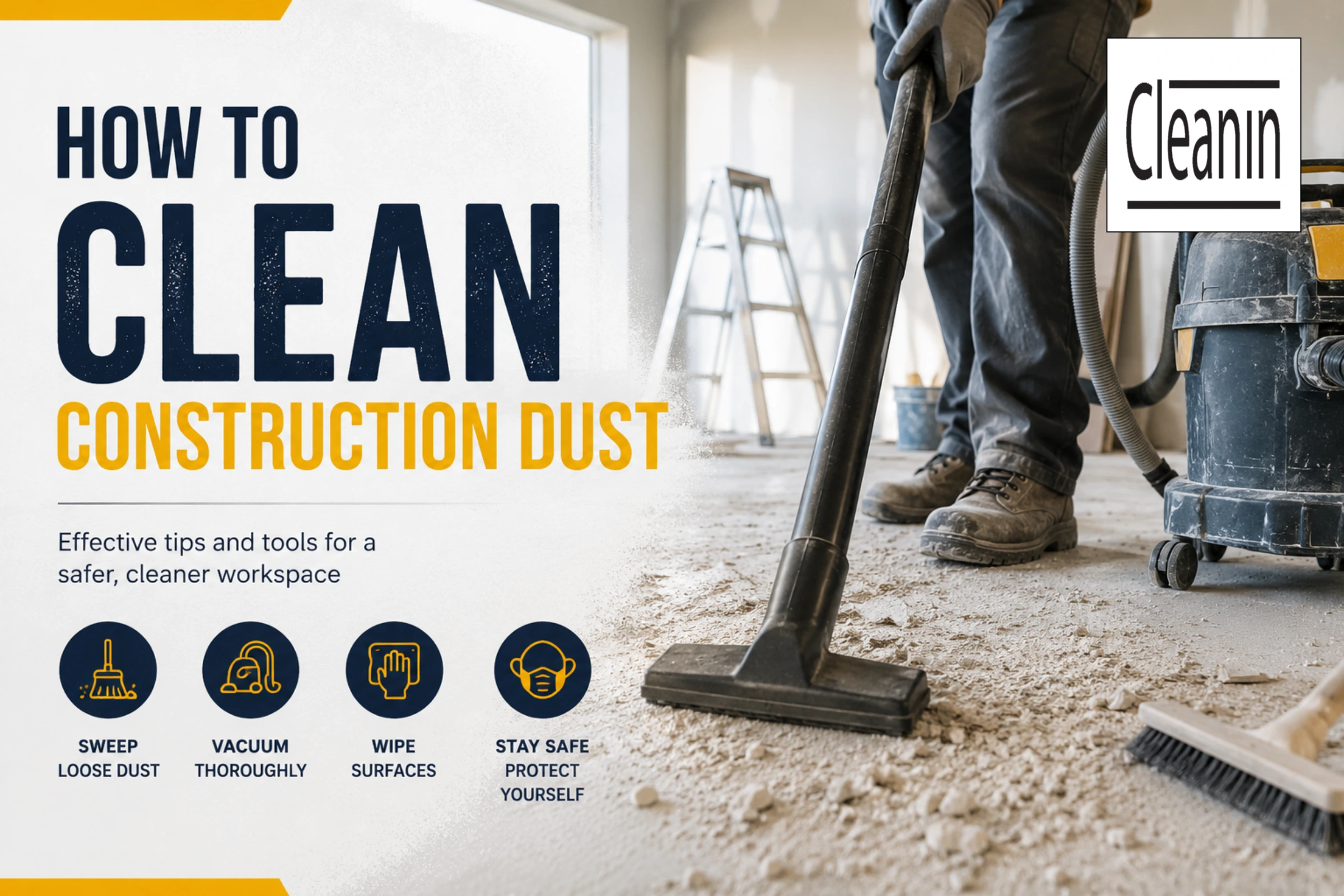
Construction dust requires systematic cleaning combining HEPA vacuuming, damp wiping, surface-by-surface cleaning, and proper filtration to remove fine airborne particles safely. Unlike ordinary household dust, construction dust contains microscopic particles from concrete, plaster, drywall, timber, paint, and silica. These particles spread throughout a building and settle on every surface.
Normal cleaning methods are rarely sufficient after construction or renovation work. Sweeping or using a standard household vacuum disturbs fine dust particles and redistributes them through the air, causing repeated contamination of floors, walls, furniture, fixtures, and ventilation systems. After construction activities stop, airborne dust settles for hours or even days unless removed with the correct cleaning techniques.
Besides affecting a property’s appearance, construction dust reduces indoor air quality, creates additional cleaning challenges and poses potential health risks for occupants. Removing these contaminants requires a structured cleaning process targeting visible debris and fine particles hidden in carpets, air vents, high surfaces and hard-to-reach areas. For commercial projects where fine silica, plaster and concrete dust have spread throughout the building, professional construction cleaning services using industrial HEPA filtration deliver a safer more thorough result and prepare the property for handover without repeated contamination.
This guide covers what construction dust is, why it is difficult to remove, the safest step-by-step cleaning methods, the differences between dry dusting and damp wiping, health risks of construction dust, when to hire professional post-construction cleaners, and how to prepare a property for handover or occupancy.
What Is Construction Dust?
Construction dust is a mixture of fine airborne particles produced during building, renovation, demolition, fit-outs, maintenance, and repair work. It contains dust from concrete, plaster, drywall, timber, paint, tiles, cement, masonry, dirt, debris, and microscopic contaminants that settle on surfaces throughout a property. Because these particles are small, they remain suspended in the air before settling on floors, walls, ceilings, furniture, equipment, and ventilation systems.
Construction dust generated from materials such as concrete, bricks, stone, tiles, and pavers may contain respirable crystalline silica. Cleaning this dust requires more than simply removing visible debris, as improper handling can release fine silica particles back into the air. If your business works with these materials, it’s important to understand the New Crystalline Silica Regulations for construction businesses and the compliance requirements that apply before carrying out any cleaning or construction activities.
Construction dust is produced throughout every stage of a project, from structural work to the final finishing trades. While larger debris is usually easy to remove, fine dust spreads quickly beyond the immediate work area, making post-construction cleaning significantly more challenging than routine cleaning.
The construction dust comes due to the following reasons:
1. Renovation and Demolition
Renovation and demolition activities produce large volumes of dust as walls, ceilings, flooring, and building materials are removed or modified. These projects produce combined concrete dust, plaster dust, masonry particles, timber debris, and insulation fibres that spread throughout adjoining rooms unless contained.
2. Commercial Fit-Outs
Office fit-outs, retail refurbishments, and commercial tenancy upgrades involve cutting, drilling, sanding, and installing new materials. These activities create fine dust that settles on workstations, shelving, lighting, glass, air vents, and finished surfaces after construction work finishes.
3. Concrete Cutting and Grinding
Concrete cutting, drilling, and grinding generate the finest construction dust on building sites. These processes produce airborne particles that travel throughout buildings and contain respirable crystalline silica, requiring specialised cleaning methods and HEPA filtration for safe removal.
4. Drywall Sanding and Plaster Dust
Sanding plasterboard joints and finishing plaster surfaces creates lightweight dust that easily becomes airborne. Because plaster and drywall dust are extremely fine, they can settle repeatedly on walls, ceilings, floors, window frames, and furniture, even after an initial clean.
Sanding plasterboard joints and finishing plaster surfaces creates lightweight dust that becomes airborne. Because plaster and drywall dust are fine, they settle repeatedly on walls, ceilings, floors, window frames, and furniture after an initial clean.
5. Painting and Surface Preparation
Preparing surfaces for painting involves sanding fillers, removing old coatings, and smoothing walls or timberwork. These tasks generate fine dust that accumulates on skirting boards, trims, light fittings, and horizontal surfaces unless cleaned thoroughly before painting is complete.
6. Timber and Tile Cutting
Cutting timber, laminate flooring, ceramic tiles, and stone products produces sawdust, mineral dust, and fine particles. Depending on the material cut, these contaminants can cling to surfaces, become trapped in carpets, or circulate through ventilation systems when unmanaged.
7. Fine Airborne Particles and Silica Dust
Not all construction dust presents equal risk. Larger dust particles settle quickly, while microscopic airborne particles remain suspended for extended periods before settling throughout a building. Dust from concrete, bricks, stone, mortar, and engineered stone may contain respirable crystalline silica, requiring careful handling and specialised cleaning procedures to minimise exposure.
Understanding the origin of construction dust helps select appropriate cleaning methods. Different dust types behave differently. Therefore, professional post-construction cleaning combines HEPA vacuuming, damp wiping, and systematic surface cleaning to remove visible debris and fine airborne particles safely.
What are the Health Risks of Construction Dust?
Construction dust can affect indoor air quality, workplace safety, and the health of everyone occupying the building. While larger dust particles eventually settle onto surfaces, finer airborne particles can remain suspended for extended periods and may be inhaled by workers, contractors, or building occupants.
A major hazard from construction work is respirable crystalline silica, generated when materials such as concrete, bricks, mortar, tiles, and engineered stone are cut, drilled, or ground. These microscopic particles penetrate deep into the lungs. Because silica dust is invisible to the naked eye, it requires appropriate dust control measures and specialised cleaning techniques rather than ordinary sweeping or vacuuming.
Some of the health risks of construction dust are:
- Respiratory Irritation
- Allergies and Asthma
- Eye Irritation
- Skin Irritation
Respiratory Irritation
Fine construction dust irritates the nose, throat, and lungs when airborne particles are inhaled over extended periods. Dust generated during demolition, sanding, plastering, or concrete work can cause coughing, throat irritation, and breathing discomfort until removed from the environment.
Allergies and Asthma
Construction dust aggravates allergies and triggers asthma symptoms in sensitive individuals. Dust particles, plus fibres and airborne contaminants, can contribute to sneezing, nasal congestion, wheezing, and respiratory discomfort in enclosed commercial spaces with limited ventilation.
Eye Irritation
Airborne dust settles on the eyes, causing redness, watering, itching, and irritation. Workers cleaning or entering recently completed construction areas can develop discomfort if appropriate eye protection is not worn or dust remains suspended in the air.
Skin Irritation
Direct contact with construction dust dries and irritates the skin after handling dusty materials or cleaning contaminated surfaces. Wearing suitable gloves and protective clothing reduces prolonged skin exposure during post-construction cleaning.
Workers performing post-construction cleaning should wear appropriate personal protective equipment (PPE) according to dust exposure levels. PPE includes respiratory protection, safety glasses, gloves, and protective clothing to minimise contact with airborne particles and contaminated surfaces. PPE should be used alongside safe cleaning practices, not as a substitute for proper dust removal.
How to Clean Construction Dust Step by Step?
Cleaning construction dust involves more than sweeping or wiping visible surfaces. Fine airborne particles settle throughout a building during construction and easily become airborne again if the cleaning process follows the wrong order. Following a systematic approach removes dust efficiently while reducing the risk of redistributing contaminants.
Before removing construction dust, the site should first be cleared of leftover building materials, packaging, debris, and construction waste. Preparing the work area creates safer access to all surfaces and makes dust removal far more effective. If your construction has just been completed, follow our guide on How to Easily Clean Up a Construction Site to properly prepare the site before starting the detailed dust cleaning process.
A step-by-step process to clean construction dust is:
Step 1: Wear Appropriate Personal Protective Equipment (PPE)
Step 2: Improve Ventilation
Step 3: Remove Large Debris
Step 4: Vacuum Using a HEPA-Filtered Vacuum Cleaner
Step 5: Use Dry Dusting Only Where Appropriate
Step 6: Damp Wipe All Surfaces
Step 7: Clean Walls and Vertical Surfaces
Step 8: Clean Ceilings and High-Level Areas
Step 9: Clean Windows, Glass, and Frames
Step 10: Clean Floors Thoroughly
Step 11: Replace or Clean HVAC Filters
Step 12: Perform a Final Inspection
Step 1: Wear Appropriate Personal Protective Equipment (PPE)
Before cleaning, wear suitable personal protective equipment (PPE) to minimise exposure to fine dust particles. Depending on the level of contamination, PPE includes a respirator or dust mask, safety glasses, gloves, and protective clothing. PPE protects against inhaling airborne dust and prevents direct contact with contaminated surfaces.
Step 2: Improve Ventilation
Open windows and doors where possible to improve airflow during cleaning. Ventilation improves air circulation and speeds drying after damp cleaning. Where natural ventilation is limited, improve indoor air quality with commercial air scrubbers or mechanical ventilation systems.
Step 3: Remove Large Debris
Collect and dispose of construction waste such as timber offcuts, plaster pieces, packaging materials, screws, nails, and debris before removing fine dust. Removing bulky materials improves access to floors, walls, and fixtures during the detailed cleaning process.
Step 4: Vacuum Using a HEPA-Filtered Vacuum Cleaner
Vacuum all accessible surfaces using a commercial vacuum with a High-Efficiency Particulate Air (HEPA) filter. Unlike standard household vacuums, HEPA filtration captures fine construction dust instead of releasing it back into the air. Begin with high-level surfaces, then clean lower areas to prevent dust from resettling onto cleaned surfaces.
Step 5: Use Dry Dusting Only Where Appropriate
Limit dry dusting to surfaces where moisture could cause damage, or loose dust can be removed safely without dispersing fine particles. Microfibre dusters are preferred over feather dusters because they trap dust rather than spreading it into the air. Avoid dry sweeping, as it redistributes construction dust throughout the property.
Step 6: Damp Wipe All Surfaces
After vacuuming, wipe hard surfaces with a clean microfibre cloth and an appropriate cleaning solution. Damp wiping captures remaining fine particles that vacuuming does not remove and prevents dust from becoming airborne again. Frequently rinse or replace cloths to avoid transferring dust between surfaces.
Step 7: Clean Walls and Vertical Surfaces
Dust settles on painted walls, partitions, doors, skirting boards, and vertical surfaces during construction. Clean these areas from top to bottom using HEPA vacuuming where appropriate, then damp wipe to remove remaining residue.
Step 8: Clean Ceilings and High-Level Areas
Clean ceilings, exposed beams, light fittings, ductwork, pipes, and ceiling-mounted fixtures before floors. Dust falling from elevated surfaces contaminates lower areas if these sections are overlooked during cleaning.
Step 9: Clean Windows, Glass, and Frames
Construction dust accumulates on windows, glazing, frames, tracks, and window sills. Clean glass carefully using suitable commercial glass cleaning products while removing dust from surrounding frames and tracks to create a streak-free finish.
Step 10: Clean Floors Thoroughly
Vacuum hard floors before damp mopping or machine scrubbing where appropriate. Commercial carpets should receive thorough HEPA vacuuming, with professional carpet cleaning recommended if dust becomes embedded within the fibres. Clean floors last to ensure dust from higher surfaces has been removed.
Step 11: Replace or Clean HVAC Filters
Construction dust accumulates within heating, ventilation, and air conditioning (HVAC) systems during building work. Replace or clean air filters after cleaning to prevent fine dust from recirculating throughout the building when the system operates.
Step 12: Perform a Final Inspection
Complete a detailed inspection of the property to ensure no dust remains on visible or hidden surfaces. Check ceilings, light fittings, skirting boards, air vents, window tracks, cabinetry, shelving, and overlooked areas. A final inspection confirms the property is clean, presentable, and ready for handover or occupancy.
Construction dust settles in multiple layers throughout a building, requiring thorough cleaning before the space is occupied. Following these steps in the correct order removes visible debris and microscopic dust particles while improving cleanliness, indoor air quality, and property presentation. For larger commercial projects or heavily contaminated sites, professional post-construction cleaning services provide the specialised equipment and expertise for a safe, comprehensive clean.
How to Clean Construction Dust from Floors?
Clean construction dust from floors by first vacuuming with a HEPA-filtered vacuum cleaner. Then, damp mop or machine scrub using an appropriate commercial floor cleaner. Avoid dry sweeping because it disturbs fine dust particles and redistributes them throughout the building instead of removing them.
The correct cleaning method depends on the flooring material. Hard floors such as polished concrete, vinyl, epoxy, laminate, and sealed timber should be thoroughly vacuumed before damp mopping with a microfibre mop. Commercial carpets require HEPA vacuuming to remove embedded dust and professional carpet cleaning if fine construction particles are embedded in the carpet fibres.
Cleaning floors is the final stage of post-construction cleaning. By removing dust from ceilings, walls, fixtures, furniture, and elevated surfaces first, this prevents freshly cleaned floors from becoming contaminated again. Once the floor dries, perform a final inspection to check for remaining dust along skirting boards, corners, expansion joints, and areas where fine particles accumulate.
How to Clean Construction Dust from Tile Floors?
Clean construction dust from tile floors by first vacuuming loose dust with a HEPA-filtered vacuum. Then damp mop with clean water and a pH-neutral tile cleaner. The process removes fine dust without scratching tile surfaces or spreading residue across the floor.
Begin by removing all loose dust and debris using a HEPA vacuum, focusing on grout lines, corners, and expansion joints where fine particles accumulate. Avoid using a dry broom, as sweeping lifts microscopic dust into the air and causes it to settle on cleaned surfaces.
After vacuuming, mop the floor with a clean microfibre mop using fresh water and an appropriate pH-neutral cleaning solution. Change the cleaning solution regularly during cleaning to prevent dust and residue from redistributing across the tiles. Avoid excessively wet mopping, especially on unsealed grout, as dirty water carries fine particles deeper into porous grout lines.
If the floor has visible grout haze, dried plaster residue, paint splatter, or remaining adhesive after construction, these contaminants require specialised tile-safe cleaning products. Use abrasive pads, harsh chemicals, or acidic cleaners only where appropriate for the tile type and following the manufacturer’s recommendations, as some finishes can be permanently damaged.
Once the floor is clean and dry, inspect the tiles under bright lighting to check for remaining dust, haze, or residue. Professional post-construction cleaners perform a final detailed inspection because fine construction dust remains trapped in grout lines and textured tile surfaces after the initial cleaning process.
What is the best equipment for Cleaning Construction Dust?
Removing construction dust effectively requires specialised cleaning tools. Fine dust particles become airborne during cleaning, settle in carpets, and accumulate on high surfaces and within ventilation systems. Professional post-construction cleaning uses equipment that captures, rather than redistributes, microscopic particles.
Some of the best equipment for cleaning construction dust is:
- Commercial HEPA Vacuum
- Microfibre Cloths
- Damp Mops
- Auto Scrubbers
- Air Scrubbers
- Extension Poles and High-Reach Cleaning Tools
- Pump Sprayers
- HEPA Air Filters
1. Commercial HEPA Vacuum
A commercial vacuum with a High-Efficiency Particulate Air (HEPA) filter is a key tool for post-construction cleaning. Unlike standard vacuum cleaners, HEPA vacuums capture fine dust particles instead of releasing them back into the air. They are used for cleaning hard floors, carpets, skirting boards, walls, ceilings, and surfaces where construction dust accumulates.
2. Microfibre Cloths
Microfibre cloths trap fine dust within their fibres rather than pushing it across surfaces. They are used for damp wiping desks, shelving, window frames, cabinetry, doors, and finished surfaces without leaving excessive lint or residue.
3. Damp Mops
After vacuuming, damp mops remove remaining dust from hard flooring surfaces such as vinyl, tile, polished concrete, timber, and epoxy floors. Using a lightly dampened mop captures residual particles while reducing the risk of dust becoming airborne again.
4. Auto Scrubbers
Large commercial buildings use auto scrubbers to clean expansive hard floor areas efficiently. These machines scrub, wash, and recover dirty water in a single pass, making them effective for offices, warehouses, retail stores, schools, and industrial facilities following construction or refurbishment work.
5. Air Scrubbers
Air scrubbers filter airborne dust during and after construction cleaning. With HEPA filtration, they remove suspended particles from the indoor environment, improve air quality, and reduce dust settling onto freshly cleaned surfaces.
6. Extension Poles and High-Reach Cleaning Tools
Construction dust accumulates on ceilings, exposed beams, ductwork, light fittings, air vents, and elevated surfaces. Extension poles and high-reach cleaning tools enable cleaners to remove dust safely without relying on ladders for every task, improving efficiency and workplace safety.
7. Pump Sprayers
Pump sprayers apply cleaning solutions evenly across walls, hard surfaces, and large floor areas before wiping or machine cleaning. They control moisture while ensuring consistent application of appropriate cleaning products throughout the property.
8. HEPA Air Filters
Replacing or cleaning HEPA air filters after construction cleaning prevents residual dust from circulating through a building’s HVAC system. Clean filters improve indoor air quality and reduce the risk of fine dust settling on surfaces after the property has been handed over.
What Areas are Commonly Missed During Construction Dust Cleaning?
Construction dust settles beyond floors and surfaces. Fine airborne particles travel throughout a building during construction and accumulate in hidden and hard-to-reach areas overlooked during routine cleaning. Missing these locations reduces indoor cleanliness, allows dust to keep circulating, and leaves the property unfinished after construction work finishes.
Some of the common areas that are commonly missed during construction dust cleaning are:
- Air Vents
- Light Fittings
- Ceiling Fans
- Skirting Boards
- Inside Cabinets and Joinery
- Window Tracks and Sills
- Door Frames and Trim
- Power Outlets and Switch Plates
- Behind Fixed Fixtures and Equipment
- High-Level Surfaces
1. Air Vents
Supply vents, return air grilles, and ventilation diffusers collect fine construction dust throughout the building process. If not cleaned, dust recirculates through the HVAC system after occupancy, affecting indoor air quality and causing freshly cleaned surfaces to become dusty again.
2. Light Fittings
Dust settles on ceiling lights, recessed fittings, pendant lights, and emergency lighting. Once illuminated, these fixtures make accumulated dust visible, reducing the appearance of the completed space.
3. Ceiling Fans
Ceiling fan blades attract significant fine dust during construction. When fans operate, accumulated dust blows back into occupied areas, causing particles to settle throughout the room again.
4. Skirting Boards
Skirting boards collect dust as airborne particles settle along wall edges. Because they are located below eye level, they are missed during general cleaning, although they are a noticeable area during a final inspection.
5. Inside Cabinets and Joinery
Dust enters cupboards, drawers, shelving units, wardrobes, and built-in cabinetry during construction. Even when cabinet doors remain closed, fine airborne particles settle inside, making internal cleaning essential to post-construction cleaning.
6. Window Tracks and Sills
Window tracks, frames, and sills trap fine dust, plaster residue, sawdust, and construction debris. These narrow areas require detailed vacuuming and damp wiping to remove accumulated particles.
7. Door Frames and Trim
Dust settles on the tops of door frames, architraves, and surrounding trim throughout the construction process. These elevated horizontal surfaces are overlooked during standard cleaning but are identified during building handovers.
8. Power Outlets and Switch Plates
Power outlets, light switches, and electrical faceplates collect dust around their edges during sanding, drilling, and finishing work. These high-touch surfaces should be cleaned carefully using appropriate methods without allowing excessive moisture near electrical components.
9. Behind Fixed Fixtures and Equipment
Construction dust accumulates behind cabinetry, appliances, sanitary fixtures, reception counters, and built-in furniture in inaccessible areas. Cleaning these concealed areas prevents dust from spreading after the building is occupied.
10. High-Level Surfaces
Ceilings, exposed beams, bulkheads, ductwork, pipes, and elevated surfaces are frequently missed during post-construction cleaning. Dust falling from these locations contaminates floors, furniture, and workstations if high-level cleaning is omitted before lower surfaces.
Why Should You Hire Professional Post-Construction Cleaners for Dust Cleaning?
While minor renovation projects can be cleaned in-house, large commercial construction projects require professional post-construction cleaning. Fine construction dust settles throughout the property, including areas that are hard to access or clean with standard equipment. Professional post-construction cleaners follow a systematic process using specialised equipment and commercial-grade products to prepare buildings for safe occupancy, client handover, or business operations.
Some of the reasons why you should hire a professional post-construction cleaner for Dust cleaning are:
1. Specialised Cleaning Equipment
Professional cleaning companies use equipment designed for post-construction environments. Commercial HEPA vacuums, auto scrubbers, high-reach cleaning tools, air scrubbers, and specialised floor cleaning equipment remove fine dust better than standard household cleaning tools while improving efficiency across large commercial spaces.
2. HEPA Filtration
Fine construction dust easily becomes airborne during cleaning if the wrong equipment is used. Professional cleaners use HEPA-filtered vacuum systems that capture microscopic particles instead of releasing them back into the air. This improves indoor air quality while preventing dust from resettling on cleaned surfaces.
3. Commercial-Grade Cleaning Products
Different construction materials leave different types of residue. Adhesives, plaster, grout haze, paint splatter, silicone residue, and fine dust require specialised commercial cleaning products matched to specific surfaces. Professional cleaners select appropriate chemicals that remove contamination effectively while protecting flooring, glass, joinery, fixtures, and finished surfaces from damage.
4. Experience with Builders Cleans
Post-construction cleaning requires general cleaning knowledge and specialised procedures. Professional cleaners understand the sequence of a builders clean, cleaning from high surfaces to low surfaces while systematically removing dust, construction residue, and debris throughout the property. Their experience ensures the building is prepared for practical completion, client inspections, or occupancy.
5. Supporting Compliance and Handover
Commercial buildings are inspected before handover or occupation. Professional post-construction cleaning presents the property in a clean, safe, and ready-to-use condition by removing dust from visible and hidden areas. Thorough cleaning supports healthier indoor environments and shows the property is prepared to a professional standard before occupants move in.
6. Saving Time and Labour
Construction dust settles across every room, surface, and ventilation component, making final cleaning much more time-consuming than routine maintenance. Outsourcing the work allows builders, project managers, and business owners to focus on project completion while experienced cleaners perform the detailed cleaning process efficiently.
7. Minimising Business Disruption
Many commercial projects have strict completion deadlines. Professional cleaning teams schedule post-construction cleaning around project timelines, helping businesses reopen faster and reducing delays between construction completion and building occupancy.
8. Consistent Quality Assurance
Professional cleaning companies follow detailed cleaning checklists and quality inspection procedures to ensure every area has been cleaned thoroughly before handover. This systematic approach reduces missed dust, overlooked surfaces, and rework after the final inspection.
Conclusion
Construction dust is a final challenge to address before a commercial property is ready for occupation. While visible debris is removed, fine dust from concrete, plaster, drywall, timber, and construction materials settles throughout the building, affecting indoor cleanliness, air quality, and the presentation of the finished space. Following a structured cleaning process ensures the safe and effective removal of visible and microscopic dust.
Professional post-construction cleaning uses specialised equipment, HEPA filtration, commercial-grade cleaning products, and systematic cleaning methods to prepare buildings for practical completion and handover. Whether your project involves a commercial office fit-out, retail refurbishment, healthcare facility, educational institution, warehouse, or industrial site, thorough cleaning creates a healthier environment, enhances the property’s appearance, and ensures it is ready for employees, customers, or tenants.
If your project is nearing completion and requires a professional builders clean or post-construction cleaning service, Cleanin provides tailored post-construction cleaning solutions for commercial properties. Our experienced team removes construction dust safely and efficiently, leaving your premises clean, presentable, and ready for business.
Contact Cleanin to arrange a site inspection or request a customised post-construction cleaning quote for your commercial property.


