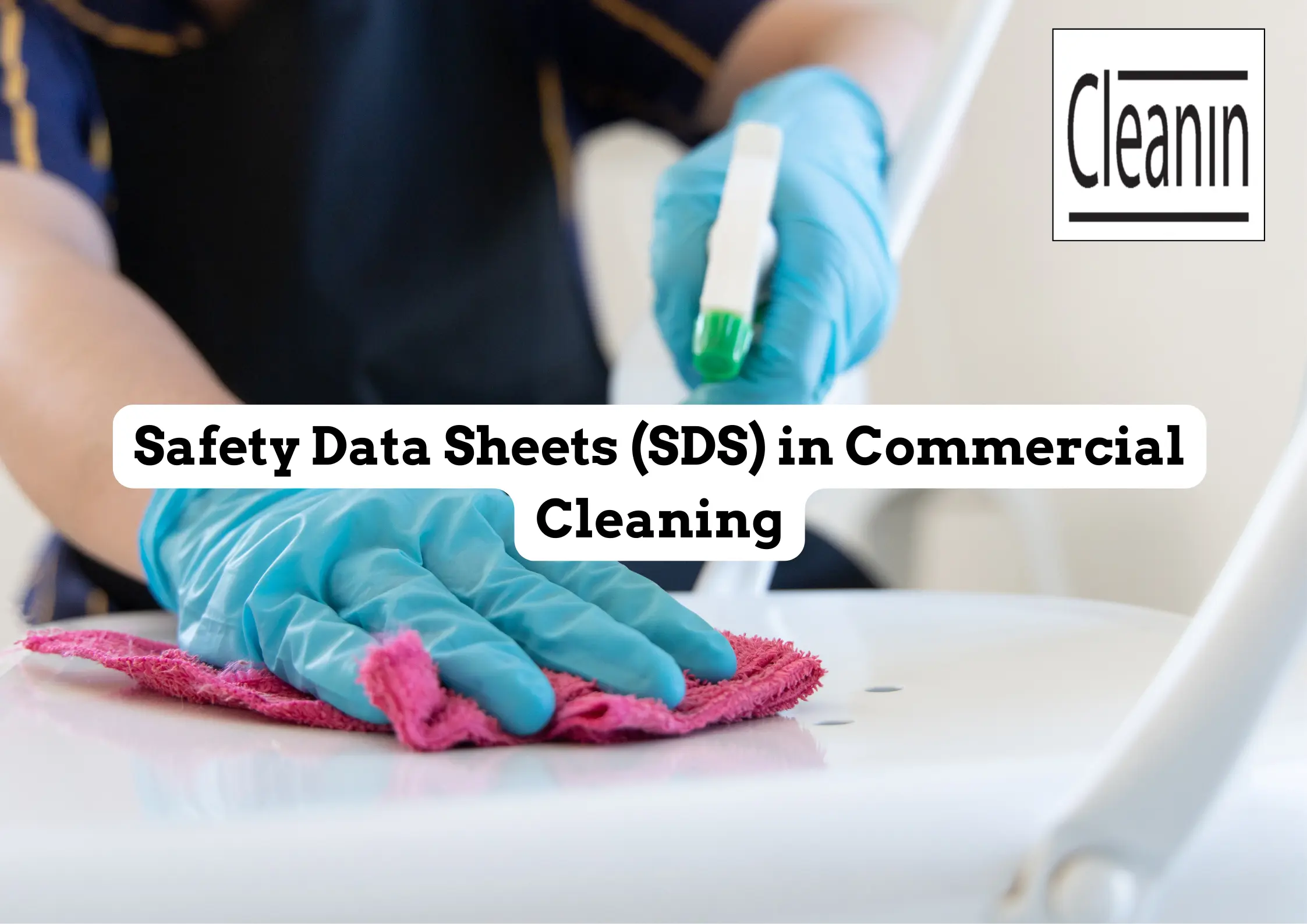
Every commercial cleaning contractor brings chemicals onto a site: disinfectants, degreasers, glass cleaners and floor strippers. Some of these products are classified as hazardous and come with a document explaining how to handle, store and respond to them safely. That document is the Safety Data Sheet (SDS). How a contractor manages these documents can provide a useful indication of how seriously it approaches chemical safety and compliance.
A Safety Data Sheet sets out a chemical’s hazards, safe handling and storage requirements, first aid measures, and emergency information in a standard format. It is not simply paperwork to keep on file. Under NSW work health and safety requirements, workers must have access to the current SDS for hazardous chemicals used, handled or stored at the workplace. A hazardous chemical register is also required where hazardous chemicals are used, handled or stored, with the relevant SDSs accessible to workers. These requirements can apply to commercial sites ranging from offices and gyms to restaurants and warehouses.
For a facility manager, SDS management may only become a priority when an incident, audit or compliance review brings it into focus. Checking how a cleaning contractor manages its SDSs before a contract starts can help identify gaps early. It turns a compliance term that can sound like background paperwork into something practical to confirm: which chemicals are being brought on site, whether their SDSs are current and accessible, and whether the required chemical register is being maintained.
What is a Safety Data Sheet (SDS)?
A Safety Data Sheet is a document that provides the information needed to handle a hazardous chemical safely, including its identity, hazards, safe handling and storage, first aid, and emergency response. The product’s manufacturer or importer prepares it, not the cleaning contractor using it, and it follows a standard format across every chemical.
The SDS exists to answer a simple question about what someone working with or exposed to the chemical needs to know. That covers the routine (how to store it, what protective equipment to use) and the urgent (what to do if it’s swallowed, splashed in an eye, or spilled). Because the manufacturer formulated the product, the SDS includes information the person using the chemical couldn’t reliably determine on their own.
An SDS isn’t the same as the label on the container, and it isn’t a document a cleaning contractor writes. The contractor’s role is to obtain the current SDS for each hazardous product it uses and make sure it’s available where the work happens. This distinction matters because it clears up a common misunderstanding: a cleaning company demonstrates SDS compliance by holding and managing the right sheets, not by producing them, since the sheets come from the chemical manufacturer.
Why do Safety Data Sheets matter in commercial cleaning?
Safety Data Sheets matter in commercial cleaning because many cleaning products contain chemicals that can be hazardous if they are used incorrectly. Disinfectants, degreasers, acids and floor strippers can cause burns, respiratory irritation or dangerous reactions when mishandled. The SDS provides important information about how each product should be handled, stored and managed safely, including what to do in an emergency.
Cleaning work involves handling these products regularly, often in occupied buildings where other people are present. A degreaser splashed in an eye, an acid mixed with an incompatible product or a floor stripper used without adequate ventilation can create serious risks. The SDS provides information on the hazards, precautions and emergency measures for the specific product. Without access to that information, workers may have to rely on assumptions or incomplete instructions.
There is another reason SDS practices matter on a commercial site. They can provide a useful indication of how systematically a contractor manages chemical safety and compliance. A cleaning company that keeps current SDSs for the hazardous chemicals it uses, makes them accessible to workers and can provide them when required has a documented process for managing chemical information. Facility owners and managers may also have their own work health and safety responsibilities, so a contractor’s chemical management practices are an important part of the overall site safety picture.
What Information Does an SDS Contain?
A Safety Data Sheet follows a standard 16-section format covering information from a chemical’s identity and hazards through to handling, emergency response and disposal. For a facility manager or cleaner, these sections can be understood in three practical areas: what the chemical is and what hazards it presents, how to handle and store it safely, and what to do if there is an incident.
Identification and Hazards
The opening sections identify the product and the manufacturer or importer, then set out the chemical’s hazards, GHS classification, hazard statements and relevant ingredient information. This is where a cleaner can confirm what a product is and understand the risks associated with it before using it. It moves the focus beyond a product’s marketing name to the actual hazards identified by the manufacturer or importer.
Handling, Storage, and First Aid
The relevant sections cover safe handling, storage requirements, exposure controls, personal protective equipment and first aid measures. In day-to-day cleaning work, this information helps workers understand how the product should be stored, what precautions are needed when using it and what immediate first aid measures apply if it contacts the skin or eyes, is inhaled or is swallowed.
Emergency and Disposal Information
The later sections cover areas such as firefighting measures, accidental-release procedures, stability and reactivity, toxicological information, transport and disposal considerations. Together, they provide product-specific information that can guide workers during a spill, fire or exposure and help ensure the chemical is handled and disposed of appropriately.
What are a Cleaning Contractor’s SDS Obligations?
A cleaning contractor must obtain the current SDS for each hazardous chemical it uses where an SDS is required, make the information readily accessible to workers who use, handle or store the chemical, and maintain the hazardous chemicals register with the current SDS for each listed chemical. These requirements form part of the contractor’s responsibilities as a business that uses hazardous chemicals at the workplace.
Obtain the current SDS
- Get it from the manufacturer, importer or supplier. The contractor does not prepare the SDS. It must obtain the current version before the hazardous chemical is used at the workplace and obtain an updated version when the SDS is amended.
- Check that it is current. Manufacturers and importers must review SDSs at least every five years and when relevant information changes. A contractor should therefore make sure the SDS it holds is the current version supplied for the chemical, rather than relying on an old copy kept on file.
Provide access
- Make it available where the work happens. Workers involved in using, handling or storing a hazardous chemical must have ready access to its current SDS. This can be provided electronically or in hard copy, provided workers know how to access it.
- Make it available for emergencies. Emergency service workers and anyone else who is likely to be exposed must also be able to access the relevant SDS.
Maintain the register
- List the hazardous chemicals used, stored or handled. The hazardous chemicals register must list the relevant hazardous chemicals at the workplace and include the current SDS for each one.
- Keep the register accessible. The register must be available to people who may be affected by the hazardous chemicals. It should not be kept somewhere workers cannot access when they need the information.
These obligations sit with the contractor because it is the business using the chemicals, but they also matter directly to the facility where the work takes place. On a commercial site, the contractor’s chemical management forms part of the wider site safety picture, so gaps in SDS access or chemical documentation are worth identifying before work begins. On an industrial site, the same duties can become more complex because a cleaning contractor’s chemicals need to be managed alongside the process chemicals already present. Our guide to hazardous chemical handling and SDS on industrial sites looks at how those requirements work together.
What is the Difference Between an SDS, a label, and a Chemical Register?
An SDS is the detailed safety reference for a chemical, a label provides key warnings on the container, and a chemical register is the workplace record of hazardous chemicals used, handled or stored on site. The three work together in different ways. The SDS explains, the label warns, and the register keeps track of the chemicals covered by the workplace requirements.
The SDS and the label are often confused, but they serve different purposes. The SDS provides detailed information about a chemical’s hazards, handling and storage requirements, first aid, exposure controls and emergency procedures across its standard sections. The label provides key information directly on the container, including the product identifier, relevant hazard information and precautionary statements. This gives a worker important warnings before or while handling the product without having to consult the full SDS.
The chemical register operates at a different level again. Rather than providing detailed information about one chemical, it records the hazardous chemicals used, handled or stored at the workplace and includes the current SDS for each listed chemical. Its purpose is completeness. It helps answer a practical question for a facility manager: what hazardous chemicals are being used or stored on this site, and is the relevant safety information available for each one? The register therefore provides an important overview, while the SDS and label provide the product-specific information workers need.
Do all cleaning products need a Safety Data Sheet?
No, not every cleaning product requires a Safety Data Sheet under NSW work health and safety requirements. The requirement depends on whether the product is a hazardous chemical covered by the relevant SDS provisions, rather than simply on the fact that it is used for cleaning. A strong disinfectant or acid-based cleaner may require an SDS, while a non-hazardous cleaning product may not.
The important factor is how the product is classified and whether the SDS requirements apply to it, not how it is marketed or how strong it appears to be. Many commercial cleaning products can be hazardous, including some disinfectants, degreasers, acidic and alkaline cleaners, and floor strippers. Other products, such as some basic detergents, may not meet the criteria for a hazardous chemical. The product label, supplier information and SDS where one is required, can help determine what hazards and controls apply, rather than relying on assumptions based on the product type.
This cuts both ways, and both assumptions can create problems. Treating every product as though it requires an SDS can create unnecessary documentation, while assuming that cleaning products are generally non-hazardous can leave important safety information missing. The practical approach is to assess each product against the relevant requirements and ensure the contractor has the appropriate SDS for every hazardous chemical for which one is required.
What Should a Facility Manager Check about a Contractor’s SDS Practice?
A facility manager can check whether a cleaning contractor has the current SDS for each hazardous chemical for which an SDS is required, maintains the relevant hazardous chemicals register, can produce the documents when needed and can explain how workers access them on site. These checks provide a practical way to see how the contractor manages chemical safety in day-to-day operations.
Ask to see the register
- Confirm it exists and is maintained. Where a hazardous chemicals register is required, the contractor should be able to identify the hazardous chemicals covered by the register and provide the current SDS for each listed chemical.
- Check that the SDSs are current. Rather than applying a simple five-year expiry rule, check that the contractor has the current SDS supplied for each chemical. Manufacturers and importers must review SDSs at least every five years and when relevant information changes.
Check access, not just possession
- Available where the work happens. Having SDSs somewhere in the company’s records is not enough if workers cannot readily access the information they need. Ask how a cleaner would find the relevant SDS while working on site.
- Workers know where to find them. A worker should know how to access the relevant SDS and understand the safety information they need to follow. The SDS supports safe work practices but does not replace appropriate training, risk assessment or site procedures.
Look for understanding, not just paperwork
- They can explain why a product requires an SDS. A contractor should understand which chemicals are covered by the relevant requirements rather than simply applying a blanket rule to every cleaning product.
- The process is routine. A contractor that can readily identify its chemicals, locate the relevant SDSs and explain how workers access them has a documented process for managing chemical information.
These checks are useful because chemical safety responsibilities can involve both the cleaning contractor and the facility’s own business or undertaking. A contractor’s SDS practices are therefore one part of the wider site safety system. Checking them helps a facility manager identify whether the contractor has the documentation and access arrangements needed to manage the chemicals it brings onto the site.
Documented Chemical Safety on Every Commercial Site
How a cleaning contractor manages its Safety Data Sheets can give a facility manager a clear view of how it approaches chemical safety and documentation. Cleanin maintains current Safety Data Sheets for the hazardous products its teams use across Greater Sydney and maintains a hazardous chemicals register for those products, with the relevant information available to workers on site across offices, strata, gyms, restaurants, warehouses and industrial facilities. Request a commercial cleaning service quote for commercial cleaning backed by documented chemical safety, not just a claim of compliance.