A surface can look spotless and still carry germs that can spread illness. That gap between looking clean and being properly cleaned is where infection control matters. It is the difference between wiping a desk so it looks tidy and cleaning it in a way that helps reduce illness spread around the office.
In a commercial cleaning environment, infection control does not mean following the same clinical process used in a hospital. It means using proper cleaning and disinfection to reduce how easily germs move from one surface to another, or from a surface to a person.
Done properly, this can help break the chain of transmission that allows illness to spread through a workplace. When it is treated as an afterthought, the result can be very different. A quick spray, a dirty cloth, or the same mop used across different areas can undermine the cleaning process, even when the facility looks clean.
This distinction matters because much of infection control is invisible. A facility manager can see whether a floor has been mopped. They cannot easily see whether high-touch surfaces were cleaned and disinfected properly, whether the right product was used, or whether it was left on the surface for the required contact time.
Understanding what infection control involves makes it easier to turn it from a vague promise into something a business can recognise, scope, and expect from its cleaning provider.
What is infection control in commercial cleaning?
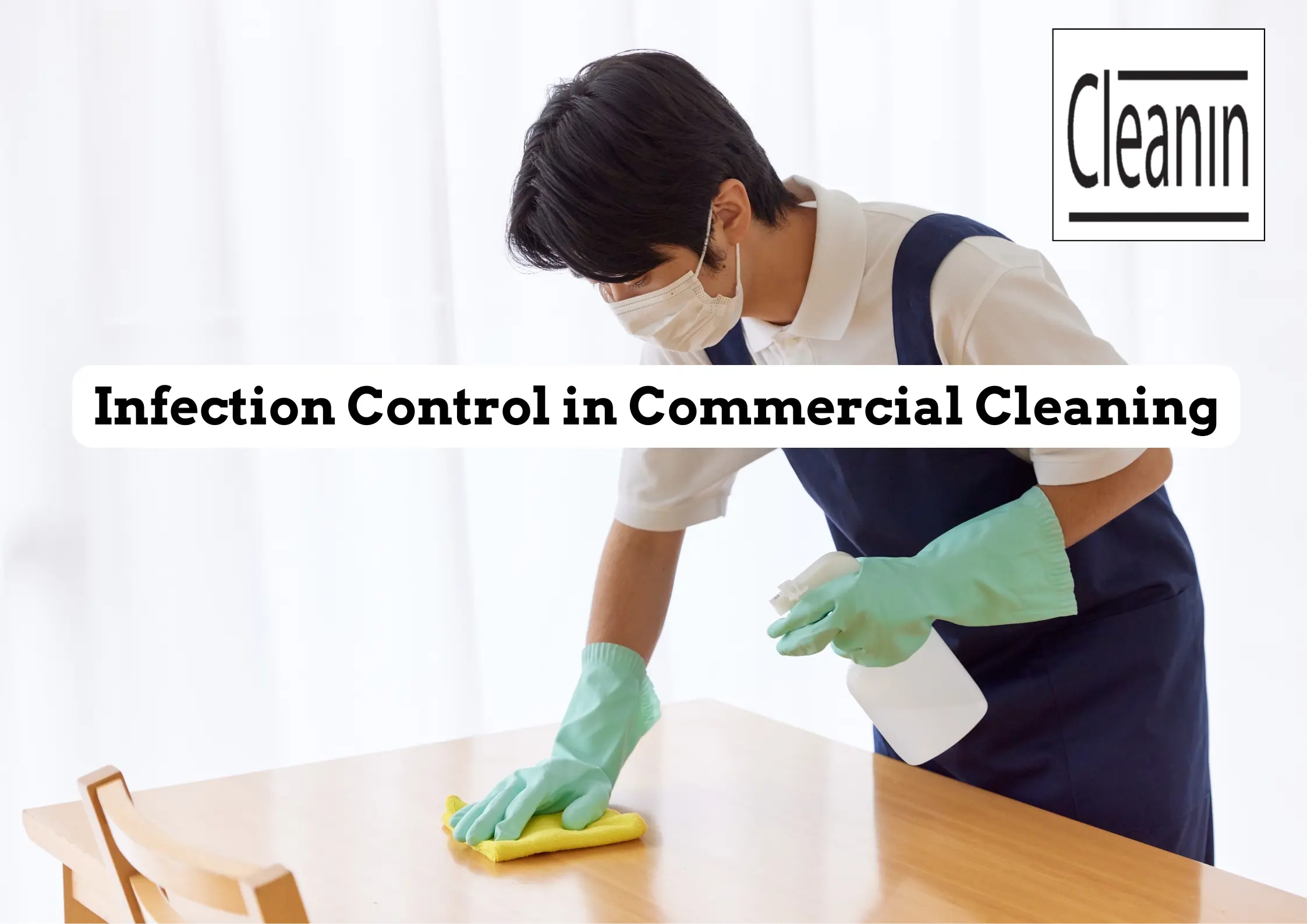
Infection control in commercial cleaning means using environmental cleaning and disinfection to help reduce the spread of germs through a workplace. It focuses on surfaces people touch regularly, such as desks, door handles, and shared equipment. Cleaning and disinfection remove or inactivate microorganisms on these surfaces before they can spread to another surface or person.
This is linked to the chain of infection. It describes the steps a germ needs to move from one person to another. Contaminated surfaces can be one link in that chain.
For example, someone with a cold may touch a door handle and leave germs behind. The next person who touches the same handle may then pick them up. Cleaning helps break this link by removing germs from the surface before they can spread further.
This is why commercial cleaning is about more than appearance. Proper cleaning and disinfection are practical ways to help reduce the spread of illness through a workplace.
It is also important to be clear about what commercial infection control does and does not involve. A commercial cleaner is not carrying out the same clinical infection-control processes used in hospitals and other healthcare settings. Those settings have different requirements because they care for patients who may be more vulnerable to infection.
In commercial cleaning, the focus is on environmental infection prevention. This means using appropriate cleaning methods and disinfection to help reduce transmission risk in places such as offices, gyms, and restaurants.
The goal is not to create a sterile environment. It is to reduce the opportunity for contaminated surfaces to help spread illness between the people who use a facility.
What is the difference between cleaning and disinfecting?
Cleaning physically removes dirt, grime, and germs from a surface using detergent and water. Disinfecting uses a chemical product to kill or inactivate germs that remain on the surface. In simple terms, cleaning removes material from the surface, while disinfection acts on the microorganisms that remain afterwards.
They are two different processes. Both can play a role in infection control, depending on the surface, setting, and level of contamination.
Cleaning does more than many people realise. Wiping a surface with detergent and water physically removes dirt, organic matter, and many germs. In many workplace settings, proper routine cleaning is enough. Official guidance generally recommends routine detergent cleaning for most areas, with disinfection used when it is needed.
Disinfection is an additional step where it is appropriate. It uses a chemical product to kill or inactivate microorganisms that may remain after cleaning. It may be needed for certain high-touch surfaces or areas where contamination is more likely.
There is also an important condition to remember. Disinfectants work best when applied to a properly cleaned surface. Dirt and organic matter can interfere with the disinfectant and reduce its effectiveness.
That is why cleaning and disinfection are not interchangeable. Where both are required, cleaning comes first and disinfection follows. The order matters, and it is worth looking at how the two steps should be carried out in practice.
Which types of surfaces need the most attention for infection control?
The surfaces that need the most attention are generally the ones people touch frequently. These are known as high-touch surfaces. Door handles, taps, light switches, and shared keyboards are common examples.
Surfaces that people rarely touch, such as floors and walls, generally present a lower opportunity for hand-to-person transmission. Shared equipment sits somewhere in between. The level of attention it needs depends on how often it is handled, how many people use it, and the setting.
High-Touch Surfaces
High-touch surfaces are contacted repeatedly throughout the day. Examples include door handles, taps, light switches, lift buttons, handrails, shared desks, and touchscreens.
Each contact creates an opportunity for microorganisms to be transferred between hands and surfaces. That is why these surfaces are an important focus of routine cleaning and disinfection.
They may also become contaminated again soon after cleaning. In busy shared settings, they may therefore need more frequent attention than surfaces that people rarely touch. The exact frequency depends on the facility, how the space is used, and the level of contamination risk.
Minimally Touched Surfaces
Minimally touched surfaces include floors, walls, ceilings, and similar areas. People do not usually touch these surfaces with their hands, so they generally have fewer opportunities to contribute to hand-to-person transmission.
These surfaces still need regular cleaning. The frequency depends on the facility and how the area is used. Visible spills and soiling should also be cleaned when they occur.
The aim is to match cleaning effort to the way each surface is used. High-touch areas may need more frequent attention, while minimally touched surfaces can usually follow their own routine cleaning schedule.
Shared Equipment and Electronics
Shared equipment and electronics can need extra attention because many people may use the same item. Examples include keyboards, phones, EFTPOS terminals, printers, and kitchen appliances.
These items also need a suitable cleaning method. Electronics should not be sprayed directly unless the manufacturer specifically allows it. Instead, the appropriate product can usually be applied to a cloth before wiping the surface.
Because shared equipment is handled frequently and can be easy to overlook, it can become a weak point in an otherwise well-planned cleaning routine. Including these items in the cleaning schedule helps ensure that frequently handled surfaces are not missed.
What makes environmental cleaning effective at reducing infection?
Effective environmental cleaning depends on three things: using the right product for the job and following its contact time, cleaning in an order that avoids re-contaminating cleaned areas, and keeping cleaning equipment hygienic and separated by area.
Each of these can affect how well a cleaning routine works. A problem with any one of them can reduce the effectiveness of the overall process.
Correct Product and Contact Time
A disinfectant needs to be suitable for the surface and used according to the product instructions. It also needs enough contact time to work. Contact time is the period the surface must remain wet with the disinfectant for it to achieve its stated effect.
Wiping the product off too early may reduce its effectiveness. The product also needs to be compatible with the surface. Using the wrong product can damage a material or may not provide the intended level of disinfection.
Product compliance is another part of this process. The disinfectant should have a claim that is appropriate for its intended use. Understanding these claims helps when choosing which products a cleaning team uses on different surfaces.
Cleaning Order: High to Low, Clean to Dirty
Effective cleaning follows a logical order. Clean higher surfaces before lower ones, and move from cleaner areas towards more contaminated areas.
Working from high to low helps prevent dust and debris from falling onto surfaces that have already been cleaned. Working from clean to dirty also reduces the chance of carrying contamination from a more contaminated area into a cleaner one.
Following this order helps prevent cleaning equipment and debris from re-contaminating areas that have already been cleaned.
Equipment Hygiene and Separation
Cleaning equipment needs to be kept clean and handled properly. Otherwise, it can transfer contamination from one surface to another.
Cloths and mops should be cleaned after use and stored in a way that allows them to dry properly. Damp equipment can support microbial growth and may transfer contamination when it is used again.
Equipment should also be separated by area where appropriate. For example, a cloth used to clean a bathroom should not then be used on an office desk. This is one of the reasons colour-coded cleaning systems are used. They help teams identify which equipment is assigned to different areas and reduce the risk of cross-contamination.
Good cleaning methods can be undermined when contaminated equipment is used. Keeping equipment clean, dry, and appropriately separated is therefore an important part of an effective environmental cleaning routine.
How does infection-control cleaning differ across facility types?
The basic principles are similar across different facilities. Clean before disinfecting, give extra attention to frequently touched surfaces, and keep cleaning equipment clean and appropriately separated.
What changes is the way each facility is used. Different facilities have different surfaces, activities, levels of contact, and contamination risks. An office, gym, restaurant, and healthcare facility therefore need cleaning programmes that reflect how their spaces are used.
Offices and Strata
Offices and strata common areas have many shared touchpoints. These include door handles, lift buttons, kitchen surfaces, bathrooms, and hot desks used by different people.
These areas need regular attention because many people may touch the same surfaces throughout the day. Floors and other general surfaces still need routine cleaning, but frequently touched surfaces may require more attention when the goal is to reduce the spread of illness.
Gyms and Fitness Facilities Centre
Gyms have several surfaces that are touched frequently. These include equipment handles, mats, benches, weights, and other shared equipment.
Users may come into direct contact with these surfaces through their hands or skin. Sweat and frequent use can also add to the cleaning requirements.
For this reason, cleaning and appropriate disinfection of shared equipment and frequently touched surfaces are important parts of a gym cleaning programme. The exact approach should reflect the equipment, manufacturer’s instructions, how often it is used, and the facility’s cleaning procedures.
Restaurants Facilities
Restaurants have to consider both environmental infection control and food safety. Food-contact surfaces, preparation areas, and equipment need to be cleaned in a way that supports safe food handling.
Areas used for food preparation also need to be kept separate from areas such as washrooms. Product selection and cleaning methods must be suitable for the surface and intended use.
Restaurants also have the usual shared touchpoints found in other commercial facilities. Tables, door handles, menus, payment terminals, and other frequently touched surfaces may need regular attention as part of the broader cleaning programme.
Medical Centre
Medical centre and other higher-risk settings have additional requirements. Medical centres, aged-care facilities, and similar environments may care for people who are more vulnerable to infection.
Cleaning in these settings can involve specific infection-control procedures, approved products, equipment requirements, colour-coding systems, and other controls. These requirements are different from those used for general commercial facilities.
A general commercial cleaning programme should not simply be applied to a healthcare setting without considering its specific requirements. Medical centre cleaning is a specialist area that needs to be planned around the facility, the people using it, and the applicable infection-control requirements.
What should a facility manager check about a contractor’s infection-control practice?
A facility manager should check whether a contractor has a clear and consistent approach to infection-control cleaning. This includes cleaning before disinfection, giving extra attention to high-touch surfaces, using suitable products with the required contact time, and keeping cleaning equipment clean and separated by area.
The contractor should also be able to explain how these steps are applied on the site. Infection control is not always visible, so a clean-looking facility alone does not show how well the process is being followed.
Check the method, not just the result:
- Clean before disinfecting. The contractor should treat cleaning and disinfection as separate steps and carry them out in the correct order. A simple spray-and-wipe approach should not be assumed to replace both steps.
- Identify high-touch surfaces. The contractor should be able to identify the frequently touched surfaces on your site and explain how often they are cleaned and disinfected. The frequency should reflect how the facility is used rather than applying one schedule to every surface.
Check the products and equipment:
- Use suitable products and follow contact time. The contractor should know which disinfectants are suitable for each surface and follow the product’s required contact time. Wiping the product away too early can reduce its effectiveness.
- Keep equipment clean and separated. Cleaning equipment should be cleaned, dried, stored properly, and separated by area where appropriate. Colour-coded systems or equivalent controls can help reduce the risk of transferring contamination between areas.
Check the system behind it:
- Use a documented cleaning process. The contractor should have a documented process that explains what is cleaned, where it is cleaned, how often it is done, and which products or methods are used. This creates a consistent approach instead of leaving important decisions to individual cleaners.
- Train staff. Cleaning staff should understand the procedures they are expected to follow and why they matter. Training helps ensure that cleaning sequences, frequencies, product use, and equipment controls are followed consistently.
Because infection control cannot be judged by appearance alone, these checks help a facility manager understand what happens behind the visible result. A contractor should be able to explain its cleaning method and show how that method is applied on site.
A tidy-looking facility is useful, but it is only part of the picture. The process behind that result is what a facility manager needs to verify.
Infection Control That Works Beyond What’s Visible
A wiped surface and a properly cleaned one can look identical. That is why effective infection control depends on the cleaning method, not appearance alone.
Cleanin follows a documented cleaning and disinfection process across Greater Sydney. The process prioritises high-touch surfaces, follows cleaning before disinfection, and keeps equipment clean and appropriately separated by area.
It is applied across offices, strata buildings, gyms, restaurants, warehouses, and industrial sites.
Request a commercial cleaning service quote to see how the process can be applied to your facility.