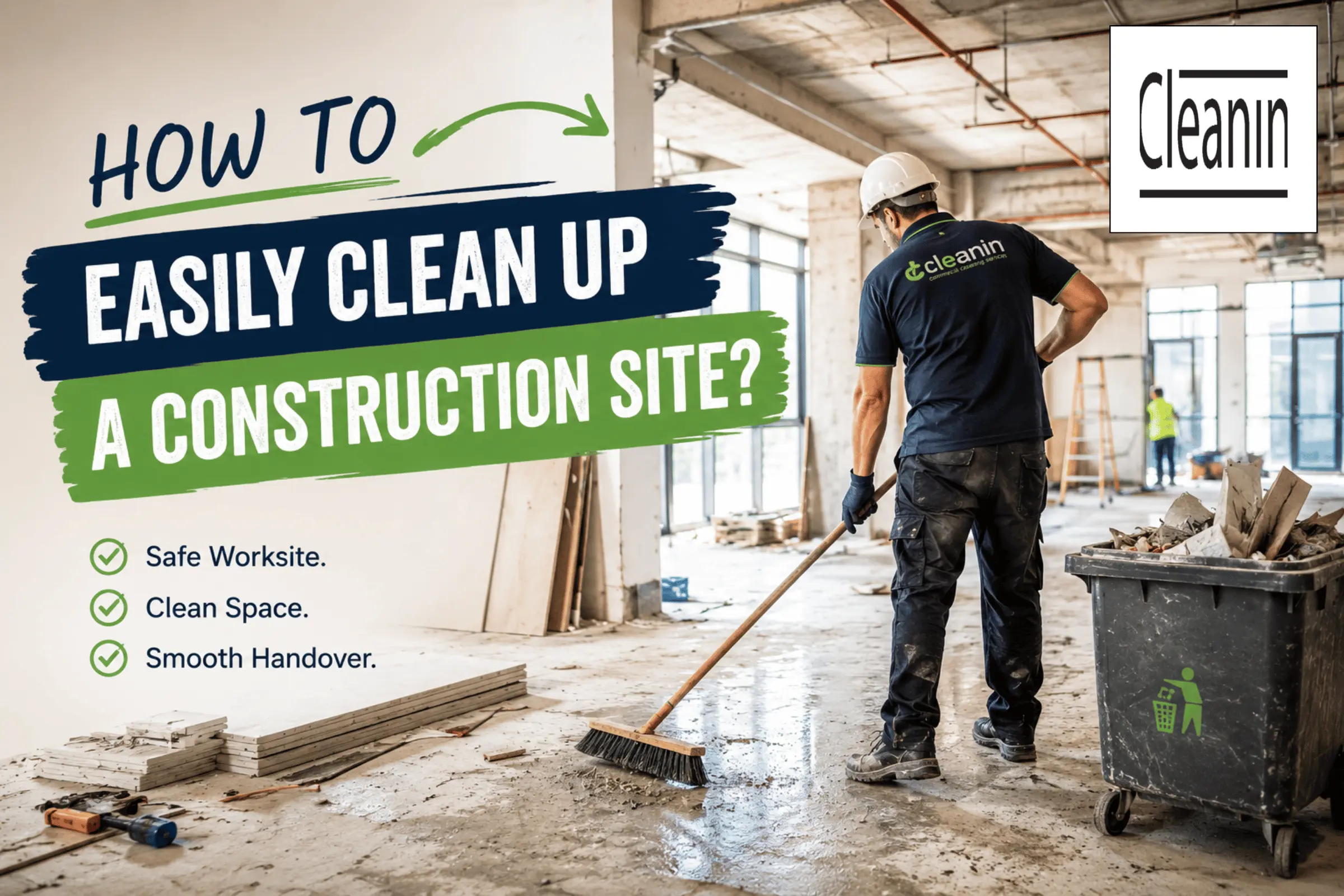
The easiest way to clean up a construction site is to follow a structured cleaning process that removes construction waste and debris first, controls dust before it spreads, cleans every area from top to bottom, and finishes with a detailed inspection before handover. Breaking the cleanup into daily site housekeeping, progressive cleaning during construction and a final builders’ clean keeps the site safer, more organised, and easier to manage while reducing the time and effort required at project completion.
According to the Australian Bureau of Statistics (ABS), the construction and demolition industry is one of Australia’s largest waste-producing sectors, generating nearly 30 million tonnes of waste each year. Managing this massive footprint starts on the ground by removing construction waste efficiently, controlling dust before it spreads, cleaning each area from top to bottom and finishing with a detailed inspection before handover.
Whether you’re building a commercial office, retail store, medical centre, warehouse, school or apartment complex, regular construction site cleaning helps reduce safety hazards, protect newly installed finishes, improve productivity and support compliance with NSW workplace health and safety requirements.
While site teams can manage routine housekeeping and debris removal, larger projects often require professional construction cleaning services to remove fine construction dust, clean completed surfaces, restore flooring and prepare the property for occupancy. Partnering with an experienced team at the builders clean through to sparkle clean stages ensures every surface meets handover standard without delaying practical completion.
In this guide, you’ll learn how to clean up a construction site efficiently, understand the different stages of construction cleaning, discover the essential equipment and safety practices involved, avoid common cleanup mistakes, and know when to hire a professional construction site cleaning service.
What are the Construction Site Cleaning Stages?
Cleaning a construction site isn’t a one-time task completed after the last contractor leaves. It takes place in several stages throughout the project, with each stage serving a different purpose.
The construction site cleaning stages are:
- Daily Site Housekeeping
- Progressive Cleaning During Construction
- Builders Clean
- Final Clean
- Sparkle Clean Before Handover
1. Daily Site Housekeeping
Daily site housekeeping is carried out throughout the construction project to keep work areas clean, organised, and safe. It focuses on removing waste, controlling dust, and eliminating hazards that could affect workers or interrupt construction activities.
Typical daily housekeeping tasks include:
- Collect construction debris and waste.
- Keep walkways and emergency exits clear.
- Sweep high-traffic work areas.
- Empty rubbish bins and skip bins as needed.
- Control dust around active work zones.
- Organise tools, equipment, and materials.
2. Progressive Cleaning During Construction
Progressive cleaning takes place as different stages of the project are completed. Instead of allowing debris and dust to accumulate, completed areas are cleaned before the next trade begins work. This protects finished surfaces and helps improve productivity across the site.
Progressive cleaning commonly includes:
- Removing packaging and leftover materials.
- Vacuuming construction dust.
- Cleaning newly installed windows and frames.
- Wiping completed walls, doors, and joinery.
- Cleaning floors before the next trade starts.
- Disposing of waste through appropriate recycling and skip bins.
3. Builders Clean
A builder’s clean is performed once major construction work has finished but before the final inspection or handover. At this stage, most tools, equipment, and building materials have been removed, allowing cleaners to focus on eliminating construction residue and preparing the property for detailed finishing.
A builders clean typically includes:
- Removing plaster, paint, silicone, and adhesive residue.
- Vacuuming and removing fine construction dust.
- Cleaning internal windows and glass.
- Wiping walls, doors, skirting boards, and fixtures.
- Cleaning kitchens, bathrooms, and amenities.
- Vacuuming and mopping all flooring.
4. Final Clean
The final clean takes place after all defects have been rectified and the remaining trades have completed their work. The goal is to ensure every area is clean, presentable, and ready for occupancy or client inspection.
Final cleaning generally includes:
- Detailed cleaning of all surfaces and fixtures.
- Spot cleaning walls, doors, and glass.
- Cleaning light switches, power points, and door hardware.
- Sanitising kitchens and bathrooms.
- Removing fingerprints, smudges, and remaining dust.
- Conducting a final quality inspection.
5. Sparkle Clean Before Handover
A sparkle clean is the last stage of the construction cleaning process and is completed immediately before the property is handed over to the client or occupants. It focuses on presentation, ensuring the building looks polished, dust-free, and ready for immediate use.
Unlike a builder’s clean, which removes construction residue, a sparkle clean enhances the appearance of the completed project by addressing the smallest finishing details.
Typical sparkle cleaning tasks include:
- Polish glass, mirrors, and stainless steel surfaces.
- Remove fingerprints and smudges from finished fixtures.
- Dust vents, ledges, and high-level surfaces.
- Polish floors where required.
- Perform a final touch-up of all completed areas.
- Complete a walkthrough to ensure the property is presentation-ready.
How to Easily Clean Up a Construction Site (Step-by-Step)?
The step-by-step process to easily clean up a construction site is:
- Develop a Cleaning Plan
- Remove Construction Waste
- Control Dust Before Cleaning
- Clean from Top to Bottom
- Clean Floors and High-Traffic Areas
- Detail Finished Fixture
- Inspect Before Handover
1. Develop a Cleaning Plan
Start by creating a cleaning plan that outlines what needs to be cleaned, who is responsible, and when each task should be completed. Scheduling daily housekeeping, progressive cleaning, and final cleaning at different construction stages prevents waste and dust from accumulating, making the overall cleanup faster and more manageable.
Your cleaning plan should:
- Assign cleaning responsibilities to workers or contractors.
- Schedule daily and weekly cleaning tasks.
- Identify areas requiring specialist cleaning.
- Plan waste disposal and recycling.
- Prepare for inspections and project handover.
2. Remove Construction Waste
Before detailed cleaning begins, remove all construction waste from the site. Clearing large debris first creates safe access to work areas and allows surfaces to be cleaned more effectively.
Separate waste into appropriate categories wherever possible to support recycling and proper disposal.
Prioritise the removal of:
- Timber offcuts
- Cardboard and packaging
- Plastic wrapping
- Metal scraps
- Bricks and concrete debris
- Plasterboard offcuts
- General construction waste
3. Control Dust Before Cleaning
Construction dust can easily become airborne during cleaning, making surfaces dirty again and reducing indoor air quality. If you’re unsure about the safest removal methods, learn how to clean construction dust safely before starting detailed cleaning.
Good dust control practices include:
- Vacuum dust using a HEPA-filter industrial vacuum.
- Damp wipe surfaces instead of dry dusting.
- Clean ventilation grilles and air vents.
- Isolate completed areas from active construction where possible.
4. Clean from Top to Bottom
Cleaning should always begin with the highest surfaces and work downward. This prevents dust and debris from falling onto areas that have already been cleaned, reducing the need for repeated work.
A typical cleaning sequence includes:
- Ceilings and exposed beams
- Air vents and light fittings
- Walls and windows
- Doors, frames, and joinery
- Fixtures and fittings
- Floors
5. Clean Floors and High-Traffic Areas
Floors often collect the highest concentration of dust, dirt, and construction residue. Entrances, corridors, stairwells, and shared access areas should receive particular attention because they experience continuous foot traffic throughout the project.
Focus on:
- Vacuuming fine dust and debris.
- Sweeping hard surfaces.
- Mopping or machine scrubbing floors.
- Removing paint, adhesive, and silicone residue.
- Pressure cleaning external pathways where required.
6. Detail Finished Fixtures
Once major cleaning is complete, focus on the finer details that contribute to a professional finish. Newly installed fixtures often collect fingerprints, dust, protective film residue, and construction marks during the final stages of a project.
Common finishing tasks include:
- Clean internal and external glass.
- Polish stainless steel fixtures.
- Wipe cabinetry and benchtops.
- Clean power points and light switches.
- Remove stickers and protective films.
- Polish taps, handles, and hardware.
7. Inspect Before Handover
The final step is a thorough inspection of the entire site to ensure every area meets project and client expectations. A walkthrough allows builders, site supervisors, or professional cleaners to identify missed cleaning tasks or defects before practical completion.
During the final inspection:
- Check each room against the cleaning checklist.
- Confirm all waste has been removed.
- Inspect windows, floors, and finished surfaces.
- Ensure kitchens, bathrooms, and amenities are presentation-ready.
- Complete any remaining touch-up cleaning before handover.
What are the essential construction site cleaning equipment?
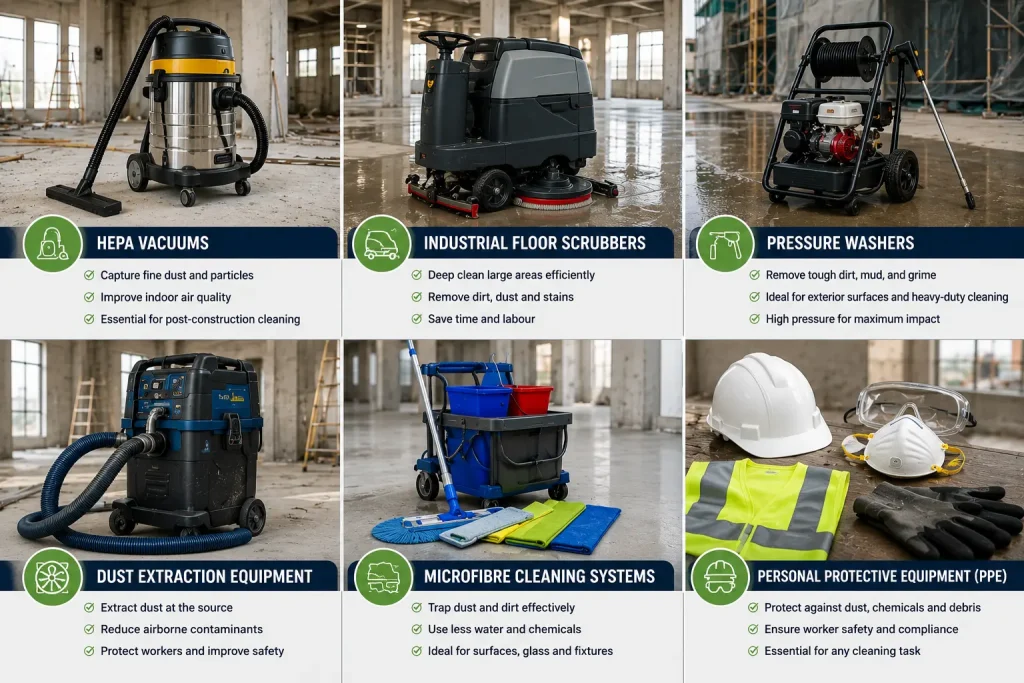
Using the right cleaning equipment makes construction site cleanup faster, safer, and more effective. Some of the essential construction site cleaning equipment are:
- HEPA vacuums
- Industrial Floor Scrubbers
- Pressure Washers
- Dust Extraction Equipment
- Microfibre Cleaning Systems
- Personal Protective Equipment (PPE)
1. HEPA Vacuums
Construction dust, including fine plaster, concrete, and timber particles, can quickly become airborne if not removed correctly. HEPA (High-Efficiency Particulate Air) vacuums capture fine dust before it spreads, improving air quality and reducing the need for repeated cleaning.
HEPA vacuums are ideal for:
- Removing fine construction dust
- Cleaning carpets and hard floors
- Vacuuming completed rooms before finishing
- Cleaning around newly installed fixtures
- Reducing airborne dust during post-construction cleaning
2. Industrial Floor Scrubbers
Construction floors often accumulate dirt, mud, paint residue, and heavy foot traffic throughout a project. Industrial floor scrubbers provide a deeper clean than traditional mops by scrubbing and drying floors in a single pass, making them ideal for large commercial sites.
They’re commonly used for:
- Concrete floors
- Epoxy flooring
- Vinyl and tiled surfaces
- Warehouse floors
- Commercial office and retail developments
3. Pressure Washers
Pressure washers use high-pressure water to remove stubborn dirt, mud, concrete residue, and stains from exterior surfaces. They are particularly useful during the final stages of construction when preparing outdoor areas for practical completion or client handover.
Common applications include:
- Building entrances
- Footpaths and walkways
- Loading docks
- Car parks
- External walls
- Outdoor hard surfaces
4. Dust Extraction Equipment
Dust extraction equipment captures dust directly at the source during construction activities, helping reduce airborne particles before they settle on completed surfaces. This improves site cleanliness, supports worker safety, and reduces the amount of cleaning required during the final stages of the project.
Dust extraction systems are commonly used for:
- Concrete cutting
- Grinding and sanding
- Drilling
- Demolition work
- Woodworking and joinery
5. Microfibre Cleaning Systems
Microfibre cloths and mop systems effectively trap dust, dirt, and fine particles without spreading them across surfaces. They’re suitable for detailed cleaning during builders’ cleans and final cleans because they leave minimal lint and reduce the need for harsh chemicals.
They are commonly used to clean:
- Windows and glass
- Benchtops and cabinetry
- Stainless steel surfaces
- Doors and skirting boards
- Light switches and fixtures
- Finished joinery
6. Personal Protective Equipment (PPE)
Construction site cleaning often exposes workers to dust, debris, chemicals, and sharp materials. Wearing the correct Personal Protective Equipment (PPE) helps minimise these risks and supports compliance with NSW Work Health and Safety (WHS) requirements.
Essential PPE includes:
- Safety gloves
- Safety glasses or goggles
- P2 respirators or dust masks
- Steel-cap safety boots
- High-visibility clothing
- Hard hats where required
- Hearing protection when operating noisy equipment
Selecting the appropriate cleaning equipment for each stage of construction improves efficiency, enhances safety, and delivers better cleaning results. While routine housekeeping may only require basic tools, builders’ cleaning, post-construction cleaning, and final handover cleaning often rely on specialised commercial equipment to remove fine dust, restore finished surfaces, and prepare the property for inspection or occupancy.
What are the Common Construction Site Cleaning Mistakes?
Some of the common construction site cleaning mistakes are:
- Waiting Until the End of the Project to Clean
- Not Controlling Construction Dust
- Mixing Different Types of Waste
- Using the Wrong Cleaning Products
- Cleaning Floors Before High-Level Areas
- Overlooking High-Touch and Detailed Areas
- Skipping the final inspection
- Relying Only on Site Staff for Final Cleaning
1. Waiting Until the End of the Project to Clean
One of the biggest mistakes is leaving all cleaning until construction is complete. Allowing waste, dust, and debris to build up throughout the project creates unnecessary hazards and makes the final clean more time-consuming and expensive.
2. Not Controlling Construction Dust
Sweeping dry dust without proper equipment can spread fine particles throughout the building, causing them to settle on finished surfaces and reducing indoor air quality.
3. Mixing Different Types of Waste
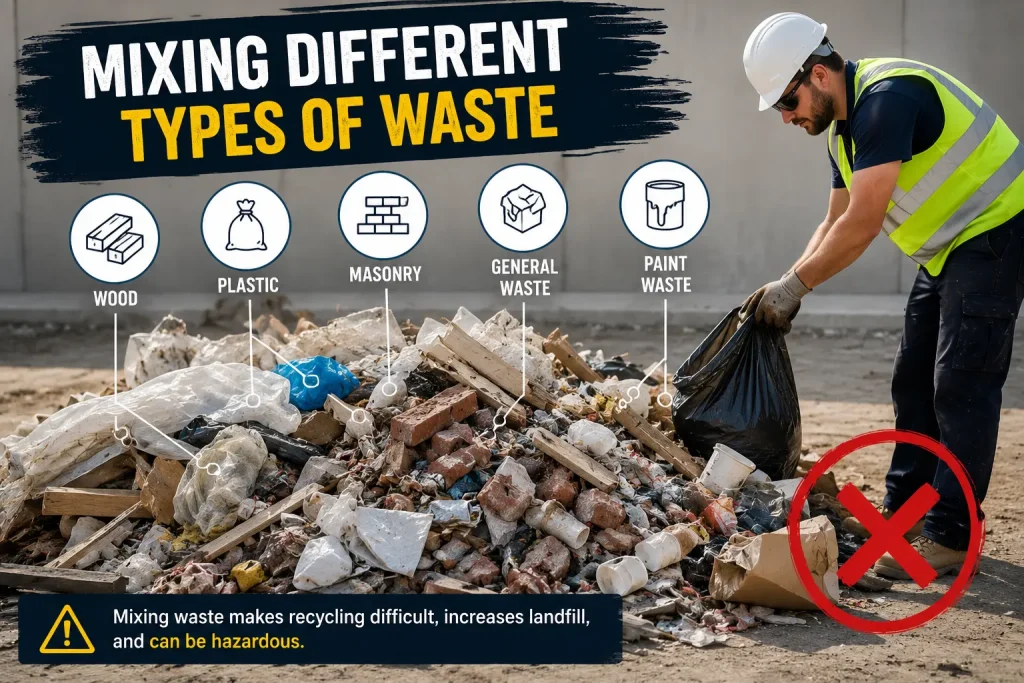
Placing all construction waste into one container makes recycling more difficult and can increase disposal costs. It may also lead to incorrect handling of hazardous materials.
4. Using the Wrong Cleaning Products
Different building materials require different cleaning methods. Using unsuitable chemicals or abrasive tools can damage glass, stainless steel, timber, stone, painted surfaces, and other newly installed finishes.
5. Cleaning Floors Before High-Level Areas
Cleaning floors too early often results in dust and debris falling from ceilings, walls, light fittings, or windows, requiring the floors to be cleaned again.
6. Overlooking High-Touch and Detailed Areas
Construction cleanup often focuses on large surfaces while smaller details are missed. Fingerprints, stickers, adhesive residue, and dust on fixtures can leave an unfinished appearance before handover.
7. Skipping the Final Inspection
Even a thorough clean can leave behind minor issues if no final walkthrough is completed. Missing these details may result in client complaints, delayed handovers, or additional return visits.
8. Relying Only on Site Staff for Final Cleaning
While construction crews can manage routine housekeeping, they often don’t have the specialised equipment or experience needed for builders’ cleaning and post-construction detailing. Fine dust, high-level surfaces, and stubborn construction residue typically require more than standard cleaning methods.
Why Choose Cleanin’s Construction Site Cleaning Services in NSW?
Some of the reasons to choose cleanin’s construction site cleaning services are:
1. Comprehensive Builders Cleaning Services
Cleanin’s builders cleaning service removes construction debris, dust, adhesive residue, paint splatters, and other building waste once major construction work is complete. The result is a clean, organised site that’s ready for inspections, defect rectification, or the next phase of the project.
2. Professional Post-Construction Cleaning
Fine construction dust often remains long after the building work has finished. Cleanin’s post-construction cleaning service thoroughly cleans floors, windows, fixtures, joinery, kitchens, bathrooms, and other finished surfaces to prepare the property for occupancy or client handover.
3. Detailed Final and Sparkle Cleaning
The final presentation of a project matters. Cleanin performs detailed final and sparkle cleans that remove fingerprints, smudges, protective film residue, and remaining dust, leaving every area polished and ready for practical completion or handover.
4. Commercial Construction Cleaning Expertise
Cleanin delivers tailored construction cleaning solutions for a wide range of commercial developments across NSW, including:
- Commercial office buildings
- Retail stores and shopping centres
- Schools and educational facilities
- Medical centres and healthcare facilities
- Warehouses and industrial facilities
- Apartment developments
- Strata and mixed-use buildings
- Hospitality venues
5. Flexible Cleaning Schedules
Every construction project operates on a different timeline. Cleanin offers flexible scheduling, including progressive cleaning during construction, after-hours cleaning, builders cleans, and final handover cleaning, ensuring cleaning services align with your project milestones.
6. Experienced and Fully Equipped Professionals
Cleanin’s trained commercial cleaners use specialised equipment—including HEPA vacuums, industrial floor scrubbers, pressure washers, and dust extraction systems—to remove construction dust, debris, and residue efficiently while protecting newly finished surfaces.
7. Supporting Site Safety and Compliance
Maintaining a clean construction site contributes to safer working conditions and supports compliance with NSW Work Health and Safety (WHS) requirements. Cleanin follows structured cleaning processes that help reduce trip hazards, manage construction waste responsibly, control dust, and prepare sites for inspections and practical completion.
8. Fast Turnaround for Project Handover
Construction deadlines are tight, and delays can be costly. Cleanin responds quickly to project schedules, delivering builders cleans, post-construction cleans, and final handover cleaning on time, so your site is ready when you need it.
Request a Free Construction Site Cleaning Quote
Whether you need daily site housekeeping, builders cleaning, post-construction cleaning, or a final sparkle clean, Cleanin can tailor a cleaning solution to suit your project.
Contact Cleanin today for a free, no-obligation quote and discover how our professional construction site cleaning services can help keep your NSW project clean, compliant, and ready for a successful handover.


