Office cleaning is more than a routine maintenance task. It plays an important role in protecting employee health, reducing workplace hazards, and supporting business compliance. In New South Wales, the Work Health and Safety (WHS) Act 2011 requires businesses to provide and maintain a safe work environment without health risks. As a result, workplace cleanliness is an important part of meeting these obligations.
While the Act does not mandate how often an office must be cleaned, it does require businesses to identify workplace risks and implement appropriate control measures. This means your office cleaning schedule should reflect factors such as workplace occupancy, shared facilities, high-touch surfaces, and the nature of your operations rather than follow a one-size-fits-all timetable.
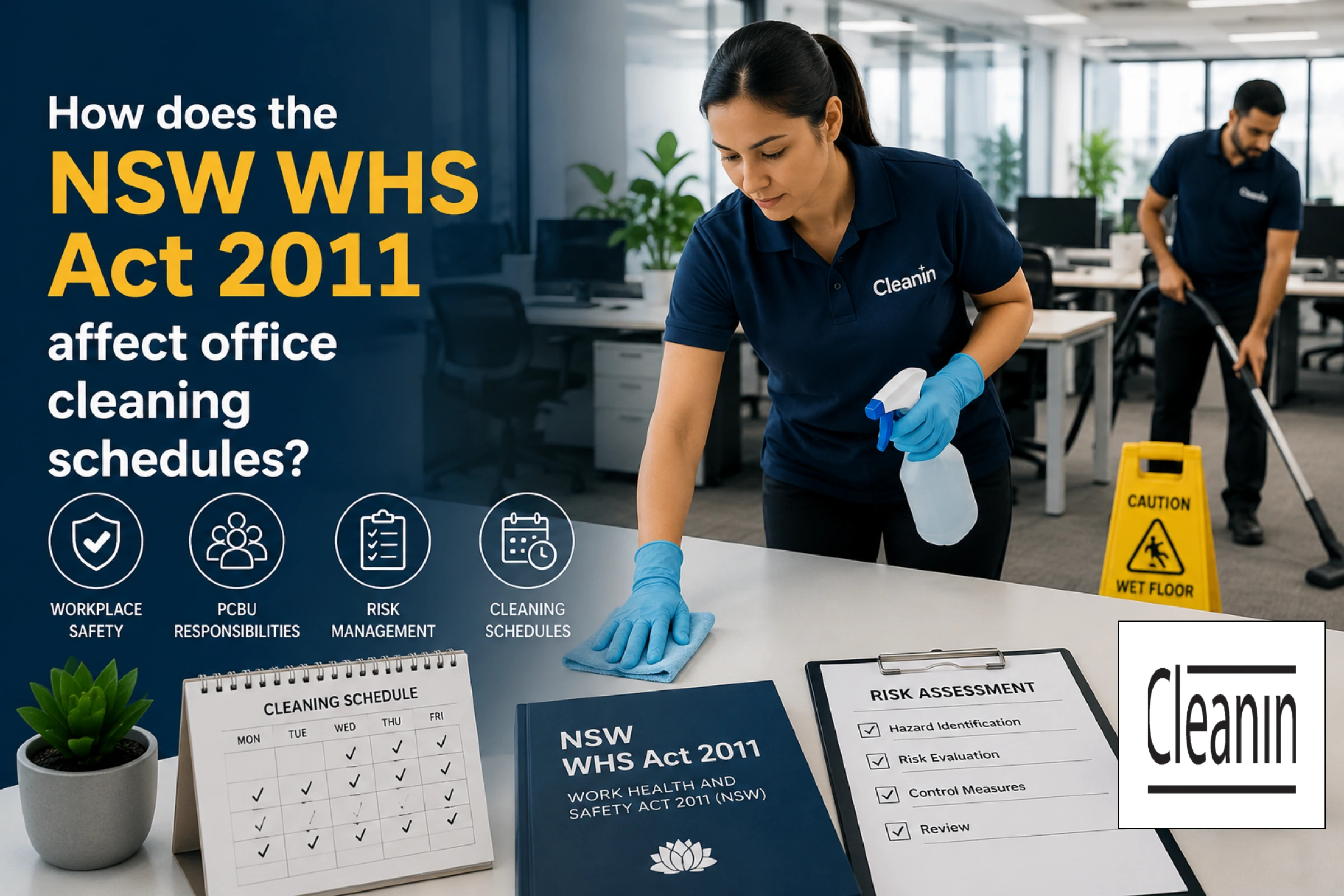
Understanding WHS Cleaning Compliance in NSW helps businesses develop risk-based cleaning schedules that align with workplace safety requirements. This guide explains how the NSW WHS Act 2011 affects office cleaning schedules, what responsibilities businesses and commercial cleaning providers have under workplace health and safety laws, and how a risk-based cleaning plan can help maintain a cleaner, safer, and more compliant workplace.
Whether you manage a corporate office, medical practice, educational facility, or multi-tenant commercial building, understanding these requirements can help you choose a professional commercial cleaning service that supports your operational and compliance goals.
What Is the NSW WHS Act 2011?
The Work Health and Safety (WHS) Act 2011 (NSW) is the primary workplace health and safety law that governs how businesses identify, manage, and minimise workplace risks. Rather than mandating fixed office cleaning frequency or specific cleaning methods, the Act requires businesses to provide and maintain a safe work environment without health risks, so far as is reasonably practicable.
For office-based businesses, this means workplace cleanliness forms part of an effective risk management strategy. Cleaning helps reduce hazards such as the spread of illness, contamination of shared spaces, and slips caused by spills. As workplace conditions change, office cleaning schedules should also be reviewed to ensure they continue to address identified risks.
Understanding the purpose of the WHS Act and the responsibilities it places on businesses and commercial cleaning providers provides the foundation for developing cleaning schedules that support workplace safety and compliance.
Purpose of the WHS Act
The purpose of the NSW WHS Act 2011 is to protect the health, safety, and welfare of workers and anyone else who may be affected by workplace activities. It establishes a legal framework that requires businesses to identify hazards, assess risks, and implement suitable control measures before incidents occur.
The Act does not specify how often an office should be cleaned. Instead, it expects businesses to determine cleaning frequencies based on workplace risks. For example, an office with high employee occupancy, shared kitchens, meeting rooms, and frequent visitor access will generally require more regular cleaning than a small office with limited daily activity.
This flexible, risk-based approach allows businesses to develop office cleaning schedules that reflect their workplace environment rather than following a fixed timetable.
Who Has Responsibilities Under the WHS Act?
The WHS Act places responsibilities on everyone who influences workplace health and safety. The primary duty belongs to the Person Conducting a Business or Undertaking (PCBU), which includes companies, partnerships, sole traders, and organisations that manage workplaces.
Other duty holders include officers, workers, contractors, and commercial cleaning companies. Each has a role in maintaining a safe workplace and reducing health and safety risks.
For commercial cleaning providers, these responsibilities extend beyond keeping premises clean. They include handling chemicals safely, using equipment correctly, following safe work procedures, wearing appropriate personal protective equipment (PPE), and carrying out cleaning activities without creating additional hazards.
How the General Duty of Care Relates to Office Cleaning?
One of the key principles of the WHS Act is the general duty of care, which requires businesses to ensure, so far as is reasonably practicable, the health and safety of workers and others affected by their operations.
Although the legislation does not mandate a cleaning schedule, this duty influences how businesses plan office cleaning. Cleaning frequencies should reflect factors such as workplace occupancy, visitor traffic, shared amenities, high-touch surfaces, and seasonal health risks. As these factors change, businesses should review and adjust their cleaning schedules to ensure they remain effective.
Working with a professional commercial cleaning service can help businesses implement a risk-based cleaning program that supports workplace hygiene, employee wellbeing, and compliance with the WHS Act.
How Does the WHS Act Influence Office Cleaning Schedules?
The NSW Work Health and Safety (WHS) Act 2011 does not specify how often an office should be cleaned. Instead, it requires businesses to identify workplace hazards, assess health and safety risks, and implement appropriate control measures. As a result, office cleaning schedules should be developed according to the specific risks present in each workplace rather than following a standard daily or weekly routine.
Factors such as workplace occupancy, visitor numbers, shared amenities, business operations, and seasonal health risks all influence how frequently different areas require cleaning. By adopting a risk-based approach, businesses can prioritise cleaning where it has the greatest impact on workplace health, hygiene, and safety.
Risk Assessments Determine Cleaning Frequency
One of the most significant ways the WHS Act influences office cleaning schedules is through workplace risk assessments. Before deciding how often an office should be cleaned, businesses should identify potential hazards that may affect the health and safety of employees, visitors, and contractors.
A workplace risk assessment considers factors such as the number of people using the workplace, the type of work performed, shared facilities, and areas that experience frequent contact. The results help determine whether certain spaces require daily, multiple daily, or less frequent cleaning.
For example, a busy corporate office with hundreds of employees and regular client visits will typically require a more comprehensive cleaning schedule than a small office with limited occupancy. This risk-based approach ensures cleaning resources are allocated where they are needed most.
Higher-Risk Areas Require More Frequent Cleaning
The WHS Act encourages businesses to focus their control measures on areas where health and safety risks are greatest. In an office environment, this means prioritising locations that experience frequent use or have a higher likelihood of contamination.
Higher-risk areas commonly include:
- Reception and waiting areas
- Building entrances and lift foyers
- Meeting rooms
- Shared workstations
- Kitchens and lunchrooms
- Bathrooms
- High-touch surfaces such as door handles, lift buttons, light switches, and shared equipment
These areas are used by multiple people throughout the day, increasing the risk of contamination and illness transmission. Cleaning them more frequently helps reduce workplace hazards and supports a healthier working environment.
Workplace Changes May Require Schedule Adjustments
Office cleaning schedules should not remain static. Under the WHS Act, businesses are expected to review workplace control measures whenever risks change. This means cleaning schedules should be updated when workplace conditions increase or reduce the level of health and safety risk.
Businesses may need to review their cleaning frequency when:
- Employee numbers increase
- Visitor traffic becomes heavier
- Office layouts or workspaces change
- Renovation or construction work is carried out
- Seasonal illnesses or infectious disease outbreaks occur
- New workplace activities introduce additional contamination risks
Reviewing cleaning schedules ensures that hygiene measures continue to reflect the current needs of the workplace rather than relying on outdated routines.
Cleaning Schedules Should Be Monitored and Documented
Developing a cleaning schedule is only part of maintaining a safe workplace. Businesses should also monitor whether the schedule remains effective and review it as workplace conditions evolve. Regular reviews help identify areas that may require additional cleaning or adjustments to existing routines.
Documenting cleaning activities also supports a structured approach to workplace hygiene. Although the WHS Act does not require every business to maintain detailed cleaning records, documentation can demonstrate that cleaning forms part of the organisation’s broader risk management process.
Many professional commercial cleaning services provide cleaning schedules, service reports, and quality assurance records that help businesses track completed work, review cleaning performance, and maintain consistent hygiene standards. These records also support ongoing workplace inspections, contractor management, and continuous improvement of office cleaning practices.
What are the Responsibilities of Commercial Cleaning Companies Under WHS?
Commercial cleaning companies play an important role in helping businesses maintain a safe and healthy workplace, but they also have their own legal responsibilities under the NSW Work Health and Safety (WHS) Act 2011. As contractors, they must ensure their cleaning activities do not create risks for their workers, clients, visitors, or anyone else in the workplace.
Meeting these responsibilities goes beyond delivering a clean office. It includes following safe work practices, managing workplace hazards, maintaining equipment, and responding appropriately when safety incidents occur. A professional commercial cleaning service should have documented procedures and trained staff to carry out these responsibilities consistently.
Some of the responsibilities of commercial cleaning companies under WHS are:
- safe chemical handling
- worker safety
- Equipment maintenance
- Incident Reporting
1. Safe Chemical Handling
Cleaning chemicals are essential for removing dirt, disinfecting surfaces, and maintaining workplace hygiene. However, many products can present health or safety risks if they are used or stored incorrectly. Commercial cleaning companies are responsible for ensuring chemicals are handled safely throughout every stage of the cleaning process.
This includes selecting suitable products for different surfaces, following manufacturer instructions, storing chemicals securely, and ensuring workers understand the information provided in Safety Data Sheets (SDS). Appropriate personal protective equipment (PPE) should also be provided whenever chemical exposure could pose a risk.
Safe chemical handling protects cleaning staff while reducing the risk of accidental exposure, property damage, and disruption to workplace operations.
2. Worker Safety
Under the WHS Act, commercial cleaning companies have a duty to protect the health and safety of their employees while they perform cleaning tasks. This begins with identifying potential hazards and implementing control measures before work starts.
Depending on the workplace, cleaners may encounter risks such as wet floors, manual handling, electrical equipment, hazardous substances, or working around employees during business hours. Providing appropriate training, safe work procedures, and suitable PPE helps minimise these risks and enables cleaning staff to work safely in different environments.
A strong focus on worker safety also benefits clients by reducing the likelihood of workplace incidents during cleaning activities.
3. Equipment Maintenance
Cleaning equipment should be maintained in a safe working condition to minimise workplace hazards and deliver consistent cleaning results. Damaged or poorly maintained equipment can create risks such as electrical faults, slips, equipment failure, or ineffective cleaning.
Professional commercial cleaning companies should routinely inspect, service, and replace equipment as required. This applies to commercial vacuum cleaners, floor scrubbers, steam cleaning machines, extension leads, and other tools used during routine cleaning.
Well-maintained equipment not only improves cleaning performance but also helps ensure work is carried out safely and efficiently.
4. Incident Reporting
Despite careful planning, workplace incidents can still occur. Commercial cleaning companies should have clear procedures for reporting hazards, injuries, near misses, chemical spills, or equipment failures that arise during cleaning operations.
Timely incident reporting allows both the cleaning contractor and the client to investigate the cause, implement corrective actions, and reduce the likelihood of similar incidents occurring in the future. It also supports ongoing risk management by identifying areas where cleaning procedures or workplace controls may need to be improved.
Professional commercial cleaning services typically maintain incident reporting processes as part of their broader WHS management system, helping clients maintain a safer workplace while demonstrating a proactive approach to health and safety.
How Professional Commercial Cleaning Services Help Businesses Meet WHS Requirements?
Meeting the requirements of the NSW Work Health and Safety (WHS) Act 2011 involves more than keeping an office visually clean. Businesses must identify workplace hazards, implement suitable control measures, and review those controls as workplace conditions change. A professional commercial cleaning service supports this process by providing structured cleaning programs that align with workplace risks and operational needs.
Beyond routine cleaning, experienced commercial cleaners help businesses maintain consistent hygiene standards, reduce health risks, and support ongoing workplace safety. Their expertise, documented procedures, and trained staff make it easier for businesses to implement cleaning practices that contribute to a safer and more compliant work environment.
Professional commercial cleaning services help businesses meet WHS requirements through the following these 4 key factors:
- Risk-Based Cleaning Plans
- Consistent Cleaning Records
- Trained Cleaning Staff
- Reduced Workplace Risks
1. Risk-Based Cleaning Plans
Every workplace has different cleaning requirements. Factors such as occupancy levels, business activities, shared facilities, and visitor traffic all influence how often different areas should be cleaned. Professional commercial cleaning companies develop cleaning plans based on these workplace risks instead of applying the same schedule to every client.
A risk-based cleaning plan typically identifies high-priority areas, determines appropriate cleaning frequencies, and outlines the cleaning methods required for different surfaces and facilities. As workplace conditions change, the cleaning plan can be reviewed and adjusted to ensure it continues to address identified risks.
This tailored approach helps businesses maintain appropriate hygiene standards while supporting their broader WHS responsibilities.
2. Consistent Cleaning Records
Maintaining consistent cleaning records helps businesses demonstrate that workplace hygiene is being managed systematically. While the WHS Act does not require every workplace to keep detailed cleaning logs, documented service records provide evidence that cleaning activities are being completed according to the agreed schedule.
Professional commercial cleaning companies often provide records that include completed tasks, service dates, inspection results, and any issues identified during cleaning visits. These records can assist facility managers with internal audits, contractor management, and ongoing reviews of workplace hygiene practices.
Consistent documentation also helps businesses monitor cleaning performance and identify opportunities to improve their cleaning schedule as workplace needs evolve.
3. Trained Cleaning Staff
The quality of an office cleaning program depends on the knowledge and experience of the people delivering the service. Professional commercial cleaning companies invest in training their staff to follow safe work procedures, use equipment correctly, handle cleaning chemicals responsibly, and clean different workplace environments effectively.
Well-trained cleaners understand how to identify potential hazards, prioritise high-risk areas, and carry out cleaning tasks without disrupting workplace operations. Their knowledge helps ensure that cleaning activities contribute to workplace health and safety rather than introducing additional risks.
Choosing a commercial cleaning provider with trained and supervised staff gives businesses greater confidence that cleaning is being performed safely, consistently, and in accordance with industry best practices.
4. Reduced Workplace Risks
One of the main benefits of engaging a professional commercial cleaning service is the reduction of workplace risks associated with poor hygiene and inadequate cleaning practices. Regular cleaning helps minimise the build-up of dust, bacteria, viruses, spills, and other hazards that can affect employee health, safety, and productivity.
By implementing a structured cleaning schedule, maintaining high-touch surfaces, and responding to changing workplace conditions, commercial cleaning companies help businesses reduce the likelihood of illness, slips, contamination, and other preventable risks.
Although hiring a professional cleaning company does not transfer a business’s legal responsibilities under the WHS Act, it provides valuable support in implementing effective cleaning controls that contribute to a cleaner, safer, and healthier workplace.