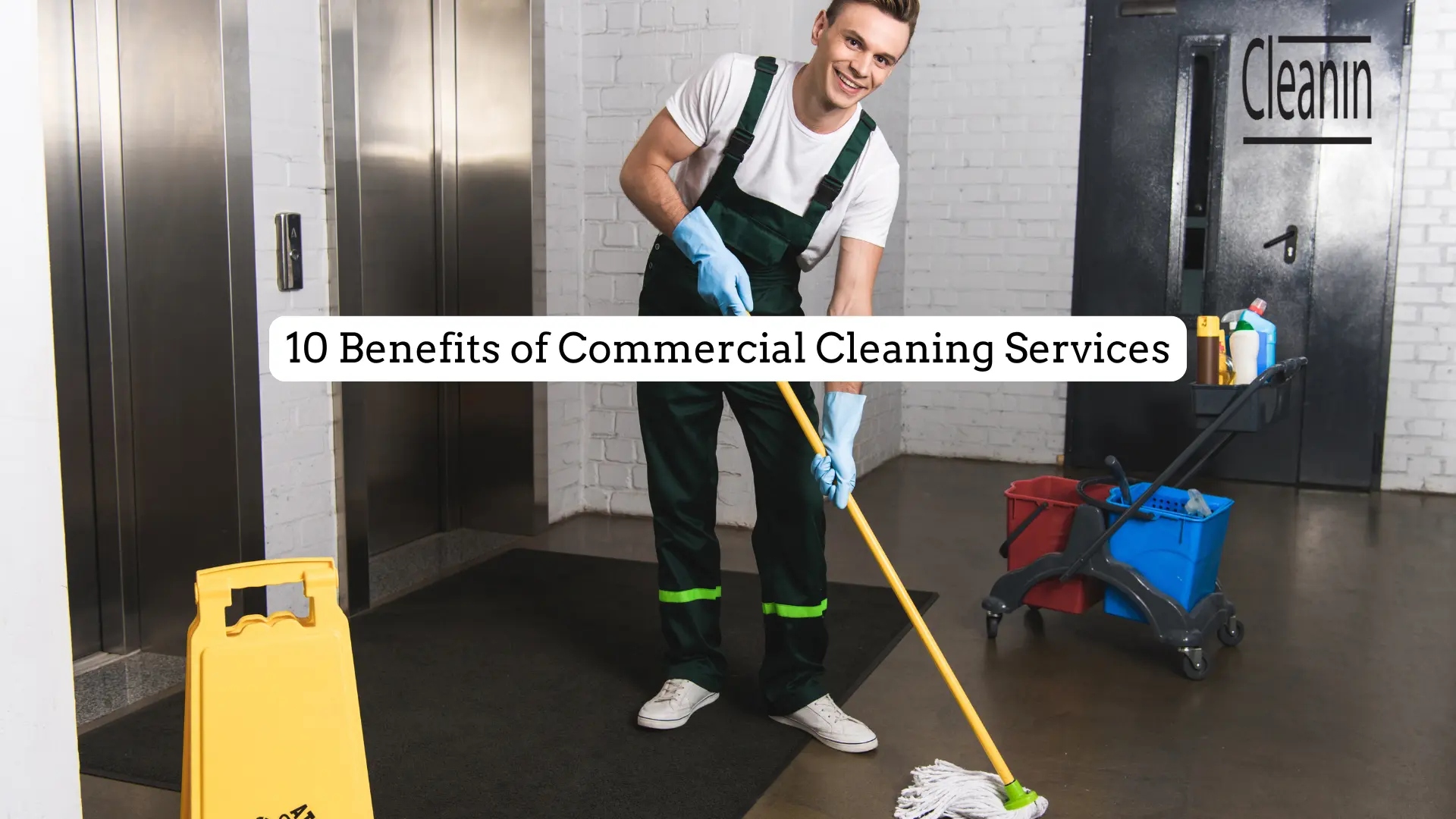
Commercial Cleaning Services are professional cleaning services designed to maintain workplace hygiene, safety, compliance, and operational cleanliness across commercial facilities. A Commercial Cleaning Service helps businesses improve workplace presentation, reduce contamination risks, support regulatory compliance, protect building assets and maintain healthier environments for employees, customers, and visitors.
Commercial Cleaning Services are not provided through a single cleaning approach. A commercial cleaning company adapts cleaning methods, staffing, equipment, and service schedules to the operational requirements of different facility types. Offices, healthcare facilities, childcare centres, retail stores, strata buildings, warehouses, and industrial facilities each require industry-specific cleaning procedures to achieve effective cleaning outcomes.
This blog explains the 10 key benefits of Commercial Cleaning Services and how they support businesses across different commercial facilities.
1. Improves Workplace Health and Hygiene
2. Improves Workplace Presentation and Professional Appearance
3. Supports Workplace Safety
4. Supports WHS Cleaning Compliance Requirements
5. Improves Operational Reliability
6. Extends the Lifespan of Building Assets
7. Improves Indoor Air Quality
8. Increases Cleaning Efficiency Through Specialised Tools and Equipment
9. Reduces Management Burden
10. Provides Facility-Specific Cleaning Solutions
1. Improves Workplace Health and Hygiene
A Commercial Cleaning Service improves workplace hygiene by removing dust, bacteria, viruses, allergens, and contaminants from shared environments and high-touch surfaces.
Commercial cleaning service sanitises high-touch surfaces such as desks, door handles, handrails, switches, washrooms, kitchens, and shared equipment. Surface sanitisation reduces contamination exposure and helps maintain healthier workplaces.
Improved workplace hygiene improves employee well-being and reduces illness-related disruptions. Cleaner workplaces often experience fewer sick days because contaminants are managed more consistently through scheduled cleaning programmes.
2. Improves Workplace Presentation and Professional Appearance
A Commercial Cleaning Service improves workplace presentation by maintaining clean floors, spotless washrooms, dust-free surfaces, and organised common areas.
Facility appearance influences how employees, customers, visitors, tenants, and stakeholders perceive a business. Clean environments create positive first impressions and reflect higher operational standards. Research shows it takes just seven seconds for a visitor to judge your business, and cleanliness is the number one factor they use to measure your professionalism.
Commercial cleaning service maintains presentation consistency across reception areas, meeting rooms, customer-facing spaces, corridors, lifts, and shared facilities.
3. Supports Workplace Safety
A Commercial Cleaning Service supports workplace safety by reducing hazards that may contribute to accidents or injuries. Cleaning teams remove spills, debris, dust buildup, grease accumulation, and contamination from operational areas. Hazard removal reduces slip, trip, and fall risks across commercial facilities.
Professional cleaning companies also implement safety procedures, hazard signage, PPE requirements, and documented cleaning processes to improve workplace safety during service delivery.
Warehouses, industrial facilities, healthcare environments, and commercial kitchens particularly benefit from structured safety-focused cleaning programmes.
4. Supports Australian WHS Standards
A Commercial Cleaning Service helps businesses maintain WHS cleaning standards that support regulatory and industry-specific compliance requirements.
Different commercial facilities operate under different compliance frameworks. Healthcare facilities follow infection-control requirements. Childcare centres follow hygiene standards. Food-handling facilities operate under food-safety regulations. Workplaces operate under WHS obligations.
Professional cleaning programmes support these requirements through documented procedures, approved chemicals, safety controls, and scheduled cleaning activities. Compliance-focused cleaning reduces operational risk and helps facilities remain audit-ready throughout the year.
5. Improves Operational Reliability
A Commercial Cleaning Service improves operational reliability by maintaining consistent cleaning standards across different facility types. Commercial cleaning providers structure cleaning services around the actual needs of the building rather than applying the same cleaning process everywhere.
Office cleaning services focus on workplace presentation and employee hygiene. Healthcare cleaning services focus on infection prevention and contamination control. Warehouse cleaning services focus on dust management and floor safety. Childcare cleaning services focus on sanitisation and child-safe cleaning procedures.
Industry-specific cleaning methods improve service consistency because cleaning activities align with operational requirements.
6. Extends the Lifespan of Building Assets
A Commercial Cleaning Service helps protect floors, furniture, fixtures, equipment, and building surfaces through appropriate cleaning methods and maintenance procedures.
Professional cleaners select cleaning chemicals, equipment, and techniques based on surface material and contamination type. Proper maintenance reduces unnecessary wear, chemical damage, abrasion, and residue buildup.
Floor maintenance services help preserve vinyl, terrazzo, concrete, timber, and stone flooring systems. Carpet cleaning services help extend carpet lifespan by removing embedded dirt and abrasive particles.
Asset protection reduces long-term repair and replacement costs across commercial facilities.
7. Improves Indoor Air Quality
A Commercial Cleaning Service improves indoor air quality by removing airborne dust, allergens, fine particles, and accumulated contaminants from the workplace.
HEPA vacuum systems capture microscopic particles before they circulate throughout the building. Dust removal service reduces particulate accumulation on surfaces, ventilation areas, and shared workspaces.
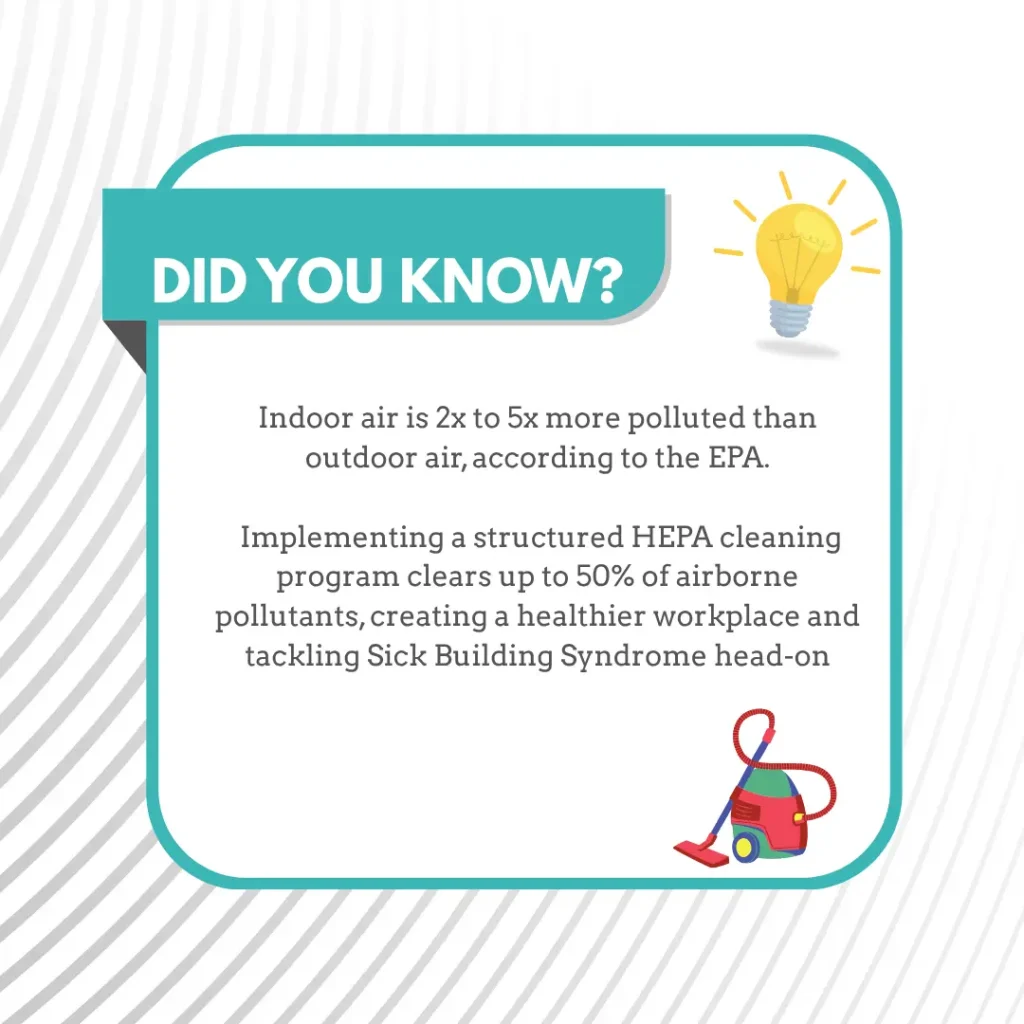
Improved indoor air quality creates a more comfortable workplace environment and supports employee well-being. Offices, schools, healthcare facilities, and childcare centres particularly benefit from air-quality-focused cleaning programmes because these environments experience high daily occupancy levels.
8. Increases Cleaning Efficiency Through Specialised Tools and Equipment
A Commercial Cleaning Service uses specialised cleaning tools and equipment to achieve faster, safer, and more consistent cleaning outcomes. Commercial cleaning tools and equipment include HEPA vacuum systems, floor scrubbers, pressure-cleaning equipment, disinfection systems, window-cleaning equipment, and waste-management tools.
Tools and Equipment selection depends on facility type, contamination level, operational requirements, and cleaning scope. The right equipment improves cleaning efficiency while reducing disruption to workplace operations.
9. Reduces Management Burden
A Commercial Cleaning Service reduces the time businesses spend managing cleaning-related responsibilities internally.
Businesses no longer need to recruit professional cleaners, purchase cleaning chemicals, maintain equipment, or supervise daily cleaning activities.
Professional cleaning providers manage staffing, scheduling, equipment maintenance, consumables, quality control, and service delivery. This allows facility managers and business owners to focus on core business operations while maintaining consistent cleaning standards.
10. Provides Facility-Specific Cleaning Solutions
A Commercial Cleaning Service delivers cleaning programmes designed around the specific requirements of each facility.
Different facilities generate different contamination patterns, operational risks, occupancy levels, and compliance obligations. Professional cleaning providers assess these factors before developing a cleaning programme.
Offices, healthcare facilities, childcare centres, strata properties, retail stores, warehouses, industrial facilities, and educational environments all require different cleaning systems.
Facility-specific cleaning improves service effectiveness because cleaning methods align with how the building operates.
What Should a Commercial Cleaning Service Include?
A Commercial Cleaning Service should include the cleaning tasks, equipment, hygiene controls, and quality-management processes required to maintain a clean, safe, and functional commercial facility. The exact service scope varies because offices, healthcare facilities, childcare centres, retail stores, warehouses, strata properties, and industrial sites operate under different cleaning requirements.
Most Commercial Cleaning Services include:
- Routine cleaning of floors, surfaces, workstations, kitchens, and washrooms
- High-touch surface cleaning and disinfection
- Waste collection and waste management
- Floor cleaning and floor maintenance services
- Facility-specific cleaning procedures
- Commercial cleaning equipment and consumables
- Quality-control inspections and service monitoring
- Workplace safety and compliance procedures
The scope of a Commercial Cleaning Service directly affects the cleaning outcomes a business receives. Businesses should review the proposed service scope by a commercial cleaning company carefully to ensure the cleaning programme aligns with the operational, hygiene, and compliance requirements of their facility.
How Can Businesses Choose the Right Commercial Cleaning Company?
Businesses should choose a Commercial Cleaning Company based on its ability to deliver cleaning services that align with the facility’s operational requirements, hygiene standards, compliance obligations, and cleaning objectives.
1. Verify the Company’s Experience With Similar Facility Types
A Commercial Cleaning Company should have experience servicing facilities similar to yours. Different facilities operate under different cleaning requirements, contamination risks, and compliance standards. A company with relevant industry experience is more likely to understand the operational needs of the facility.
2. Review the Proposed Service Scope
A Commercial Cleaning Service should include a clearly defined scope of work. The scope should explain what areas will be cleaned, how often cleaning will occur, and which cleaning tasks are included within the service agreement. A detailed service scope helps businesses compare cleaning providers based on service quality rather than price alone.
3. Evaluate Equipment and Cleaning Capability
A Commercial Cleaning Company should have access to the equipment required for the facility environment. Different facilities require different commercial cleaning tools and equipment. Equipment capability directly influences cleaning efficiency and service quality.
4. Verify Compliance and Safety Systems
A Commercial Cleaning Company should operate with documented safety and compliance procedures. Commercial cleaning services often involve chemical handling, workplace hazards, infection-control requirements, and public-access environments. Businesses should verify the company’s use of Safe Work Method Statements (SWMS), Safety Data Sheets (SDS), worker training programmes, and risk-management procedures.
5. Assess Quality Control Processes
A Commercial Cleaning Service should be supported by regular inspections, supervision, and performance monitoring. Quality-control systems help maintain cleaning consistency across different service visits. Inspection reports, site audits, and corrective-action procedures provide accountability and help ensure service standards remain consistent over time.
6. Request a Site Assessment Before Accepting a Quote
A professional Commercial Cleaning Company should perform a site assessment before preparing a cleaning proposal. A site assessment allows the company to evaluate building size, occupancy levels, contamination risks, cleaning frequency requirements, and operational constraints. Site assessments generally lead to more accurate cleaning proposals and more realistic service recommendations.
7. Compare Overall Value Rather Than Price Alone
The lowest quote does not always provide the best cleaning outcome. Cleaning quality depends on staffing, supervision, equipment, training, cleaning frequency, and service scope.
Businesses should compare the overall value of each proposal rather than focusing exclusively on contract cost. A cleaning programme that aligns with the facility’s requirements often delivers better long-term results than a lower-cost service with limited scope.