A Commercial Cleaning Service uses specialised tools and equipment to provide safe, consistent, and industry-specific cleaning outcomes across commercial facilities. Offices, hospitals, warehouses, childcare centres, retail stores, strata buildings, schools, gyms, and industrial facilities all require different cleaning methods, which means they also require different tools and equipment, chemicals, and cleaning systems.
Understanding the tools and equipment used in commercial cleaning helps facility managers evaluate service capability, compare cleaning providers, and determine whether a contractor can meet the hygiene, safety, and operational requirements of their facility.
This guide explains the most commonly used commercial cleaning tools and equipment and how they support professional cleaning services across different facility types.
Complete List of Tools and Equipment For Commercial Cleaning Services
These are the complete list of tools and equipment used in the commercial cleaning services:
1. Manual Cleaning Tools
Manual cleaning tools are non-powered cleaning tools used to remove dust, dirt, debris, stains, and contaminants from surfaces through direct physical cleaning methods. Manual cleaning tools support daily cleaning, detail cleaning, spot cleaning, waste management, and surface maintenance across commercial facilities. Offices, healthcare facilities, childcare centres, retail stores, warehouses, hospitality venues, and strata buildings all rely on manual cleaning tools as part of their daily cleaning service.
Types of Manual Cleaning Tools
I. Microfibre Cloths
Microfibre cloths remove dust, dirt, fingerprints, and bacteria from desks, workstations, counters, glass surfaces, and high-touch points. The microfibre material captures fine particles within its fibres, which improves cleaning performance while reducing chemical usage.
ii. Dusting Tools and Extension Dusters
Dusting tools remove loose dust from furniture, shelving, ventilation grilles, ceiling fixtures, and elevated surfaces. Extension dusters allow cleaners to access high-level areas without requiring ladders for routine dust removal.
iii. Mops and Buckets
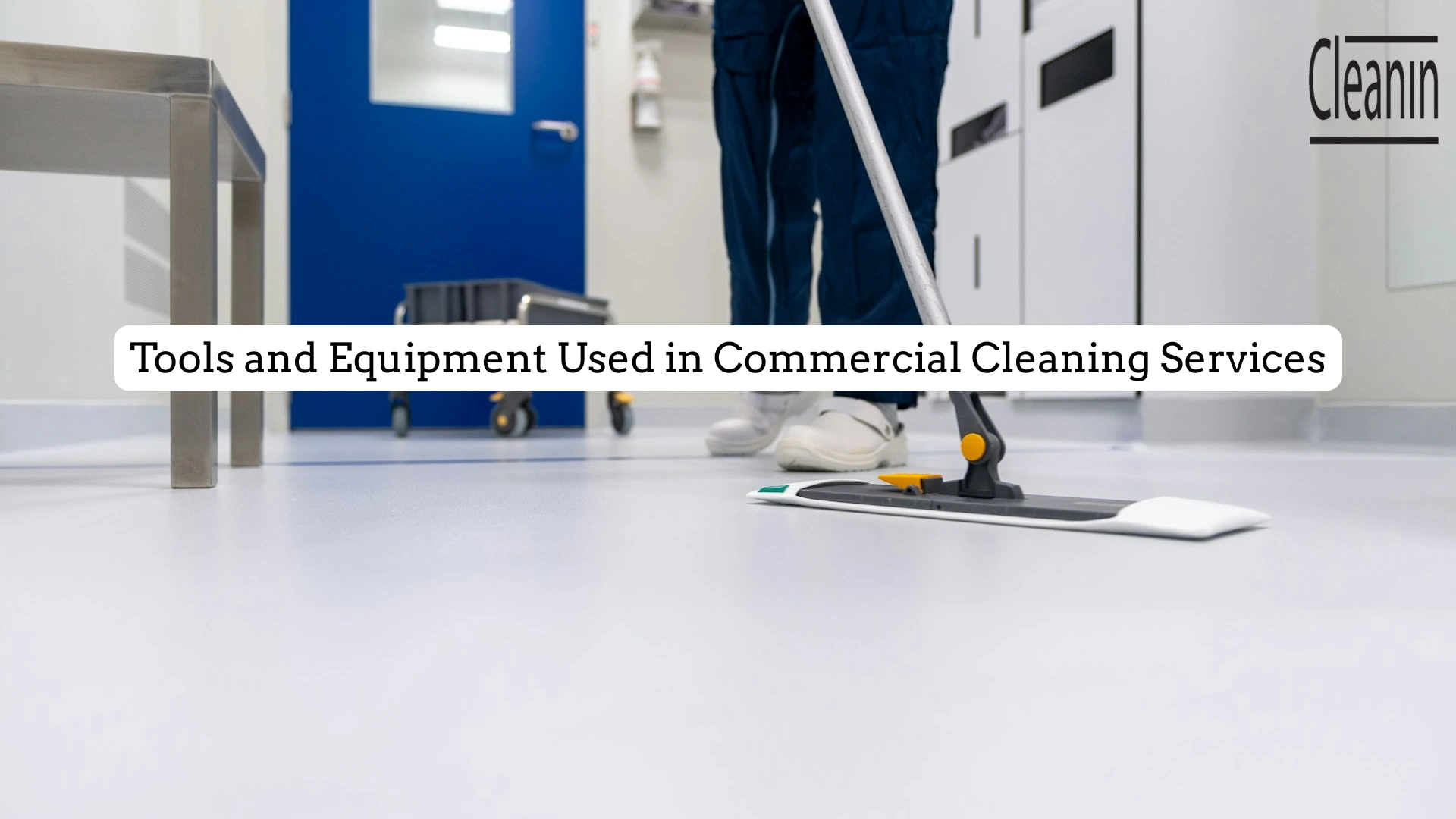
Mops and buckets clean hard floor surfaces by applying and removing cleaning solutions. Different types of mop systems support routine cleaning, spill response, contamination control, and floor maintenance across commercial facilities.
iv. Squeegees
Squeegees remove water and cleaning solution from glass, mirrors, windows, and smooth floor surfaces. The rubber blade leaves surfaces clean and streak-free while accelerating drying times.
v. Scrub Brushes and Hand Scrubbers
Scrub brushes loosen stubborn dirt, grease, and grime from grout lines, tiled surfaces, skirting boards, washrooms, kitchens, and textured flooring. Hand scrubbers provide additional cleaning power for detail work and spot cleaning.
vi. Dustpans and Brooms
Dustpans and brooms collect loose debris before wet cleaning begins. Dry debris removal protects floor surfaces and improves the effectiveness of subsequent cleaning procedures.
vii. Waste Collection Tools
Waste collection tools support waste removal, waste segregation, and contamination control. Commercial cleaners use grabbers, waste bags, bin liners, and collection containers to manage waste safely across different facility types.
viii. Window Cleaning Applicators
Window applicators distribute cleaning solution evenly across glass surfaces before squeegee removal. These tools improve cleaning consistency and help achieve streak-free results.
ix. Scrapers and Stain-Removal Tools
Scrapers remove adhesive residue, paint spots, construction debris, chewing gum, and other bonded contaminants from hard surfaces. Proper scraper selection protects surfaces while improving cleaning efficiency.
2. Vacuum Cleaners
Vacuum cleaners remove dust, allergens, debris, and fine particles from carpets, hard floors, upholstery, and shared workspaces. Commercial Cleaning Services use different vacuum systems depending on the facility type and contamination level. Upright vacuums are used for large carpet areas, backpack vacuums are used for multi-level buildings and HEPA-filtered systems for fine particulate control.
Types of Vacuum Cleaners
I. Upright Vacuums
Upright vacuums improve carpet cleaning efficiency across large office spaces, hotel corridors, educational facilities, and retail environments. Upright vacuums provide strong suction power and faster coverage across high-traffic carpeted areas.
ii. Backpack Vacuums
Backpack vacuum improves mobility in stairwells, cinemas, theatres, transport facilities, and occupied office environments. Cleaners move more efficiently through narrow or crowded spaces while reducing setup time.
iii. HEPA Filter Vacuums
HEPA filter vacuums improve indoor air quality by capturing microscopic dust particles, allergens, and airborne contaminants. Healthcare facilities, offices, schools, and childcare centres commonly use HEPA-filter vacuums because these environments require better air-quality management.
3. Floor Cleaning Equipment
Floor-cleaning equipment removes dirt buildup, stains, grease, moisture, and contamination from commercial flooring surfaces.
Types of Floor Cleaning Equipment
I. Floor Scrubber Machines
Floor scrubber machines clean hard floors through automated scrubbing, chemical application, and water recovery systems. Floor scrubber machines are commonly used in shopping centres, warehouses, hospitals, airports, and industrial sites because large floor areas require consistent cleaning performance.
ii. Buffing and Polishing Machines
Floor buffing and polishing machines restore floor appearance and maintain protective floor coatings. Floor buffing and polishing machines are used on vinyl, marble, terrazzo, and polished stone surfaces.
4. Disinfection and Sanitization Equipment
Disinfection and sanitization equipment are used to control contamination, improve disinfectant coverage, and maintain consistent chemical application across different facility types. The most commonly used disinfection and sanitization equipment includes trigger spray applicators for targeted surface disinfection, electrostatic sprayers for broad surface coverage, fogging machines for large-area airborne application, and chemical dosing systems for controlled chemical dilution.
Types of Disinfection and Sanitization Equipment
i. Trigger Spray Applicators
Trigger spray applicators provide targeted disinfectant application across high-touch surfaces and shared contact points. The effectiveness of the trigger spray applicator depends on how long it remains on the surface before wiping or drying. Most disinfectants need to stay on a surface for 30 seconds to 5 minutes to effectively kill germs, depending on the disinfectant type and the contaminants being targeted.
ii. Electrostatic Sprayers
Electrostatic sprayers improve the distribution of disinfectant across large, complex, and difficult-to-reach surfaces in commercial facilities. Electrostatic sprayers electrically charge disinfectant droplets so they spread and stick more evenly across surfaces, including hard-to-reach areas that traditional wiping methods may miss. Droplet size affects surface coverage and disinfectant performance. Electrostatic sprayers are used for outbreak response cleaning, infection-control procedures, and terminal cleaning programmes.
iii. Fogging Machines
Fogging machines distribute disinfectant mist across large commercial spaces where broader airborne coverage is required. The effectiveness of a fogging machine depends on chemical compatibility, particle distribution, ventilation conditions, and settling time after application.
iv. Chemical Dosing and Dilution Systems
Chemical dosing and dilution systems control the mixing ratio between concentrated chemicals and water during cleaning preparation. Chemical dosing systems are used to maintain accurate chemical dilution. Controlled dosing reduces dilution inconsistencies caused by manual chemical mixing.
5. Safety and Protective Gear
Safety and protective gear are used to reduce worker exposure to chemical, biological, mechanical, and slip-related hazards across different facility environments. Under the Work Health and Safety Act 2011 (NSW) and Work Health and Safety Regulation 2017 (NSW), a commercial Cleaning Service must provide appropriate PPE, ensure correct worker training, and apply documented hazard controls before any cleaning activity begins.
Types of Safety and Protective Gear
i. Protective Gloves
Protective gloves prevent direct contact between workers and corrosive commercial chemical agents, contaminated surfaces, and waste materials. Protective nitrile gloves are used for chemical handling and healthcare cleaning because nitrile materials resist chemical penetration and reduce skin exposure risks. Heavy-duty gloves protect workers in industrial cleaning environments where sharp objects, rough surfaces, or heavy debris create physical injury risks.
ii. Respiratory Protection
Respiratory protection reduces worker exposure to airborne particles, chemical vapours, and biological contaminants. P2 respirators and N95 masks are used in environments where dust levels, pathogen exposure, or chemical vapours exceed safe exposure thresholds. Respiratory protection equipment reduces inhalation risk and improves worker safety during these operations.
iii. Safety Glasses and Face Shields
Safety glasses protect workers from chemical splashes, airborne debris, and pressurised liquid exposure. Safety glasses are used during chemical dilution, washroom cleaning, and surface disinfection tasks where liquid exposure risk exists.
Face shield equipment provides extended protection during high-risk cleaning activities such as pressure washing, kitchen degreasing, and industrial cleaning operations where splash-back or particle rebound is more likely.
iv. Protective Clothing
Protective clothing reduces contamination transfer and protects workers from chemical and biological exposure. Protective clothing includes disposable coveralls, waterproof aprons, fluid-resistant gowns, and high-visibility uniforms, depending on the facility environment.
v. Slip-Resistant Safety Footwear
Slip-resistant footwear reduces workplace fall risks by improving grip on wet, oily, or uneven surfaces. Slip-resistant footwear is used in hospitals, commercial kitchens, warehouses, and floor scrubbing operations where slip hazards are frequent.
vi. Hazard Signage and Traffic-Control Equipment
Hazard signage alerts occupants and controls movement during active cleaning operations. Hazard signage uses floor signs, barricades, hazard cones, and caution tape to prevent accidental entry into cleaning zones.
Hazard signage is essential in retail centres, strata buildings, office spaces, and public-access facilities where occupants share space with cleaning teams. Hazard signage reduces slip incidents, prevents interference with cleaning work, and improves overall site safety compliance.
6. Waste Management Equipment
Waste management equipment is used to safely collect, separate, transport, and dispose of general waste, recyclable materials, sanitary waste, and hazardous waste generated across commercial facilities. The equipment selection depends on waste type, contamination level, facility category, and local environmental disposal regulations.
Types of Waste Management Equipment
I. Waste Collection Bins and Sorting Systems
Waste collection bins act as the primary point of waste segregation in commercial facilities. Waste collection bins are categorized according to waste category so that disposal remains organised and compliant.
General waste bins collect non-recyclable materials. Recycling bins collect paper, plastics, and cardboard. Sanitary bins collect hygiene-related waste in washrooms and healthcare environments. Colour-coded bin systems support correct segregation by reducing human error during disposal.
ii. Waste Liners and Containment Bags
Waste liners and containment bags prevent leakage, odour spread, and contamination during waste handling. Waste liners are used as a barrier between waste materials and collection bins.
Standard liners are used for general waste collection in offices and retail environments. Heavy-duty liners are used in industrial and high-volume environments where waste weight and sharp materials increase breakage risk. Biohazard-rated bags are used in healthcare and clinical settings where contamination control is required.
iii. Trolleys and Waste Transport Equipment
Waste transport trolleys move waste safely through commercial buildings without manual lifting or carrying. Waste management trolleys reduce worker strain and minimise spill incidents during waste movement.
Small waste trolleys are used in office environments where waste volumes are lower. Enclosed transport carts are used in hospitals, shopping centres, and large commercial buildings where waste movement occurs across long internal distances.
iv. Recycling and Segregation Equipment
Recycling and segregation equipment separates recyclable materials at the source to improve environmental compliance. Recycling and segregation equipment are used in commercial cleaning services to ensure recyclable waste does not mix with general waste streams. Recycling systems reduce landfill waste volume and improve operational efficiency in high-output commercial environments.
v. Hazardous and Clinical Waste Containers
Hazardous waste containers manage materials that require controlled handling due to chemical or biological risk. Hazardous waste containers are used to isolate waste that cannot be disposed of through standard waste systems.
vi. Waste Compactors and High-Volume Disposal Systems
Waste compactors reduce waste volume in high-output commercial environments. Waste compactors are used to manage large-scale waste generation in shopping centres, hotels, industrial sites, and multi-tenant facilities.
Compactors compress waste to reduce storage space, control odour, and reduce collection frequency. This improves operational efficiency and lowers waste disposal costs over time. High-volume disposal systems support consistent waste handling in facilities where daily waste generation exceeds standard bin capacity.
7. Window and Facade Cleaning Equipment
Window and facade cleaning equipment is used to clean external building surfaces safely and effectively. Window cleaning equipment selection depends on building height, facade design, access restrictions, wind exposure, and workplace safety requirements.
Types of Window and Facade Cleaning Equipment
i. Reach-and-Wash Water-Fed Pole Systems
Reach-and-wash systems are used for low-rise and mid-rise commercial buildings where direct ground-level access is possible. Water-fed pole systems combine lightweight carbon fibre poles with soft-bristle brush heads and purified water delivery. Water-fed pole system allows operators to clean glass and facade surfaces from the ground without using ladders or elevated platforms.
ii. Elevated Work Platforms (EWPs)
Elevated Work Platforms (EWPs) are used when facade areas cannot be accessed safely from the ground and require controlled elevation. EWPs are applied when stable, platform-based access is required for controlled cleaning or maintenance tasks at height.
iii. Rope Access Systems
Rope access systems are used when building height or architectural design prevents safe use of EWPs. Industrial rope systems, full-body harnesses, and certified anchor points are used in commercial cleaning services that comply with AS 4488 standards to support vertical access cleaning.
iv. Building Maintenance Units (BMUs)
BMUs are permanent facade access systems installed on high-rise commercial buildings. A Commercial Cleaning Service uses BMUs that consist of roof-mounted cradle systems or gondolas that move along fixed tracks to provide controlled access across building facades.
What are the Cleaning Tools and Equipment Used for Industrial Facilities?
The most common industrial cleaning tools and equipment are:
Vacuum Cleaners: Vacuum cleaners remove dust, debris, metal shavings, and fine particulate matter from production floors and warehouse environments.
Ride-On Floor Scrubbers: Ride-on floor scrubbers clean large industrial floor surfaces efficiently and consistently. Ride-on floor scrubbers apply cleaning solution, agitate surface contamination, and recover dirty water in a single operation.
Walk-Behind Floor Scrubbers: Walk-behind floor scrubbers clean production zones, loading areas, and narrow operational spaces where larger equipment cannot operate effectively.
High-Pressure Cleaning Machines: High-pressure cleaning machines remove grease, mud, oil residue, and heavy surface contamination from industrial assets and external areas.
Steam Cleaners: Steam cleaners sanitise surfaces using high-temperature steam rather than excessive chemical application. Steam systems dissolve grease, loosen contamination, and eliminate microorganisms from machinery surfaces, food-processing equipment, and industrial work areas.
Personal Protective Equipment (PPE): PPE reduces direct exposure between workers and industrial cleaning hazards during operations.
Mops and Buckets: Mops and Buckets remove liquid spills, light grease, dust residue, and surface contamination from industrial floor areas.
Ladders and Scaffolding: Ladders and scaffolding are used to clean ceilings, high walls, lighting fixtures, ventilation systems, ducts, rafters, beams, and other elevated structures where ground-level access is insufficient.
Why Tools and Equipment Capability Matter When Choosing a Commercial Cleaning Service?
The effectiveness of a Commercial Cleaning Service depends on more than the cleaning staff alone. Cleaning outcomes depend on whether the service provider has the right equipment, cleaning systems, and operational capability to support the facility being serviced.
Different facilities require different cleaning equipment. Office cleaning requires vacuum systems, floor-care equipment, and presentation-focused cleaning tools. Healthcare and childcare facilities require disinfection equipment, HEPA filtration systems, and strict contamination-control procedures. Warehouses and industrial facilities require industrial scrubbers, pressure-cleaning equipment, and heavy-duty cleaning systems capable of managing large-scale contamination.
A Commercial Cleaning Service that invests in facility-specific equipment is better positioned to deliver consistent cleaning standards, maintain compliance requirements, protect surfaces, and support long-term facility maintenance.
Cleanin provides professional commercial cleaning services across offices, healthcare facilities, childcare centres, schools, strata buildings, retail centres, warehouses, industrial facilities, and other commercial properties throughout Greater Sydney. Equipment selection is determined during the site assessment process and aligned with the facility’s operational requirements, contamination levels, compliance obligations, and cleaning scope.
By understanding the tools and equipment used in commercial cleaning services, businesses can make more informed decisions when evaluating cleaning providers and selecting a cleaning programme that matches their facility requirements.
Get a Commercial Cleaning Service Assessment for Your Facility
Cleanin assesses facility type, contamination levels, operational requirements, and cleaning scope before recommending a cleaning programme. Contact Cleanin today at 1300 50 55 50 or request a quote at cleanin.com.au to discuss your facility requirements and request a tailored commercial cleaning service quote.