Many businesses compare dry and steam carpet cleaning when planning a commercial carpet maintenance service. While both methods are designed to improve carpet cleanliness and appearance, they achieve different outcomes and are suited to different types of facilities, levels of soiling, and operational requirements. If you’re looking for a broader overview of commercial carpet care, our Guide to Commercial Carpet Cleaning explains the different cleaning methods, maintenance strategies, and best practices for keeping commercial carpets in optimal condition.
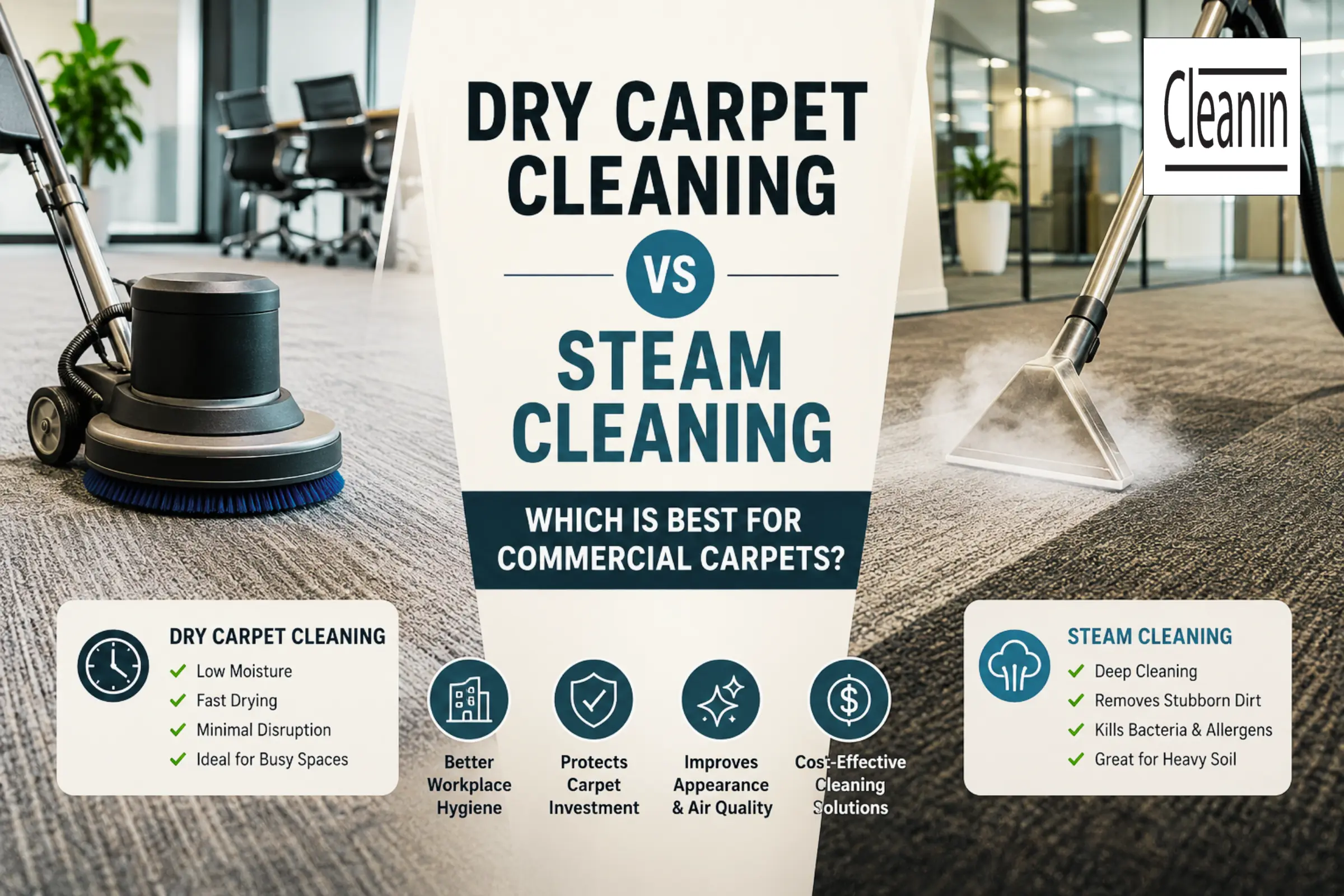
Dry carpet cleaning is a low-moisture method that allows carpets to return to service quickly, making it a practical option for workplaces that cannot accommodate extended drying times. Steam cleaning, more accurately known as hot water extraction, uses heated water and powerful extraction equipment to remove deeply embedded dirt, allergens, and contaminants from the carpet fibres, making it the preferred choice for restorative deep cleaning.
Choosing between the two methods is not about determining which one is better overall. Instead, the right solution depends on factors such as the type of carpet, the amount of foot traffic, the level of soiling, business operating hours, drying requirements, and long-term maintenance objectives. In many commercial environments, both methods are used together as part of a carpet cleaning service.
In this guide, we’ll explain the differences between dry carpet cleaning and steam cleaning, compare their advantages and limitations, and help you determine which method is best suited to your commercial facility. We’ll also explore how professional commercial cleaning companies select the appropriate cleaning approach based on the specific needs of each workplace.
What Is Dry Carpet Cleaning?
Dry carpet cleaning is a low-moisture commercial carpet cleaning method that removes dirt and debris without saturating the carpet with water. Unlike deep cleaning methods that rely on hot water extraction, dry carpet cleaning uses specialised cleaning compounds or absorbent products to loosen and capture soil within the carpet fibres, allowing the carpet to be cleaned with minimal drying time.
The process begins by applying a cleaning compound or solution evenly across the carpet. Depending on the system being used, a rotary machine or counter-rotating brush works the product into the carpet pile, where it breaks down and absorbs dirt, dust, and other contaminants. The cleaning compound, together with the loosened soil, is then removed using professional vacuum extraction equipment.
Because very little moisture is introduced during the cleaning process, carpets typically return to service much sooner than with hot water extraction. This makes dry carpet cleaning a practical solution for commercial facilities that operate throughout the day or cannot accommodate lengthy drying periods.
Dry carpet cleaning is commonly used in offices, retail stores, hotels, educational facilities, and other occupied commercial environments where maintaining business continuity is a priority. It is particularly effective as part of an ongoing carpet maintenance program, helping to maintain carpet appearance and remove surface-level soil between scheduled deep cleaning services.
Although dry carpet cleaning delivers excellent results for routine maintenance, it is not designed to replace restorative deep cleaning. Carpets with heavy soiling, embedded contaminants, or significant staining generally require hot water extraction to achieve a deeper level of cleaning.
How Dry Carpet Cleaning Works?
Professional dry carpet cleaning generally follows these steps:
- The carpet is thoroughly vacuumed to remove loose dust, dirt, and debris.
- A specialised dry cleaning compound or low-moisture cleaning solution is applied to the carpet.
- A rotary or counter-rotating brush machine works the product into the carpet fibres to loosen and absorb soil.
- The cleaning compound and captured contaminants are removed using commercial vacuum equipment.
- Any remaining spots or stains are treated where required before the carpet is returned to service.
Because the process uses minimal moisture, drying times are significantly reduced, allowing businesses to resume normal operations with minimal interruption.
What Is Steam Carpet Cleaning?
Steam carpet cleaning, more accurately known as hot water extraction (HWE), is a deep-cleaning method that uses heated water, cleaning solutions, and powerful vacuum extraction to remove dirt, allergens, bacteria, and other contaminants from commercial carpets. Although it is commonly referred to as “steam cleaning,” the process relies on hot water rather than steam to achieve effective cleaning.
The process begins by applying a cleaning solution to the carpet to loosen embedded dirt, oils, and stains. Heated water is then injected deep into the carpet fibres under pressure. Almost simultaneously, a high-powered extraction machine removes the water together with the dissolved soil and contaminants, leaving the carpet significantly cleaner and reducing the amount of residue left behind.
Because hot water extraction cleans deep within the carpet pile, it is widely regarded as one of the most effective methods for restorative carpet cleaning. It is commonly recommended for heavily soiled carpets, high-traffic commercial environments, post-construction cleaning, and scheduled deep cleaning programs. Many carpet manufacturers also recommend hot water extraction as the preferred maintenance method to help preserve carpet performance and support warranty requirements.
Compared with low-moisture cleaning methods, steam carpet cleaning uses more water and generally requires longer drying times. For this reason, it is often scheduled after business hours or during periods of low occupancy to minimise disruption to daily operations.
While hot water extraction provides a deeper level of cleaning, it does not need to be performed every time carpets are cleaned. Many businesses combine periodic steam cleaning with interim low-moisture maintenance methods to keep carpets clean throughout the year while reducing operational downtime.
While hot water extraction provides excellent deep-cleaning results, it is not always the most practical solution for every commercial environment. Businesses that require faster turnaround times may benefit from low-moisture alternatives.
How Steam Carpet Cleaning Works?
Professional steam carpet cleaning typically follows these steps:
- The carpet is inspected and vacuumed to remove loose dust and debris.
- A pre-treatment solution is applied to loosen embedded soil, oils, and stains.
- Heated water is injected deep into the carpet fibres using professional extraction equipment.
- A powerful vacuum immediately extracts the water together with dirt, cleaning solution, and contaminants.
- Remaining stains are treated if required, and the carpet is left to dry before returning to normal use.
Although drying times vary depending on the carpet type, cleaning equipment, humidity, and ventilation, professional hot water extraction provides a thorough deep clean that helps improve carpet appearance, indoor hygiene, and the long-term condition of commercial carpets.
Dry Carpet Cleaning vs Steam Cleaning: Key Differences
The main difference between dry carpet cleaning and steam carpet cleaning is the amount of moisture used and the depth of cleaning achieved. Dry carpet cleaning is a low-moisture method designed for routine maintenance and fast turnaround, while steam carpet cleaning (hot water extraction) is a deep-cleaning method that removes embedded soil, allergens, and contaminants from within the carpet fibres.
Neither dry carpet cleaning nor the steam cleaning method is universally better. The most suitable option depends on the carpet’s condition, the level of foot traffic, drying requirements, and your facility’s operational needs. Many businesses use both methods as part of a planned commercial carpet maintenance program.
| Factor | Dry Carpet Cleaning | Steam Carpet Cleaning (Hot Water Extraction) |
|---|---|---|
| Primary Purpose | Routine maintenance and appearance improvement | Deep cleaning and restorative carpet care |
| Moisture Used | Low moisture | High moisture with hot water extraction |
| Cleaning Depth | Cleans surface soil and moderate contamination | Removes deeply embedded dirt, oils, allergens, and contaminants |
| Drying Time | Typically 30 minutes to 2 hours | Usually 4 to 8 hours, depending on conditions and equipment |
| Business Disruption | Minimal, as carpets return to service quickly | Greater, often requiring after-hours or scheduled cleaning |
| Equipment | Rotary or counter-rotating brush machines with low-moisture systems | Hot water extraction machines with high-powered vacuum systems |
| Best For | Routine maintenance, occupied workplaces, and interim cleaning | Heavily soiled carpets, periodic deep cleaning, and restorative maintenance |
| Soil Removal | Removes surface-level dirt and loose contaminants | Removes deep-seated soil, oils, residues, and allergens |
| Maintenance Role | Supports ongoing carpet appearance between deep cleans | Restores carpet condition as part of scheduled maintenance |
| Operational Impact | Suitable for businesses that require continuous access | Best scheduled outside business hours where possible |
What are the Advantages and Disadvantages of Dry Carpet Cleaning?
Dry carpet cleaning is widely used in commercial environments because it provides an effective way to maintain carpet appearance with minimal disruption to business operations. By using specialised low-moisture cleaning compounds or absorbent products, the method removes surface-level soil and moderate contamination while allowing carpets to return to service much sooner than deep-cleaning methods.
Advantages
- Minimal Drying Time
- Minimises Business Disruption
- Suitable for Routine Carpet Maintenance
- Lower Moisture Reduces Risk
- Suitable for Moisture-Sensitive Environments
Disadvantages
- Does Not Provide Deep Restorative Cleaning
- Less Effective on Heavy Soiling
- May Require Periodic Deep Cleaning
- Cleaning Results Depend on Carpet Condition
What are the Advantages and Disadvantages of Steam Carpet Cleaning?
Steam carpet cleaning, also known as hot water extraction (HWE), is one of the most effective methods for restoring commercial carpets. By injecting heated water and a cleaning solution deep into the carpet fibres, then immediately extracting them with powerful vacuum equipment, the process removes embedded dirt, oils, allergens, and other contaminants that routine maintenance methods cannot reach.
For commercial facilities, steam carpet cleaning is typically performed as part of a scheduled deep-cleaning program rather than day-to-day maintenance. It helps restore the appearance of carpet, improve indoor hygiene, and extend the lifespan of carpeted flooring in high-traffic environments.
Advantages
- Provides a Deep, Thorough Clean
- Removes Embedded Dirt and Contaminants
- Effective for High-Traffic Commercial Areas
- Supports Long-Term Carpet Maintenance
- Suitable for Restorative Cleaning
Disadvantages
- Longer Drying Time
- May Require After-Hours Cleaning
- Not Always Necessary for Routine Maintenance
- Professional Equipment and Expertise Are Essential
Which Cleaning Method Is Best for Different Commercial Facilities?
There is no single carpet cleaning method that suits every commercial facility. The most appropriate approach depends on factors such as daily foot traffic, the level of soiling, operating hours, drying requirements, and the role the carpet plays within the workplace.
In many cases, businesses achieve the best results by combining routine dry carpet cleaning with periodic steam carpet cleaning. Dry cleaning helps maintain carpet appearance with minimal disruption, while hot water extraction provides the deep cleaning needed to remove embedded contaminants and restore carpet condition.
The table below outlines which cleaning method is generally best suited to different commercial environments.
| Facility Type | Recommended Cleaning Method | Why It Works |
|---|---|---|
| Office | Combination of dry cleaning and steam cleaning | Dry cleaning supports routine maintenance with minimal disruption, while periodic steam cleaning removes accumulated soil and helps maintain carpet condition. |
| Retail Store | Primarily dry cleaning with scheduled steam cleaning | Retail environments require fast turnaround and continuous customer access. Dry cleaning keeps carpets presentable, while steam cleaning restores heavily used areas during planned maintenance. |
| Healthcare Facility | Steam cleaning supported by low-moisture maintenance | Healthcare environments demand high hygiene standards. Steam cleaning removes deeply embedded contaminants, while interim maintenance helps preserve cleanliness between deep cleaning cycles. |
| School or Educational Facility | Combination of both methods | Classrooms and common areas experience heavy daily use. Regular maintenance combined with scheduled deep cleaning supports hygiene and extends carpet life. |
| Hotel | Combination of both methods | Guest rooms, corridors, and function spaces require a consistently high standard of presentation. Low-moisture cleaning minimises room downtime, while steam cleaning restores carpets periodically. |
| Warehouse and Industrial Facility | Steam cleaning where carpeted areas exist | Heavy soil, dust, and operational contamination often require the deeper cleaning capability of hot water extraction. |
| Gym or Fitness Centre | Combination of both methods | High foot traffic and increased moisture levels make routine maintenance important, while periodic deep cleaning helps remove embedded dirt and odours. |
| Strata Buildings | Combination of both methods | Common areas benefit from regular appearance maintenance, with scheduled deep cleaning helping preserve carpets in lift lobbies, corridors, and shared spaces. |
What are the Factors to Consider When Choosing Between Dry and Steam Carpet Cleaning?
Choosing between dry carpet cleaning and steam carpet cleaning involves more than selecting the fastest or deepest cleaning method. The right approach depends on your facility’s operational requirements, the condition of the carpet, and your long-term maintenance objectives.
Professional commercial cleaning companies assess these 8 factors before recommending the most appropriate cleaning method:
- Level of Soiling
- Carpet Type and Construction
- Business Operating Hours
- Drying Requirements
- Foot Traffic
- Indoor Hygiene Requirements
- Existing Carpet Maintenance Program
- Budget and Long-Term Value
1. Level of Soiling
The amount of dirt, dust, stains, and embedded contaminants is one of the most important considerations.
Carpets with light to moderate soiling can often be maintained effectively using dry carpet cleaning as part of a routine maintenance program. However, carpets affected by heavy foot traffic, accumulated dirt, or long periods without professional cleaning generally benefit from the deeper cleaning provided by hot water extraction.
2. Carpet Type and Construction
Not all commercial carpets are manufactured in the same way. Carpet fibre, pile construction, backing materials, and manufacturer recommendations can all influence the most suitable cleaning method.
Professional cleaners assess the carpet before cleaning to ensure the selected method delivers effective results without damaging the fibres or affecting the carpet’s performance.
3. Business Operating Hours
The amount of downtime a facility can accommodate often determines which cleaning method is most practical.
Businesses that operate during standard office hours may be able to schedule steam carpet cleaning after hours or on weekends. Facilities that operate continuously, such as hotels, retail stores, or customer-facing workplaces, often prefer low-moisture cleaning methods that allow carpets to return to service quickly.
4. Drying Requirements
Drying time is an important operational consideration.
If carpets need to be used shortly after cleaning, dry carpet cleaning is generally the more suitable option because it introduces very little moisture. Where longer drying times can be accommodated, steam carpet cleaning provides a more thorough restorative clean.
5. Foot Traffic
High-traffic areas accumulate dirt more quickly and often require a combination of routine maintenance and periodic deep cleaning.
Reception areas, corridors, entrances, meeting rooms, and shared workspaces typically benefit from regular low-moisture cleaning to maintain appearance, with scheduled hot water extraction used to remove embedded contaminants and restore carpet condition.
6. Indoor Hygiene Requirements
Some facilities place a greater emphasis on hygiene than others.
Healthcare facilities, childcare centres, educational institutions, and other environments with higher hygiene expectations may require periodic deep cleaning to remove contaminants that routine maintenance methods cannot fully address.
7. Existing Carpet Maintenance Program
The cleaning method should support the facility’s overall maintenance strategy rather than being selected in isolation.
Many commercial buildings achieve the best results by combining routine dry carpet cleaning throughout the year with scheduled steam carpet cleaning at longer intervals. This balanced approach helps maintain carpet appearance, minimise operational disruption, and extend the lifespan of the flooring.
8. Budget and Long-Term Value
Cleaning costs should be considered alongside long-term maintenance outcomes.
Routine maintenance can help reduce the build-up of embedded soil, making future deep cleaning more effective and helping preserve the condition of the carpet. Choosing the right cleaning method at the right time often provides better long-term value than relying on a single cleaning approach for every situation.
Why a Professional Assessment Matters?
Every commercial facility has unique cleaning requirements. A professional commercial cleaning company will assess your carpet type, level of soiling, traffic patterns, operating hours, and maintenance objectives before recommending the most appropriate cleaning method.
Rather than viewing dry carpet cleaning and steam carpet cleaning as competing services, they should be considered complementary methods that work together to maintain clean, hygienic, and well-presented commercial carpets throughout the year.
Can Dry Carpet Cleaning Replace Steam Carpet Cleaning?
No, dry carpet cleaning cannot completely replace steam carpet cleaning. While both methods clean commercial carpets, they are designed to achieve different outcomes and are most effective when used together as part of a planned carpet maintenance program.
Dry carpet cleaning is primarily a maintenance method. It removes surface-level dirt, dust, and moderate soiling while allowing carpets to return to service quickly. This makes it ideal for maintaining carpet appearance in busy commercial environments where extended drying times are not practical.
Steam carpet cleaning, or hot water extraction, is a restorative cleaning method. It penetrates deep into the carpet fibres to remove embedded soil, oils, allergens, and other contaminants that accumulate over time. These contaminants cannot always be removed through low-moisture cleaning alone.
For this reason, relying exclusively on dry carpet cleaning may eventually allow deeply embedded dirt to build up within the carpet pile, reducing carpet appearance and contributing to premature wear. Likewise, relying only on steam carpet cleaning may result in unnecessary downtime if carpets require frequent maintenance throughout the year.
How do both Dry Carpet Cleaning and Steam Carpet Cleaning methods work together?
Professional commercial cleaning companies often recommend combining both cleaning methods to achieve the best long-term results.
Dry carpet cleaning is used between deep cleaning cycles to maintain cleanliness, improve appearance, and minimise disruption to daily business operations. Steam carpet cleaning is scheduled periodically to restore the carpet by removing accumulated contaminants that routine maintenance cannot reach.
This combination helps businesses:
- Maintain a consistently clean and professional workplace.
- Reduce the build-up of embedded dirt and allergens.
- Extend the lifespan of commercial carpets.
- Minimise disruption through routine low-moisture maintenance.
- Preserve carpet performance with scheduled deep cleaning.
How Professional Carpet Cleaning Companies Choose the Right Method?
Professional commercial carpet cleaning companies do not recommend the same cleaning method for every facility. Instead, they assess the condition of the carpet, how the space is used, and the operational requirements of the business before developing an appropriate cleaning plan.
Rather than choosing between dry carpet cleaning and steam carpet cleaning based on preference alone, experienced cleaning professionals evaluate several factors to determine which method will deliver the best results while minimising disruption to the workplace.
Professional carpet cleaning companies use the following methods to choose the right cleaning method:
1. Assessing the Carpet’s Condition
The first step is to inspect the overall condition of the carpet. Cleaning professionals look for visible soiling, stains, wear patterns, traffic lanes, and any signs of embedded dirt or contamination. Lightly soiled carpets may only require low-moisture maintenance, while carpets with heavy soil build-up or widespread staining often require hot water extraction.
2. Identifying the Carpet Type
Different carpet fibres and constructions respond differently to cleaning methods. Professional cleaners identify the carpet material, pile construction, backing system, and manufacturer recommendations before selecting a cleaning process. This helps ensure the carpet is cleaned safely without affecting its appearance, performance, or expected lifespan.
3. Evaluating Foot Traffic and Usage
How a facility is used has a direct impact on the cleaning method selected. Areas with constant pedestrian traffic, such as entrances, reception areas, corridors, retail floors, and shared office spaces, often require more frequent maintenance than low-traffic areas. Cleaning recommendations are adjusted to match the amount of daily use and the rate at which soil accumulates.
4. Understanding Business Operations
Professional cleaners also consider how cleaning activities will affect normal business operations. Facilities that operate during standard business hours may be able to accommodate after-hours steam cleaning. Businesses that operate around the clock or require continuous access often benefit from low-moisture cleaning methods that allow carpets to return to service quickly.
5. Considering Hygiene and Compliance Requirements
Some industries require higher cleaning standards than others. Healthcare facilities, childcare centres, educational institutions, hospitality venues, and other regulated environments may require periodic deep cleaning to support hygiene expectations, infection control measures, or internal cleaning protocols. These requirements influence both the cleaning method and the recommended cleaning frequency.
6. Developing a Long-Term Maintenance Program
Rather than recommending a single cleaning service, professional commercial cleaning companies often develop an ongoing maintenance program tailored to the facility. A typical program may combine routine dry carpet cleaning to maintain appearance with scheduled steam carpet cleaning to remove embedded contaminants and restore carpet condition. This balanced approach helps extend carpet life, improve workplace presentation, and reduce long-term maintenance costs.
Why Businesses Choose Professional Commercial Carpet Cleaning
While routine vacuuming and spot cleaning help maintain the appearance of commercial carpets, they cannot remove deeply embedded dirt, allergens, stains, and contaminants that accumulate over time. For this reason, many businesses rely on professional commercial carpet cleaning services to maintain workplace hygiene, protect their flooring investment, and minimise disruption to daily operations.
Professional commercial cleaning companies provide more than access to specialised equipment. They assess the condition of the carpet, recommend the most suitable cleaning method, and develop maintenance programs based on the facility’s traffic levels, operational requirements, and industry standards.
Some of the reasons why businesses use professional commercial carpet cleaning services are:
- Delivers Better Cleaning Results
- Extends the Lifespan of Commercial Carpets
- Supports a Healthier Workplace
- Reduces Business Disruption
- Protects Manufacturer Recommendations
- Creates a Tailored Maintenance Program
- Provides long-term value
1. Delivers Better Cleaning Results
Commercial-grade equipment and professional cleaning techniques remove embedded soil, oils, allergens, and contaminants that routine maintenance cannot effectively eliminate. This helps restore carpet appearance while improving overall cleanliness throughout the workplace.
2. Extends the Lifespan of Commercial Carpets
Dirt and abrasive particles trapped within carpet fibres gradually increase wear as people walk across the surface. Regular professional cleaning removes these contaminants before they cause unnecessary fibre damage, helping businesses maximise the lifespan of their carpet investment.
3. Supports a Healthier Workplace
Commercial carpets can trap dust, allergens, bacteria, and other airborne particles that affect indoor environments. Periodic professional cleaning helps reduce the build-up of these contaminants, supporting cleaner and healthier workplaces for employees, customers, and visitors.
4. Reduces Business Disruption
Professional cleaning companies recommend cleaning methods based on the facility’s operating hours and occupancy levels. Low-moisture cleaning can minimise downtime in continuously occupied workplaces, while after-hours hot water extraction allows deep cleaning to be completed with minimal impact on business operations.
5. Protects Manufacturer Recommendations
Many commercial carpet manufacturers recommend periodic hot water extraction as part of their maintenance guidelines. Following these recommendations helps preserve carpet performance, maintain appearance, and support warranty requirements where applicable.
6. Creates a Tailored Maintenance Program
Every commercial facility has different cleaning requirements. Rather than applying the same cleaning method to every workplace, professional providers develop maintenance schedules based on factors such as carpet type, traffic volume, business operations, and hygiene requirements.
This tailored approach ensures carpets receive the appropriate combination of routine maintenance and restorative deep cleaning throughout the year.
7. Provides Long-Term Value
Professional carpet cleaning is not simply about improving appearance after carpets become dirty. A planned maintenance program helps reduce long-term cleaning costs, minimise premature carpet replacement, improve workplace presentation, and maintain a clean, professional environment for everyone using the facility.
For most businesses, professional commercial carpet cleaning is a preventative maintenance strategy rather than a reactive service. By combining the right cleaning methods at the right intervals, businesses can maintain cleaner carpets, extend flooring life, and support a healthier and more professional workplace.
Conclusion
Choosing between dry carpet cleaning and steam carpet cleaning is not about finding a universally better method. Each serves a different purpose within a commercial carpet maintenance program and delivers the best results when used in the right circumstances.
Dry carpet cleaning is ideal for routine maintenance, minimal disruption, and fast turnaround in occupied workplaces. Steam carpet cleaning (hot water extraction) provides the deep restorative cleaning needed to remove embedded dirt, allergens, and contaminants while helping preserve the long-term condition of commercial carpets.
The most effective approach depends on factors such as carpet type, traffic levels, business operating hours, hygiene requirements, and the overall condition of the flooring. Rather than relying on a single cleaning method, many businesses combine both as part of a planned maintenance program that balances day-to-day cleanliness with periodic deep cleaning.
A professional commercial cleaning company can assess your facility, recommend the most appropriate cleaning method, and develop a tailored maintenance schedule that keeps your carpets clean, extends their lifespan, and supports a healthier, more professional workplace.