Commercial carpets face constant foot traffic from employees, customers, visitors, and occupants. They accumulate dirt, dust, allergens, stains, bacteria, and debris that routine vacuuming cannot remove. Daily maintenance maintains a presentable appearance but does not remove contaminants trapped deep in carpet fibres.
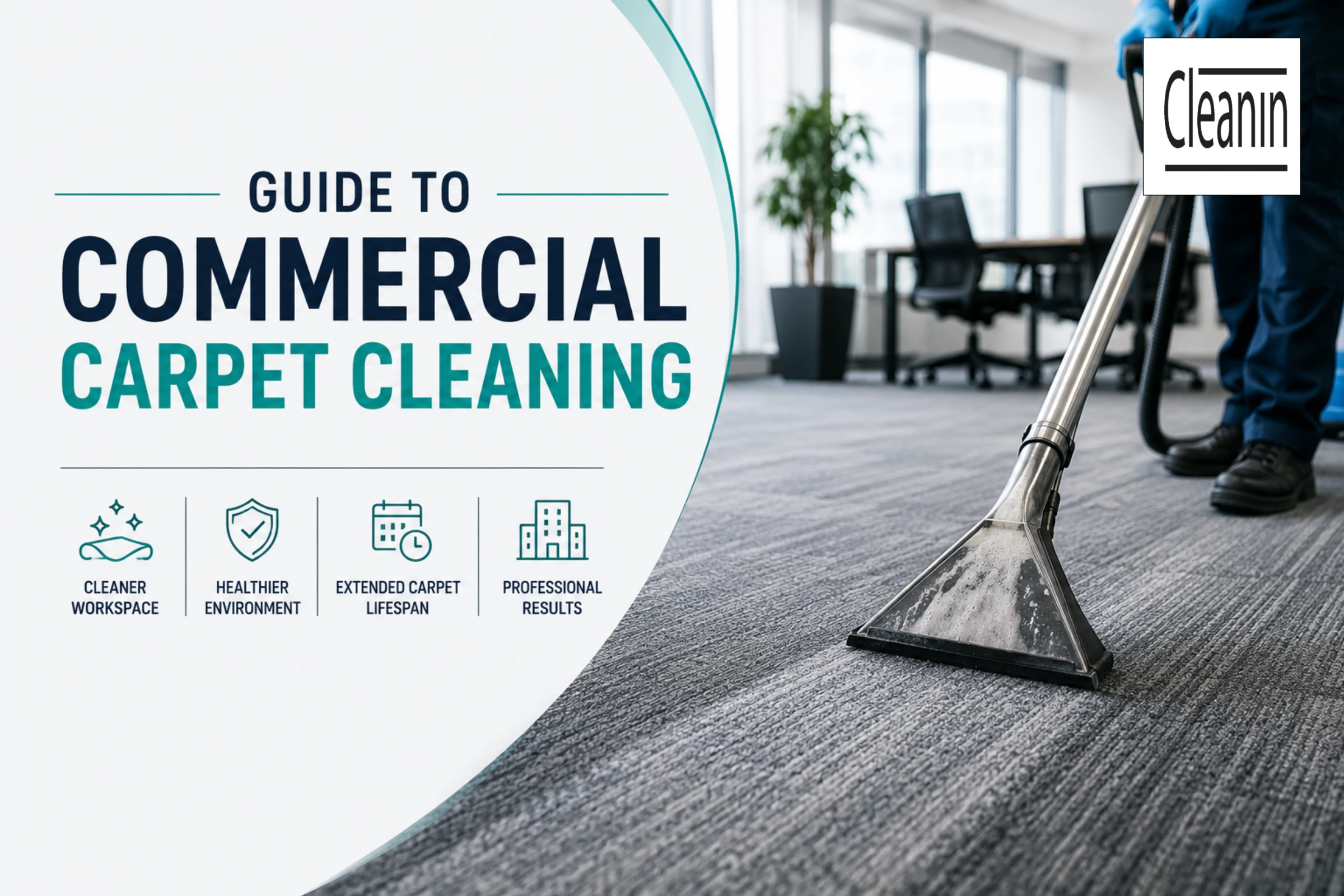
Commercial carpet cleaning is a specialised commercial cleaning service designed to restore the cleanliness, appearance, and condition of carpets in business environments. With professional equipment and cleaning methods, the carpet cleaning service removes embedded dirt, eliminates stains and odours, improves indoor air quality, and extends the lifespan of commercial flooring.
Commercial carpet cleaning is a specialized commercial cleaning service designed to restore the cleanliness, appearance and condition of carpets in business environments. With professional equipment and cleaning methods, the carpet cleaning service removes embedded dirt, eliminates stains and odours, improves indoor air quality and extends the lifespan of commercial flooring. When commercial carpets need more than routine vacuuming, professional carpet cleaning services using commercial-grade equipment and proven methods restore appearance, remove embedded contaminants and help extend the life of your flooring investment.
In this guide, you’ll learn what commercial carpet cleaning involves, the cleaning methods professionals use, how often carpets should be cleaned, the factors that influence cleaning costs, and how to choose the right commercial carpet cleaning service for your business.
What is Commercial Carpet Cleaning?
Commercial carpet cleaning is a specialised commercial cleaning service that removes dirt, stains, allergens, bacteria and other contaminants from carpets in business and commercial environments. Unlike routine vacuuming, professional carpet cleaning uses specialised equipment, cleaning solutions and proven techniques to clean deep within the carpet fibres, helping restore their appearance, hygiene, and condition.
Commercial carpet cleaning is commonly performed in offices, retail stores, schools, medical centres, hotels, strata properties, government buildings and other commercial facilities where carpets are exposed to frequent foot traffic. Regular professional cleaning helps businesses to maintain a clean and professional environment while protecting one of their largest flooring investments.
Although daily vacuuming is an important part of routine maintenance, it cannot remove embedded soil, stains, allergens, or bacteria that accumulate over time. Professional commercial carpet cleaning complements routine cleaning by providing a deeper level of cleaning that improves indoor air quality, removes stubborn contaminants, and extends the lifespan of the carpet.
Commercial carpet cleaning is not a one-size-fits-all service. Cleaning methods are selected based on factors such as carpet type, fibre material, traffic levels, soiling conditions, drying requirements, and the operational needs of the facility. For example, a busy office may require low-moisture cleaning to minimise downtime, while a hotel or educational facility may benefit from hot water extraction to remove heavily embedded dirt and allergens.
As part of a broader commercial cleaning program, carpet cleaning works alongside services such as office cleaning, hard floor cleaning, window cleaning, restroom cleaning and deep cleaning to help businesses maintain a clean, safe, and well-presented workplace throughout the year.
Why Commercial Carpet Cleaning Matters?
Commercial carpets are exposed to constant foot traffic, spills, dust, allergens, and other contaminants that gradually affect their appearance and condition. While routine vacuuming helps remove loose dirt, it cannot eliminate the particles trapped deep within the carpet fibres.
Regular commercial carpet cleaning helps businesses maintain a cleaner, healthier, and more professional workplace. It also protects flooring assets and supports a broader commercial cleaning program.
Some of the benefits of commercial carpet cleaning are:
1. Improves Workplace Hygiene
Carpets can trap dust, bacteria, allergens, and other contaminants carried in on footwear or generated through daily activity. Over time, these particles accumulate beneath the surface and are difficult to remove through routine cleaning alone.
Professional commercial carpet cleaning removes embedded contaminants, helping create a cleaner environment for employees, customers, visitors, and occupants. This is particularly important in offices, healthcare facilities, schools, hotels, and other high-traffic commercial environments where maintaining hygiene is a priority.
2. Extends the Lifespan of Commercial Carpets
Replacing commercial carpet is a significant investment. Dirt and abrasive particles trapped within carpet fibres can cause premature wear as people walk across the surface each day.
Scheduled professional cleaning helps remove these contaminants before they damage the carpet structure. Combined with routine maintenance, commercial carpet cleaning helps preserve the carpet’s appearance, maintain its performance, and extend its service life.
3. Improves Indoor Air Quality
Carpets frequently capture airborne dust, pollen, and other particles. As these contaminants build up, they can become airborne again through everyday foot traffic and workplace activity.
Commercial carpet cleaning removes accumulated debris from deep within the carpet, helping improve indoor air quality and creating a more comfortable workplace for building occupants.
This is particularly relevant for allergy sufferers. See how carpet cleaning reduces allergies for a closer look at which allergens accumulate in carpet fibres and how professional cleaning removes them.”
4. Removes Stains and Odours
Coffee spills, food stains, tracked-in dirt, and moisture can leave commercial carpets looking worn and create unpleasant odours over time. Standard vacuuming is rarely enough to address these issues.
Professional carpet cleaning uses specialised cleaning methods and stain treatments to remove stubborn marks and neutralise odours, helping restore the carpet’s appearance and maintain a fresh, professional environment.
5. Creates a Positive First Impression
Carpets are one of the first interior features employees, clients, and visitors notice when entering a commercial property. Clean, well-maintained flooring reflects positively on the overall presentation of the business, while stained or worn carpets can create the opposite impression.
Regular commercial carpet cleaning helps businesses maintain a professional image across reception areas, meeting rooms, open-plan offices, retail spaces, and other customer-facing environments.
6. Supports a Complete Commercial Cleaning Program
Commercial carpet cleaning is most effective when combined with other professional cleaning services such as routine office cleaning, hard floor maintenance, restroom cleaning, window cleaning, and periodic deep cleaning. Together, these services create a comprehensive cleaning program that supports workplace hygiene, asset protection, and long-term facility maintenance.
Rather than treating carpet cleaning as an occasional task, businesses should include it as part of their ongoing commercial cleaning schedule to maintain consistent cleanliness and presentation throughout the facility.
What are the Common Commercial Carpet Cleaning Methods?
Commercial carpet cleaning is not a one-size-fits-all service. The most appropriate carpet cleaning method depends on factors such as carpet construction, the level of soiling, daily foot traffic, business operating hours, and drying requirements. Professional commercial cleaning companies assess these factors before recommending the most suitable cleaning solution for each facility.
Among the available methods, dry carpet cleaning and hot water extraction (commonly known as steam cleaning) are the two most widely used carpet cleaning methods. Each offers distinct advantages and is suited to different maintenance objectives. If you’re comparing these two approaches specifically, our Dry Carpet Cleaning vs Steam Carpet Cleaning guide explains their differences in detail, including how each method works, their advantages and limitations, drying times, and the types of commercial facilities they are best suited for.
The 5 common commercial carpet cleaning methods are:
- Hot Water Extraction (HWE)
- Dry Compound Cleaning
- Encapsulation Cleaning
- Bonnet Cleaning
- Shampoo Cleaning
1. Hot Water Extraction (HWE)
Hot water extraction also called steam cleaning, is one of the most effective methods for deep cleaning commercial carpets. It works by injecting hot water (between 70°C and 90°C) and a cleaning solution into the carpet under pressure. A powerful extraction machine pulls it back out almost immediately, bringing loosened dirt, oils, allergens, bacteria, and other contaminants with it.
The effectiveness of hot water extraction depends largely on the performance of the extraction equipment. Truck-mounted systems produce much stronger suction than portable machines, so they pull out more moisture and soil in a single pass. Carpets cleaned with truck-mounted equipment typically dry in 4 to 8 hours. Portable units can take 12 to 24 hours, depending on the carpet, humidity, and ventilation.
Because it draws contaminants from deep in the carpet pile rather than just the surface, hot water extraction is generally the preferred method when carpets need a proper reset. Many carpet manufacturers recommend it as part of regular maintenance to preserve carpet performance and keep warranties intact.
Hot water extraction is common in offices, hotels, schools, healthcare facilities, retail spaces, and other commercial settings with heavy foot traffic. It works particularly well for carpets that are heavily soiled, overdue for an annual clean, coming off a construction job, or have built up staining and odour over time.
While hot water extraction provides excellent deep-cleaning results, it is not always the most practical solution for every commercial environment. Businesses that require faster turnaround times may benefit from low-moisture alternatives.
Best suited for:
- Heavily soiled commercial carpets
- Annual or scheduled deep cleaning
- High-traffic workplaces
- Removing embedded dirt, allergens, stains, and odours
Things to consider:
- Requires drying time before carpets can be used again.
- Most businesses schedule hot water extraction after business hours or during weekends to minimise operational disruption.
- Drying time varies depending on the extraction equipment, carpet construction, indoor ventilation, and environmental conditions.
2. Dry Compound Cleaning
Dry compound cleaning is a low-moisture carpet cleaning method designed for commercial spaces where carpets need to be cleaned with minimal disruption to normal operations. Instead of using a large volume of water, technicians spread an absorbent cleaning compound across the carpet surface. It’s typically made from biodegradable carrier materials mixed with cleaning agents that attract and bind dirt, dust, and other particles.
A counter-rotating brush machine works the cleaning compound deep into the carpet pile, allowing it to absorb contaminants from the fibres. Once the compound has captured the loosened soil, it is removed using a commercial-grade vacuum, leaving the carpet clean and ready for use.
Because the process introduces very little moisture, there’s almost no drying time. In most commercial environments, carpets can be returned to normal foot traffic within 30 minutes of cleaning. This makes dry compound cleaning a practical choice for facilities that operate throughout the day and cannot accommodate lengthy drying periods.
While dry compound cleaning provides excellent results for routine maintenance, its cleaning action is primarily concentrated within the upper portion of the carpet pile. It is less effective at removing heavily embedded soil, oils, or contaminants that have penetrated deep into the carpet backing. For restorative cleaning or heavily soiled carpets, methods such as hot water extraction generally provide a more thorough clean.
Best Suited For
- Offices that operate during normal business hours
- Retail stores with continuous customer traffic
- Hotels, reception areas, and public spaces
- Educational facilities and government buildings
- 24-hour workplaces where downtime must be minimised
- Routine commercial carpet maintenance programs
Things to Consider
- Provides minimal drying time, allowing carpets to be used shortly after cleaning.
- Removes surface and moderate soil effectively but is not intended for heavily soiled carpets.
- May not completely remove embedded oils, deep stains, or contaminants trapped near the carpet backing.
- Works best as part of a scheduled maintenance program, with periodic hot water extraction used to restore carpets at deeper levels.
- The effectiveness of the process depends on the quality of the cleaning compound, brush agitation, and thorough vacuum recovery.
3. Encapsulation Cleaning
Encapsulation cleaning is a low-moisture method used as part of regular commercial carpet maintenance. Rather than flushing contaminants out with water, it uses a polymer-based solution that surrounds dirt and soil particles, locking them inside microscopic crystals.
The solution is applied across the carpet and worked into the fibres with a rotary or counter-rotating brush machine. As it dries, the polymer crystallises around loosened soil, stopping it from re-attaching to the fibres. Routine vacuuming over the next 24 to 48 hours pulls the crystallised particles out. Because the residue dries into a hard crystal rather than a wet film, it’s also less likely to attract new dirt in the meantime.
Because encapsulation uses very little moisture, carpets dry within 30 to 60 minutes, making it one of the most practical cleaning methods for facilities that operate throughout the day. Offices, schools, retail stores, hotels, and other high-traffic commercial environments often use encapsulation method to maintain carpet appearance between scheduled deep cleaning services.
Although encapsulation provides excellent results for routine maintenance, encapulsation method is not designed to replace restorative cleaning. On heavily soiled carpets or those with significant oil contamination, the polymer cannot encapsulate all embedded contaminants. For this reason, encapsulation is most effective when combined with periodic hot water extraction (HWE) as part of a comprehensive commercial carpet maintenance program.
Best Suited For
- Offices with consistent daily foot traffic
- Retail stores and shopping centres
- Schools, universities, and educational facilities
- Hotels and conference venues
- Government buildings and commercial offices
- Interim maintenance between scheduled deep cleaning services
- Facilities that require carpets to dry quickly and remain operational
Things to Consider
- Produces drying times of approximately 30 to 60 minutes, allowing businesses to resume normal operations quickly.
- Maintains carpet appearance by removing light to moderate soil before it becomes deeply embedded.
- Leaves minimal residue, helping carpets stay cleaner between scheduled maintenance visits.
- Does not provide the same level of deep soil removal as hot water extraction for heavily soiled carpets.
- Works best as part of a planned commercial carpet cleaning program rather than as a standalone deep cleaning solution.
- Regular hot water extraction is still recommended to remove accumulated oils, heavy contamination, and deeply embedded soil that encapsulation cannot fully eliminate.
4. Bonnet Cleaning
Bonnet cleaning is a low-moisture commercial carpet cleaning method primarily used to improve the appearance of carpets in high-traffic areas. Rather than cleaning deep within the carpet fibres, it focuses on removing surface soil, stains, and traffic marks to refresh the carpet’s appearance between scheduled deep cleaning services.
The process begins by applying a cleaning solution to the carpet surface. A rotary machine fitted with an absorbent bonnet pad then rotates across the carpet, lifting loosened dirt from the upper layer of the fibres. As the bonnet pad picks up soil, it gets flipped or swapped out to maintain cleaning performance throughout the job.
Because bonnet cleaning removes surface-level contamination with very little moisture, carpets dry quickly and are usually back in use within a short time, which makes it practical for spaces that can’t be taken out of service for long. This makes the method particularly suitable for businesses that need to maintain a clean appearance without interrupting daily operations.
Bonnet cleaning is commonly used in hotel lobbies, reception areas, conference centres, retail stores, office entrances, and other public-facing commercial spaces where presentation is important. It is often performed before events, inspections, customer visits, or as part of an ongoing carpet maintenance program.
While bonnet cleaning effectively restores the appearance of lightly soiled carpets, it does not remove deeply embedded dirt, oils, or contaminants trapped near the carpet backing. Repeated bonnet cleaning without periodic deep extraction can gradually leave soil beneath the carpet surface, reducing overall cleaning effectiveness over time. For this reason, bonnet cleaning should be used as an interim maintenance method alongside periodic hot water extraction or other restorative cleaning techniques.
Best suited for:
- Hotel lobbies and reception areas
- Office entrances and common areas
- Retail stores and shopping centres
- Conference centres and event venues
- Commercial facilities that need a quick appearance refresh
- Interim maintenance between scheduled deep cleaning services
Things to consider:
- Fast drying with minimal disruption to operations
- Removes surface soil and traffic marks, not deep-seated contaminants
- Repeated use without deep cleaning lets soil accumulate beneath the surface
- Works best as part of a planned maintenance program, not as a standalone method
- Periodic hot water extraction is still needed to restore carpet hygiene and remove embedded dirt and oils
5. Carpet shampooing
Carpet shampooing is one of the traditional commercial carpet cleaning methods used to remove dirt, stains, and surface contaminants from carpet fibres. The process involves applying a foaming cleaning solution to the carpet and agitating it with a rotary brush machine. The agitation loosens dirt and debris from the fibres, which is then removed during the process or vacuumed out once the carpet dries.
Before low-moisture and extraction methods became standard, shampooing was common across commercial buildings. It’s less common now because newer techniques generally provide deeper soil removal, shorter drying times, and leave less cleaning residue.
Carpet shampooing can improve the appearance of moderately soiled carpets and is effective at removing visible dirt from the upper layers of the carpet. However, if excess shampoo residue remains after cleaning, it can attract new dirt over time, causing carpets to become soiled more quickly. For this reason, proper rinsing or follow-up extraction is essential to achieve the best results.
Although carpet shampooing is no longer the preferred method for routine commercial carpet maintenance, it may still be suitable for restoring heavily soiled carpets or treating specific areas where additional agitation is required before deep extraction. Professional cleaning companies often combine shampooing with hot water extraction to improve overall cleaning performance and remove any remaining detergent residue.
Best Suited For
- Heavily soiled carpets requiring additional agitation
- Restorative cleaning before hot water extraction
- Commercial facilities with stubborn surface dirt or staining
- Periodic deep cleaning where appearance restoration is a priority
Things to Consider
- Provides stronger mechanical agitation than many low-moisture cleaning methods.
- Can improve the appearance of carpets with moderate to heavy surface soiling.
- May leave detergent residue if the carpet is not properly rinsed or extracted.
- Longer drying times than most low-moisture cleaning methods.
- Modern commercial cleaning providers generally favour hot water extraction, encapsulation, or dry compound cleaning for routine maintenance because they offer deeper cleaning, faster drying, and reduced residue.
- Shampooing is best used selectively rather than as the primary method for ongoing commercial carpet maintenance.
Commercial Carpet Cleaning Process
Professional commercial carpet cleaning follows a structured process to get consistent results while minimising disruption to business operations. Although the exact process may vary depending on the cleaning method and facility requirements, most commercial carpet cleaning services follow these key steps.
Step 1: Site Inspection and Carpet Assessment
Every job starts with an inspection. Cleaning professionals look at the carpet type, fibre material, soiling levels, stains, traffic patterns, and any areas that need special attention. This also determines which cleaning method is appropriate, flags potential issues like damaged carpet or permanent staining, and helps plan the work around the facility’s operating hours.
Step 2: Pre-Vacuuming
Before any wet or low-moisture cleaning starts, the carpet is vacuumed with commercial-grade equipment to remove loose dirt, dust, sand, and other dry particles that could interfere with the cleaning process.
Getting the dry soil out first means the cleaning method can focus on embedded contaminants rather than surface debris, improving overall cleaning effectiveness.
Step 3: Pre-Treatment of Stains and High-Traffic Areas
Heavy-traffic zones and visible stains get targeted pre-treatment before the main clean. Professional cleaning solutions are applied to loosen oils, dirt, and stubborn stains that have bonded to the carpet fibres.
Reception areas, entrances, corridors, meeting rooms, and walkways often require additional attention because they experience the highest levels of daily use.
Step 4: Professional Carpet Cleaning
With the carpet prepared, cleaning professaionals carry out the chosen cleaning method — hot water extraction, encapsulation, dry compound, bonnet, or another technique suited to the facility.
The goal is to remove embedded dirt, allergens, stains, and contaminants while protecting the carpet fibres and achieving the required level of cleanliness with minimal disruption to the workplace.
Step 5: Spot Treatment and Stain Removal
After the main cleaning process, cleaners inspect the carpet for any remaining stains or marks. Specialised stain removal products and techniques are used where needed to treat individual problem areas without damaging the carpet.
Some stains caused by permanent dyes, chemicals, or prolonged contamination, may not be completely removable. A professional inspection helps set realistic expectations before treatment starts.
Step 6: Drying and Ventilation
Once cleaning is complete, the carpet is allowed to dry using the appropriate method for the cleaning process performed. Depending on the cleaning method, drying may take anywhere from 30 minutes for low-moisture methods to several hours for hot water extraction.
Professional cleaners may use air movers, ventilation systems, or existing HVAC systems to accelerate drying and reduce the time before the area can be safely reopened.
Step 7: Final Inspection and Quality Check
The final step is a walkthrough to confirm that the cleaning has been completed to the required standard. Cleaners check overall cleanliness, stain removal, drying progress, and any areas that may require additional attention.
Many commercial cleaning providers also discuss ongoing carpet maintenance, recommend an appropriate cleaning schedule, and advise when the next professional carpet cleaning service should be carried out based on the facility’s traffic levels and operational requirements.
What Are the Health and Safety Standards for Commercial Carpet Cleaning?
Commercial carpet cleaning involves more than achieving clean carpets. Professional cleaning should also protect building occupants, cleaning staff, and the workplace throughout the cleaning process. Following appropriate health and safety practices helps minimise risks, prevent accidents, and ensure cleaning is completed safely and efficiently.
While health and safety requirements vary depending on the facility and industry, professional commercial carpet cleaning providers typically follow established workplace safety procedures and industry best practices.
Some of the health and safety standards for commercial carpet cleaning are:
1. Conduct a Site Risk Assessment
Before cleaning begins, the work area should be assessed to identify potential hazards. This may include high-traffic walkways, electrical equipment, uneven flooring, restricted access areas, and any obstacles that could affect the cleaning process.
A site assessment also helps determine the most suitable cleaning method and allows work to be planned around the facility’s operating hours.
2. Use Cleaning Products Safely
Professional carpet cleaning products should be selected according to the carpet type and the level of soiling. Cleaning technicians should follow the manufacturer’s instructions for dilution, application, and safe handling to reduce the risk of carpet damage or unnecessary chemical exposure.
Where appropriate, low-odour or environmentally responsible cleaning products may be used to minimise disruption for building occupants.
3. Display Safety Signage During Cleaning
Cleaning equipment, hoses, and damp carpet surfaces can create slip and trip hazards.
Warning signs should be placed around the work area to alert employees, visitors, and contractors that cleaning is in progress. Where possible, access to recently cleaned areas should be restricted until they are safe to use.
4. Minimise Slip and Trip Hazards
Professional cleaners should position equipment and hoses carefully to reduce the risk of accidents. Low-moisture cleaning methods or staged cleaning programs may be recommended in busy workplaces where maintaining safe access is essential.
Ensuring carpets are sufficiently dry before reopening the area also helps reduce the risk of slips.
5. Use Appropriate Personal Protective Equipment (PPE)
Cleaning technicians should wear suitable personal protective equipment based on the tasks being performed. Depending on the cleaning method and products used, this may include gloves, safety footwear, eye protection, or other protective equipment to support safe chemical handling and equipment operation.
6. Follow Safe Equipment Operating Procedures
Commercial carpet cleaning equipment should be inspected and operated according to the manufacturer’s recommendations. Proper maintenance helps improve cleaning performance while reducing the risk of equipment failure or workplace incidents.
Technicians should also use the appropriate equipment for the selected cleaning method to protect both the carpet and the surrounding environment.
7. Schedule Cleaning to Reduce Workplace Disruption
Many commercial carpet cleaning projects are completed after business hours, on weekends, or during periods of low occupancy. Scheduling work outside normal operating hours helps minimise disruption while allowing carpets sufficient time to dry before employees, customers, or visitors return.
How Often Should Commercial Carpets Be Cleaned For Different Facilities?
There is no single cleaning schedule that suits every commercial facility. The ideal frequency for professional commercial carpet cleaning depends on factors such as foot traffic, the type of business, carpet condition, hygiene requirements, and how the space is used on a daily basis.
Facilities with constant visitor traffic generally require more frequent professional cleaning than offices with limited occupancy. Similarly, healthcare facilities, hotels, schools, and retail environments often maintain stricter cleaning schedules to support hygiene standards, protect flooring assets, and maintain a professional appearance.
Routine vacuuming should be carried out daily or as required, while professional commercial carpet cleaning should be scheduled throughout the year based on the facility’s operational needs.
Recommended Commercial Carpet Cleaning Frequency is presented in the table below:
| Facility Type | Recommended Professional Cleaning Frequency | Why It Matters |
|---|---|---|
| Office Buildings | Every 6–12 months | Maintains workplace appearance, removes accumulated dirt, and extends carpet lifespan. |
| Retail Stores | Every 3–6 months | High customer traffic increases dirt, stains, and wear on carpeted areas. |
| Hotels and Hospitality Venues | Every 3–6 months | Frequent guest movement requires carpets to remain clean, hygienic, and well presented. |
| Medical Centres and Healthcare Facilities | Every 3–6 months or as required | Supports hygiene standards and helps manage contaminants in high-occupancy environments. |
| Schools and Educational Facilities | Every 6 months | Removes accumulated dust, allergens, and dirt from classrooms, libraries, and shared spaces. |
| Government Buildings | Every 6–12 months | Maintains professional presentation while protecting flooring assets in public facilities. |
| Strata Buildings and Common Areas | Every 6 months | Preserves the appearance of shared corridors, foyers, and common spaces used by residents and visitors. |
| Conference Centres and Event Venues | Every 3–6 months | Frequent events and heavy foot traffic accelerate carpet wear and staining. |
Why Preventive Maintenance Is Better Than Reactive Carpet Cleaning?
Many businesses arrange carpet cleaning only after stains become visible or carpets begin to look worn. By that stage, dirt, oils, and contaminants have often penetrated deep into the carpet fibres, making them more difficult to remove.
A preventive carpet maintenance program keeps carpets consistently clean instead of allowing contamination to build up over time. It also helps protect flooring assets, improves workplace presentation, supports indoor air quality, and reduces the need for costly restorative cleaning or premature carpet replacement.
Rather than relying on a fixed schedule, businesses should work with a professional commercial cleaning provider to develop a carpet maintenance program based on their facility type, traffic levels, operational requirements, and long-term maintenance goals.
What are the Signs Your Commercial Carpet Needs Professional Cleaning?
Commercial carpets pick up dirt, dust, allergens, and oils through daily use. Routine vacuuming handles loose debris, but it won’t shift embedded soil or restore what the carpet looked like when it was new.
Catching the signs early means booking a professional clean before small problems turn into permanent ones.
The Signs that shows your comercial carpet needs professional cleaning are:
- Visible Dirt and Traffic Lanes
- Persistent stains
- Unpleasant odours
- Increased dust and allergens
- Dull or matted appearance
- It’s been a while since the last professional clean
- Complaints from staff or customers
- Don’t wait until it’s obvious
1. Visible Dirt and Traffic Lanes
Dark walkways, worn traffic lanes, and visible dirt are among the clearest indicators that a carpet requires professional cleaning. These areas experience constant foot traffic, which pushes soil deep within the carpet fibres where regular vacuuming can’t reach.
Professional carpet cleaning restores the carpet’s appearance by removing accumulated dirt and reducing visible wear patterns.
2. Persistent Stains
Coffee spills, food stains, ink, mud, and other contaminants can become permanent if they remain in the carpet for longer periods. When stains continue to reappear after routine cleaning or spot treatment, professional cleaning is often required to remove contaminants trapped beneath the carpet surface.
Early treatment also increases the likelihood of successful stain removal.
3. Unpleasant Odours
Persistent odours often indicate that contaminants have penetrated beyond the surface of the carpet. Food spills, moisture, bacteria, mould growth, and organic matter can all contribute to unpleasant smells that routine cleaning cannot eliminate.
Professional carpet cleaning helps remove the source of the odour rather than simply masking it with deodorising products.
4. Increased Dust and Allergens
If employees frequently notice excessive dust, allergy symptoms, or poor indoor air quality, the carpet may be acting as a reservoir for fine dust, pollen, and other airborne particles.
Deep cleaning removes contaminants that accumulate within the carpet pile and supports a cleaner indoor environment.
5. Dull or Matted Carpet Appearance
Over time, dirt and oils cause carpet fibres to lose their original texture and colour. Even after vacuuming, carpets may continue to look flat, dull, or worn.
Professional cleaning removes built-up residues that reduce the carpet’s appearance and helps restore the texture of the fibres.
6. Longer Time Since the Last Professional Cleaning
Even if carpets appear reasonably clean, they may still contain embedded soil that gradually damages the fibres.
If your facility has not scheduled professional carpet cleaning for an extended period, arranging a maintenance clean can help preserve carpet condition, improve appearance, and prevent excessive soil accumulation.
7. Increased Customer or Employee Complaints
Complaints about dirty carpets, unpleasant odours, or the overall appearance of the workplace can indicate that routine cleaning is no longer sufficient.
Clean, well-maintained carpets contribute to a healthier workplace, reinforce a professional business image, and create a more comfortable environment for employees, customers, and visitors.
8. Don’t Wait Until the Carpet Looks Dirty
Many businesses delay professional carpet cleaning until stains become obvious or carpets appear heavily soiled. By that stage, dirt and contaminants have often penetrated deep into the carpet fibres, making cleaning more difficult and increasing long-term maintenance costs.
Scheduling professional commercial carpet cleaning before these signs become severe helps extend carpet lifespan, maintain workplace presentation, and reduce the need for costly restorative cleaning or premature carpet replacement.
What are the factors that Affect Commercial Carpet Cleaning Costs?
The cost of commercial carpet cleaning varies from one facility to another. There is no fixed price because every project differs in terms of carpet size, condition, cleaning requirements, and operational constraints.
Professional commercial cleaning companies typically assess the facility before preparing a quote. This helps ensure the recommended cleaning method, equipment, and service scope match the needs of the business.
The factors that affect commercial carpet cleaning costs are:
Carpet Size
The total carpeted area is one of the biggest pricing factors. Larger facilities generally require more labour, equipment, cleaning solutions, and time to complete the work than smaller premises.
Businesses with multiple floors, large open-plan offices, or extensive common areas may require a more comprehensive cleaning program than a single office suite.
Carpet Condition
Heavily soiled carpets usually require more intensive cleaning than carpets that receive regular maintenance.
Embedded dirt, stubborn stains, accumulated oils, and long periods without professional cleaning can increase the amount of preparation and cleaning required to restore the carpet.
Cleaning Method
Different cleaning methods involve different equipment, labour requirements, and drying times.
For example, hot water extraction typically requires specialised extraction equipment and longer drying times, while encapsulation cleaning or dry compound cleaning may be more suitable for facilities that require minimal operational downtime.
The selected cleaning method depends on the carpet’s condition, the facility’s operational requirements, and the desired cleaning outcome.
Type of Commercial Facility
Cleaning requirements vary across industries.
An office with light daily occupancy may require a straightforward maintenance clean, while hotels, retail stores, healthcare facilities, schools, warehouses, and other high-traffic environments often require additional attention, specialised procedures, or more frequent cleaning.
The type of facility influences both the scope of work and the resources required to complete the service.
Accessibility and Operational Requirements
The location of the carpeted areas can also affect project complexity.
Facilities with multiple floors, restricted access, occupied workspaces, or limited parking for cleaning equipment may require additional planning and time. Businesses that request after-hours, weekend, or staged cleaning to minimise operational disruption may also have different service requirements.
Stain Removal and Additional Services
Some commercial carpet cleaning projects include services beyond standard carpet cleaning.
Examples may include:
- Spot stain treatment
- Odour removal
- Upholstery cleaning
- Fabric partition cleaning
- Entrance mat cleaning
- Carpet protection treatments
Adding these services increases the overall scope of the project and may influence the final quotation.
Cleaning Frequency
Businesses that maintain a scheduled carpet maintenance program often require less intensive cleaning than facilities where carpets have been neglected for long periods.
Regular maintenance helps prevent excessive soil build-up, making future cleaning more efficient and supporting the long-term condition of the carpet.
How to Choose a Commercial Carpet Cleaning Service?
Choosing the right commercial carpet cleaning provider involves more than comparing prices. The quality of the service depends on the company’s experience, cleaning methods, equipment, safety procedures, and ability to meet the operational requirements of your facility.
Before requesting a quote, consider the following factors while choosing a commercial carpet cleaning service:
Choose a Company with Commercial Cleaning Experience
Commercial carpet cleaning is different from residential carpet cleaning. Business environments have larger areas, heavier foot traffic, tighter scheduling, and sometimes industry-specific requirements.
Look for a provider that regularly works across offices, retail stores, schools, healthcare facilities, hotels, warehouses, and strata buildings. Experience with commercial environments helps ensure the cleaning program is appropriate for your facility.
Ask About the Cleaning Methods
Not every carpet needs the same cleaning approach.
A professional cleaning company should assess your carpet and recommend the most suitable method, whether that is hot water extraction, encapsulation cleaning, dry compound cleaning, bonnet cleaning, or another specialised technique.
The provider should also explain why the selected method is appropriate based on the carpet type, level of soiling, and your operational requirements.
Check the Equipment and Products
The quality of equipment affects results, drying times, and how well the carpet holds up after cleaning.
Professional commercial cleaning companies use commercial-grade extraction machines, low-moisture systems, specialised stain removal products, and equipment suited for large commercial environments. The right cleaning product also protects carpet fibres over time.
Check Their Experience with Your Facility Type
Different industries have different cleaning requirements. An office needs a clean, presentable space on a regular schedule. Healthcare facilities, schools, hotels, and retail environments may need specialised procedures, higher frequency, or work done outside business hours.
A provider with experience in your type of facility helps ensure they understand your operational needs.
Talk About Scheduling
Professional carpet cleaning should fit around your business operations whenever possible. Ask whether the provider offers after-hours, weekend, or staged cleaning to minimise disruption. Businesses that operate continuously or have customer-facing areas often benefit from flexible scheduling and low-moisture cleaning methods that reduce drying times.
Verify Insurance, Safety, and Compliance
Before engaging anyone, check that they carry public liability insurance, follow WHS procedures, and train staff in the safe handling of equipment and chemicals. If your industry has specific hygiene or compliance standards, ask directly how they manage them.
Request a Site Inspection Before Accepting a Quote
Accurate quotations are usually based on a professional site assessment rather than estimates provided over the phone.
During the inspection, the cleaning provider can evaluate the carpet’s condition, identify stains or high-traffic areas, recommend the most appropriate cleaning method, estimate drying times, and prepare a service proposal based on the actual requirements of the facility.
Choose Value Rather Than the Lowest Price
The cheapest quote is not always the best option.
Consider the overall value offered, including the provider’s experience, cleaning methods, equipment, scheduling flexibility, service quality, and ability to support your long-term carpet maintenance program. A well-planned commercial carpet cleaning service can help extend carpet lifespan, improve workplace presentation, and reduce future maintenance costs.
Questions to Ask Before Hiring a Commercial Carpet Cleaning Company
Before making a decision, consider asking:
- What carpet cleaning methods do you recommend for my facility?
- Which method is best suited to my carpet type and level of soiling?
- How long will the carpets take to dry?
- Can the work be completed after business hours or on weekends?
- Do you provide a site inspection before preparing a quote?
- Have you cleaned facilities similar to mine?
- What is included in the quoted service?
- Do you recommend an ongoing carpet maintenance program?
These questions help you compare providers based on service quality and suitability rather than price alone, making it easier to select a commercial carpet cleaning company that meets your facility’s operational and maintenance requirements.
Keep Your Commercial Carpets Clean, Professional, and Well Maintained
Commercial carpets experience constant foot traffic, making regular professional cleaning essential for maintaining appearance, improving indoor hygiene, and extending carpet lifespan.
Cleanin provides professional commercial carpet cleaning as part of our commercial cleaning services across Greater Sydney. Our team assesses your facility, recommends the most suitable cleaning method, and develops a maintenance program tailored to your carpet type, traffic levels, and business operations.
Whether you manage an office, retail store, healthcare facility, school, warehouse, industrial site, hotel, or strata property, we can help you maintain cleaner carpets with minimal disruption to your daily operations.
Request a free site assessment and quote to discuss your commercial carpet cleaning requirements with our team.
Frequently Asked Questions
How often should commercial carpets be professionally cleaned?
Commercial carpets should be professionally cleaned based on the facility’s foot traffic, industry requirements, carpet condition, and daily usage. High-traffic workplaces may require more frequent cleaning than low-occupancy offices. A professional commercial cleaning provider can recommend a maintenance schedule that suits your facility.
What is the best commercial carpet cleaning method?
The best commercial carpet cleaning method depends on your carpet type, level of soiling, drying requirements, and business operations. Hot water extraction is commonly used for deep cleaning, while encapsulation, dry compound cleaning, and bonnet cleaning are often used for routine maintenance or facilities that require minimal downtime.
Can commercial carpet cleaning remove stains?
Yes, commercial carpet cleaning can remove many common stains, including those caused by coffee, food, mud, and general workplace traffic. However, the success of stain removal depends on the type of stain, how long it has been present, the carpet material, and whether the stain has permanently damaged the fibres.
How long does commercial carpet cleaning take to dry?
Commercial carpet cleaning drying times vary depending on the cleaning method, carpet type, humidity, and ventilation. Low-moisture methods such as encapsulation and dry compound cleaning typically dry within 30 to 60 minutes, while hot water extraction may take several hours before the carpet is ready for normal use.
Does commercial carpet cleaning disrupt business operations?
Commercial carpet cleaning does not have to disrupt business operations when it is properly planned. Many commercial cleaning providers offer after-hours, weekend, or staged cleaning services, while low-moisture cleaning methods allow carpets to return to service quickly with minimal interruption.
Is carpet cleaning included in commercial cleaning services?
Yes, carpet cleaning is commonly included as part of commercial cleaning services. Many commercial cleaning providers offer carpet cleaning alongside routine office cleaning, floor care, window cleaning, pressure washing, and other specialised cleaning services. The exact services included depend on the provider and the scope of the cleaning contract.