Post-construction window cleaning removes construction-specific residue from newly installed or renovated glazing before a commercial property is handed over or occupied. It involves removing fine construction dust, paint, plaster, silicone, adhesive, cement residue, and debris that accumulate on the glass, frames, tracks, and sills during building works.
For builders and property managers in Sydney, the objective is not simply to make windows look clean. The window cleaning process must restore clear glazing, remove bonded construction residue without damaging the glass or surrounding materials, and leave the complete window system ready for final inspection. The condition of the residue, type of glazing, frame material and accessibility all influence how the work should be approached.
This guide explains what post-construction window cleaning includes, which residues commonly require specialist treatment, how professionals approach the cleaning process, what equipment and access methods may be required, and when specialist commercial window cleaning is appropriate for a construction handover.
Why Do Windows Need Specialist Cleaning After Construction?
Windows often require post-construction cleaning services because building work leaves residues that routine glass cleaning is not designed to remove. Fine dust can settle across glazing and tracks, while paint, plaster, silicone, adhesive and cement-based materials may bond to surfaces during installation and finishing work.
The timing of residue removal also matters. Some construction deposits become more difficult to remove once they dry, increasing the risk of ineffective cleaning or surface damage if the wrong technique or tool is used. Professional assessment helps determine the appropriate treatment based on the residue type, glass surface, frame material and level of contamination.
Specialist cleaning also addresses parts of the window that are easily overlooked during ordinary glass cleaning. Frames, tracks, sills, edges and corners can retain construction dust and debris even when the main glass surface appears clean. Cleaning these components contributes to a consistent finished condition across the entire window system.
For builders and property managers, the practical benefit is a handover-ready window installation. Proper post-construction cleaning removes visible construction residue, protects finished surfaces from avoidable damage and helps ensure windows meet the expected presentation standard before final inspection or occupancy.
What Does Post-Construction Window Cleaning Include?
Post-construction window cleaning covers the glass and surrounding window components affected by construction activity. The exact scope depends on the condition of the installation, the type of residue present and the project’s handover requirements.
- Glass surfaces: Removes construction dust, paint spots, plaster residue, adhesive marks, water marks and other visible contamination from the glazing.
- Window frames: Cleans dust and construction residue from aluminium, uPVC or other frame surfaces without compromising the finished material.
- Tracks and channels: Removes accumulated dust, small debris and residue from sliding or opening mechanisms where construction materials commonly collect.
- Sills and ledges: Clears fine dust, splashes and debris from horizontal surfaces around the window assembly.
- Edges and corners: Details areas where residue can remain after the main glass surface has been cleaned, particularly around glazing edges and frame junctions.
- Construction residue treatment: Applies an appropriate removal method to bonded materials such as paint, silicone, adhesive, plaster or cement deposits according to the surface and contamination.
- Final detailing and inspection: Checks the completed window system for remaining marks, residue, streaks or missed areas before the property proceeds to final presentation or handover.
The objective is to leave the complete window installation—not just the glass—clean, presentable and ready for inspection or occupancy.
What Construction Residues Are Found on Windows?
Post-construction windows can retain different residues from building, installation and finishing work. The residue type, how firmly it has bonded, and the surface it is on determine the appropriate removal method.
Construction dust: Fine particles from cutting, drilling, sanding and plastering can settle on glass, frames, tracks and sills.
Paint and overspray: Paint splashes and overspray can dry onto glazing and require controlled spot removal.
Plaster and gyprock residue: Dried plaster and fine dust can adhere to glass during finishing work.
Silicone and sealant: Excess material can remain around glazing edges, joints and frames after installation.
Adhesive residue: Tape, labels and protective coverings can leave sticky marks on glass and frames.
Cement and grout: Hardened cementitious residue can leave deposits on glazing and requires careful treatment to prevent surface damage.
Protective film residue: Temporary films used during construction may leave adhesive deposits after removal.
How Is Post-Construction Window Cleaning Performed?
Post-construction window cleaning follows a residue-specific and surface-safe process rather than treating every window in the same way. Professionals first assess the glazing and surrounding components, identify the contamination present, and then select cleaning methods and equipment that suit the surface and site conditions.
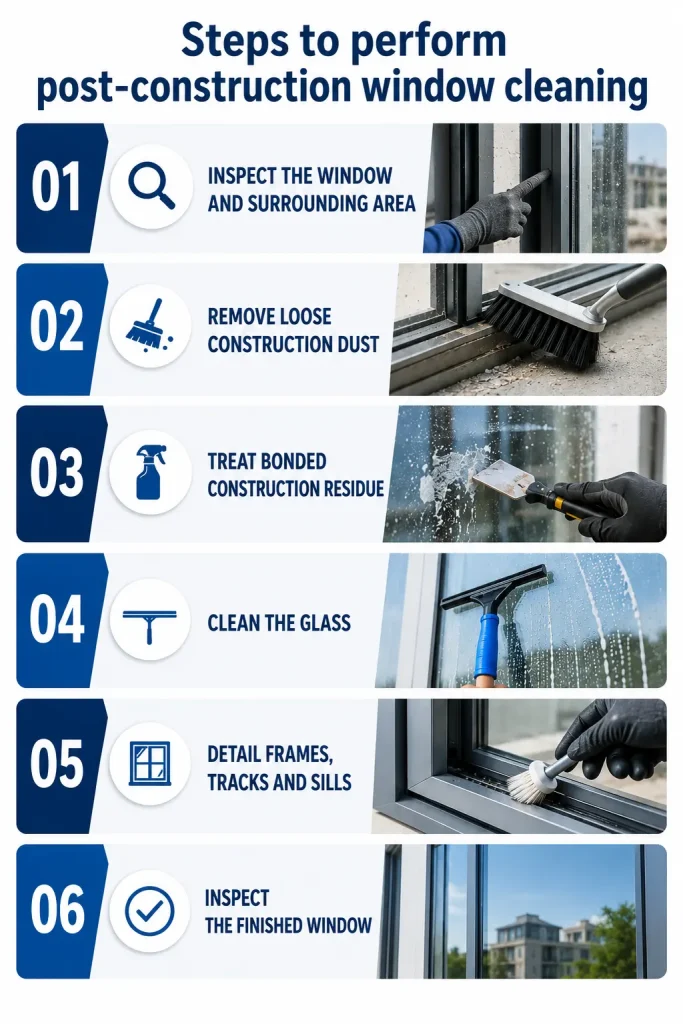
1. Inspect the Window and Surrounding Area
The process begins by checking the glass, frames, tracks, sills and edges for construction residue, surface condition and accessibility. Paint, adhesive, silicone, plaster and cement deposits may require different treatments, while elevated or difficult-to-access windows may require specialist access equipment.
2. Remove Loose Construction Dust
Loose dust and particles are removed before intensive wet cleaning begins. This reduces the amount of abrasive material being moved across the glass and allows subsequent cleaning stages to work more effectively.
3. Treat Bonded Construction Residue
Remaining paint, plaster, adhesive, silicone or mineral deposits are treated according to their material and location. Appropriate tools and cleaning solutions are selected to loosen or remove the residue while minimising the risk of scratching glass or damaging frames.
4. Clean the Glass
Once heavier construction residue has been addressed, the glazing is cleaned using suitable professional glass-cleaning equipment and solution. The surface is worked systematically to remove remaining dirt, cleaning solution and fine residue without leaving unnecessary streaks or marks.
5. Detail Frames, Tracks and Sills
The surrounding window components are cleaned separately because construction debris can accumulate in tracks, channels, frame edges and sills even when the glass itself appears clean. Detailing these areas produces a more complete finished result.
6. Inspect the Finished Window
The final stage is an inspection of the entire window system for remaining residue, streaks, marks, missed edges or visible contamination. Any identified areas are treated before the windows are considered ready for final presentation, inspection or property handover.
What Equipment Is Used for Post-Construction Window Cleaning?
Post-construction window cleaning uses professional equipment selected according to the window surface, construction residue, building height and access conditions. Different tools perform different stages of the work, from removing bonded residue to cleaning glass and detailing window frames.
| Equipment | Primary use |
|---|---|
| Squeegees | Remove water and cleaning solution from glass to produce a clear, streak-free finish. |
| Microfibre cloths | Detail glass edges, frames, sills and other areas where precision is required. |
| Professional window washers/applicators | Apply cleaning solution evenly across larger glass surfaces before extraction with a squeegee. |
| Glass scrapers | Carefully remove suitable bonded materials such as paint spots or other construction residue from compatible glass surfaces. |
| Water-fed poles | Reach elevated external windows from appropriate ground-level positions while delivering purified water to the glazing. |
| Wet/dry vacuums | Remove loose debris and accumulated water from window tracks, channels and surrounding areas. |
| Professional cleaning solutions | Loosen dirt and compatible residues before mechanical cleaning, with product selection based on the surface and contamination. |
| Extension tools | Provide additional reach for windows, frames and other components that cannot be accessed comfortably from ground level. |
When Does Post-Construction Window Cleaning Require Specialised Access Equipment?
Post-construction window cleaning requires specialised access equipment when window height, building design, location or surrounding site conditions prevent safe and effective access from ground or standard working positions.
The access method should be determined during the site assessment rather than selected separately from the cleaning requirements.
Post-Construction window cleaning requires specialised access equipment in the following conditions:
- Multi-storey buildings: External glazing on upper levels may require equipment that provides safe access to elevated windows.
- High or difficult-to-reach glazing: Windows positioned above entrances, atriums, stairwells or other structures may not be accessible using conventional methods.
- Large commercial facades: Extensive areas of external glass can require suitable reach systems or elevated access solutions to achieve consistent coverage.
- Restricted ground access: Landscaping, structures, traffic areas or other site features can limit where cleaning equipment can be positioned.
- Windows with complex architectural layouts: Recessed glazing, curtain walls and irregular window configurations may require additional reach or specialised access.
- Construction sites with changing conditions: Temporary structures, unfinished surfaces and active work areas can affect how external windows are safely accessed.
For Sydney and NSW commercial properties, access planning should also account for site-specific risk controls and applicable work health and safety requirements. The objective is to provide safe access to the glazing without compromising the quality of the post-construction cleaning or the finished building surfaces.
How Can Post-Construction Window Cleaning Prevent Glass Damage?
Post-construction window cleaning helps prevent glass damage by matching the removal technique, equipment and cleaning solution to the type of residue and glazing surface. Construction materials can become firmly bonded to glass, so using an unsuitable tool or excessive force can create scratches, marks or surface deterioration.
- Assess the glass first: Identify the glazing type, surface condition and existing defects before attempting residue removal.
- Identify the residue: Paint, silicone, adhesive, plaster and cement deposits require different treatment approaches. Avoid applying the same removal technique to every contaminant.
- Remove loose particles carefully: Fine dust and grit can act as abrasive material when dragged across glass, so loose debris should be controlled before more intensive cleaning.
- Use suitable removal tools: Scrapers and other mechanical tools should only be used when appropriate for the glass and residue, with controlled pressure and technique.
- Select compatible cleaning solutions: Professional cleaning products should be chosen according to the residue and surface to avoid chemical damage to glazing, coatings or frames.
- Protect surrounding finishes: Frames, seals, sills and adjacent building materials should be considered when treating bonded construction residue.
- Inspect after cleaning: A final inspection can identify remaining contamination, scratches or other surface issues before the property reaches handover.
When Should Post-Construction Window Cleaning Be Completed?
Post-construction window cleaning should generally be scheduled after major dust-producing and finishing work has been completed but before the final property inspection and handover. This timing helps prevent newly cleaned windows from being contaminated again while ensuring construction residue is addressed before the building is occupied.
The timing should be coordinated with the project’s finishing schedule:
- After major construction work: Wait until activities that generate substantial dust, plaster or debris around the glazing have finished.
- After window installation and finishing: Confirm that glazing, frames, seals and surrounding finishes are sufficiently complete before detailed cleaning begins.
- Before final inspection: Complete the window clean early enough to allow inspection and corrective cleaning if remaining residue is identified.
- Before handover or occupancy: The final window condition should be established before the property is presented to the client, tenants or occupants.
- After other dusty finishing activities: If painting, sanding, fit-out or similar work continues after the initial window clean, a further detail clean may be required.
Timing also depends on residue condition and project sequencing. Delaying the removal of certain bonded materials can make treatment more difficult, while cleaning too early can lead to recontamination from ongoing construction activity.
For commercial projects, the most effective approach is to coordinate window cleaning with the construction programme, final cleaning activities, inspection schedule and handover date rather than treating it as an isolated task.
Need Professional Post-Construction Window Cleaning in Sydney?
Getting construction windows ready for inspection or handover requires more than routine glass cleaning. Cleanin provides professional post-construction window cleaning across Sydney, with cleaning methods selected according to the glazing, construction residue, window components and site access requirements.
From glass and frames to tracks, sills and difficult-to-reach glazing, our team can help prepare commercial properties for their final presentation. Contact Cleanin to discuss your project requirements and request a quote for post-construction window cleanin service.
FAQs
Do I need to book post-construction window cleaning separately from a builder’s clean?
Yes. I’d note that a standard builder’s clean typically covers floors, surfaces and fixtures, while glass with bonded construction residue needs the scraping and degreasing steps described above, which a general builder’s clean doesn’t include.
Can post-construction window cleaning damage new glass?
Damage risk comes from mismatched tools, not the process itself. Using a metal blade on coated glass, or skipping a test patch, is where scratching typically originates rather than the removal method as a whole.
How long does post-construction window cleaning take for a mid-size commercial building?
Duration depends on glazing area, residue severity and access method, and is confirmed after a site assessment rather than quoted as a flat figure.