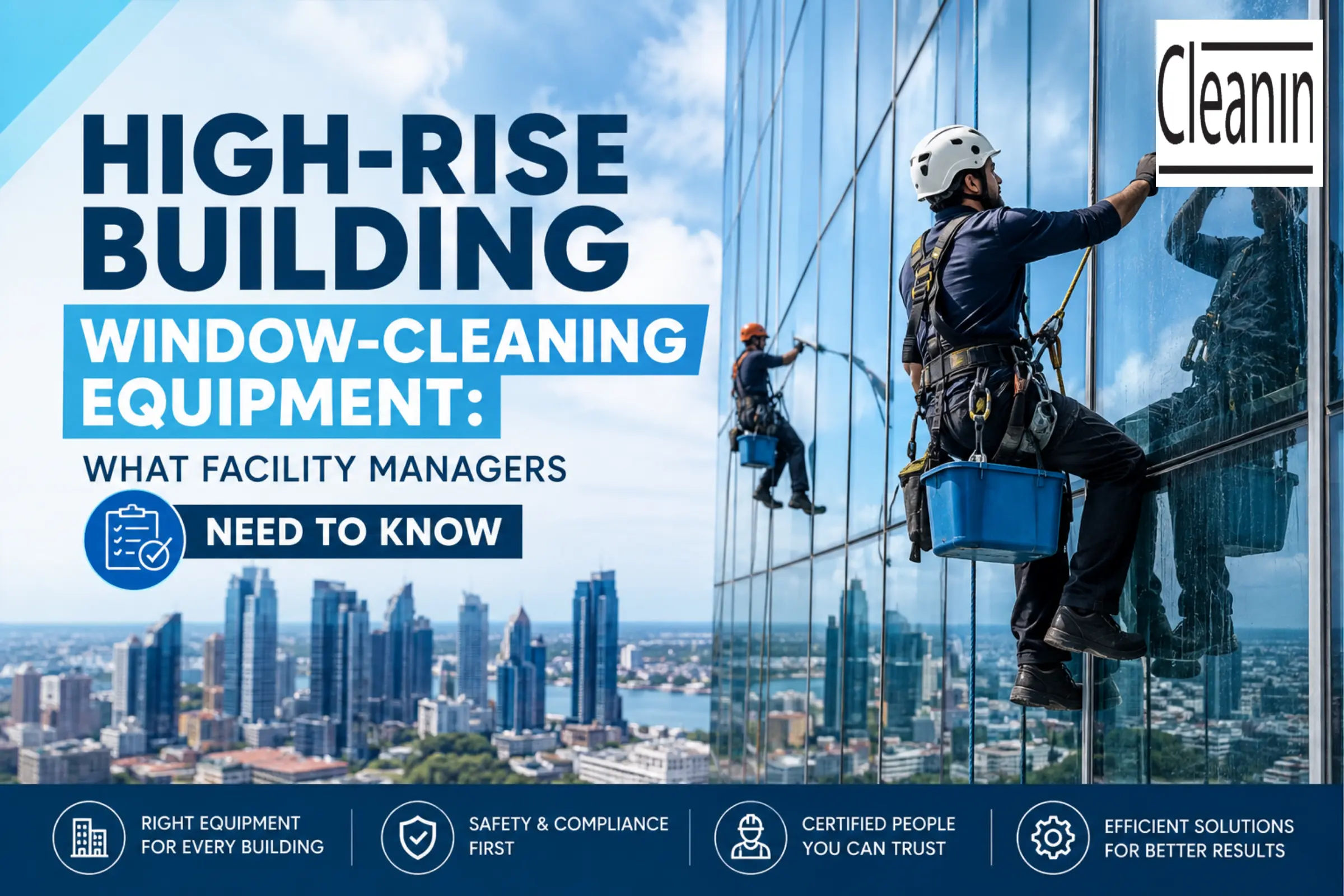
High-rise buildings need specialised window-cleaning equipment because windows located above ground level cannot always be reached safely or effectively from inside or from ground level. The equipment used depends on the building’s height, facade design, window position, available access points and the type of glass being cleaned.
Common window cleaning equipment includes water-fed poles and purified-water systems for accessible sections, rope-access systems for difficult facades, suspended platforms and building maintenance units (BMUs) for controlled vertical access, and elevating work platforms (EWP) where suitable ground or roof access is available.
Each system serves a different purpose. Cleaning tools remove dirt, dust and residue from the glass, access systems position workers at the required height, and safety equipment helps control the risks associated with working above ground.
High-rise window cleaning also involves fall-arrest equipment, roof anchor points, davit sockets and rope systems, along with relevant safety and certification requirements. These factors affect the cost, safety and scheduling of the work, so a quote should identify the proposed access method rather than simply list “window cleaning.
Understanding these equipment types helps facility and property managers assess how high-rise window cleaning can be safely and effectively carried out by professional commercial cleaning teams.
What equipment is used for high-rise window cleaning?
High-rise window cleaning equipment can be grouped into access equipment, window-cleaning tools and safety equipment. Each piece of equipment has a different purpose, and the appropriate combination depends on the building height, facade design, window position and available access.
The equipment used for high-rise window cleaning are:
Access Equipment
Building Maintenance Units (BMUs)
BMUs are permanent roof-mounted systems designed to move workers along a building facade. They are the standard access method on towers above roughly 20 storeys with dedicated facade-maintenance infrastructure, allowing technicians to reach multiple levels of external windows without separate rigging setup each visit.
Suspended or Swing-Stage Platforms
These platforms are suspended from the roof and can be raised or lowered along the facade. They typically cover the 6–20 storey mid-rise band on buildings without an installed BMU, giving workers stable access to large sections of external glazing across several levels at once.
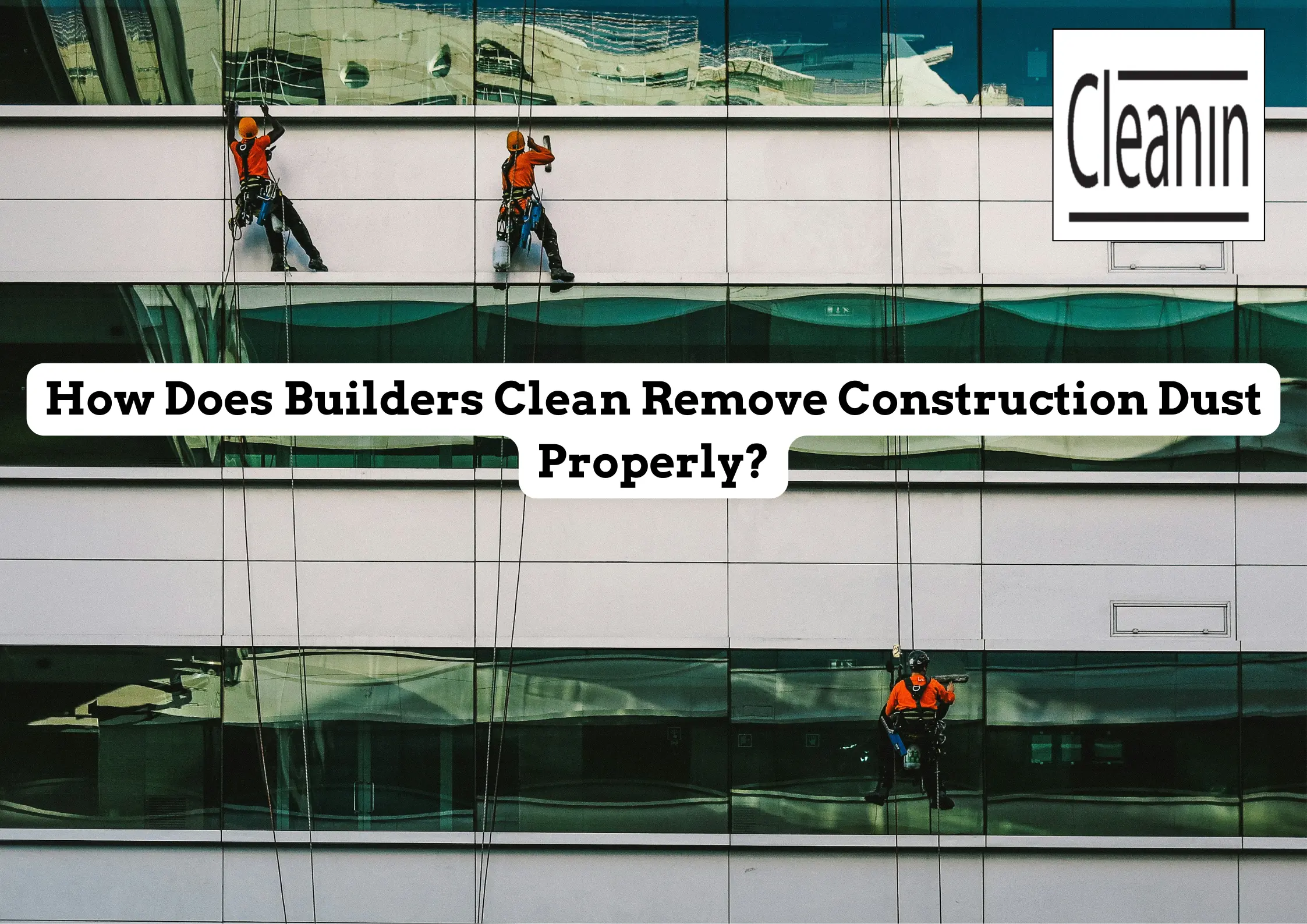
Rope-Access Systems (IRATA-Certified Technicians)
Rope access allows trained technicians to reach windows from the roof or another suitable anchor point without installing a suspended platform. It is particularly useful for irregular facades, restricted areas, and sections where conventional access equipment cannot provide practical access. The system relies on two independently anchored lines: a static working line that bears the technician’s weight, and a dynamic backup line that arrests a fall if the primary line is compromised.
Technicians performing rope access on Australian commercial buildings should hold an IRATA (Industrial Rope Access Trade Association) certification, graded Level 1 through 3 depending on supervisory responsibility. This is a specific, checkable credential, and a legitimate high-rise contractor will produce it on request, not just claim “trained staff.”
Water-Fed Poles
Water-fed poles use long, lightweight poles with brush heads and purified water to clean suitable windows from a safe position below. They’re generally effective up to around 20 metres, or roughly six storeys, which is why they’re used for the lower floors of a high-rise even when upper floors need rope access or a BMU.
Robotic and Drone-Assisted Systems
Robotic crawler units, which adhere to the glass using suction or magnetic tracking, are increasingly used on large flat curtain-wall sections where the facade geometry suits automated coverage. Drones are used less often for the cleaning itself and more for pre-clean facade inspection, spotting cracked seals or damaged panels before technicians are deployed. Neither replaces certified access methods on irregular or heritage facades.
Anchor Points, Davits, and Fall-Arrest Hardware
Every access method above, whether BMU, swing stage, rope, or robotic system tethered for retrieval, depends on anchor infrastructure that’s separate from the visible equipment: roof anchor points, davit sockets, and fall-arrest lines rated to AS/NZS 1891 for height safety. These anchors serve a dual role, connecting harnesses for fall protection and providing the fixed points that rope systems and swing stages rig from. They need periodic load testing and a compliance certificate, usually renewed annually.
This is the part of the job that’s invisible from the ground and easiest for an under-qualified operator to skip. A facility manager should ask for the building’s current anchor point certification before any contractor sets foot on the roof, not after.
Window-Cleaning Tools
Squeegees
Squeegees remove water and cleaning solution from the glass after washing. They are commonly used where technicians have direct physical access to the window surface, including windows reached through platforms or rope access. Blades wear down with use and are typically replaced well before they start streaking, since a degraded blade is a common cause of a poor-looking finish despite otherwise correct technique.
Applicators
Applicators apply cleaning solution across the glass before the squeegee stage. They are useful for loosening dirt, dust, and surface residue before the glass is wiped dry.
Microfibre Tools
Microfibre cloths and tools are useful for wiping frames, edges, detailing areas, and removing remaining marks after the main glass-cleaning process.
Purified-Water Brush Heads
These brush heads are attached to water-fed poles and use purified water to loosen and rinse dirt from suitable glass. Because the water is deionised, the glass air-dries spot-free without needing a squeegee pass, which is what makes the method viable from a fixed ground position.
Safety Equipment
Harnesses
Harnesses form part of personal fall-protection systems used where workers are exposed to fall hazards. Their use depends on the selected access method and the requirements of the work system, and they’re inspected before each use, not just on a periodic schedule like the anchor hardware they connect to.
Lifelines
Lifelines provide a continuous connection point for suitable fall-protection systems. They support controlled movement along areas where workers need to operate near exposed edges, distinct from the working and backup lines used in rope access itself.
The important distinction is that access equipment determines how workers reach the window, cleaning tools determine how the glass is cleaned, and safety equipment supports controlled work at height. Not every high-rise building requires every item; the equipment combination should match the building’s facade, access conditions, and approved cleaning method.
FAQs
How often should high-rise windows be professionally cleaned?
Most commercial towers schedule this quarterly, though buildings in coastal or high-pollution areas often move to a bi-monthly cycle to manage salt residue and grime buildup.
What equipment is used for high-rise window cleaning?
Common equipment includes BMUs, suspended platforms, rope-access systems, water-fed poles, squeegees, applicators, purified-water brush heads and microfibre tools, along with suitable safety equipment.
What is a BMU used for in window cleaning?
A Building Maintenance Unit (BMU) provides controlled access to external windows on high-rise buildings. It is commonly installed on commercial towers with dedicated façade-maintenance infrastructure.
When is rope access used for high-rise window cleaning?
Rope access is useful when windows are difficult to reach with platforms or other access systems, particularly on irregular façades, restricted sections and areas with limited conventional access.
Can water-fed poles clean high-rise windows?
Yes, water-fed poles can clean suitable elevated windows that can be safely reached from a lower position. They are most useful where ground-based or other safe positioning provides sufficient reach.
What factors determine which window-cleaning equipment is used?
Equipment selection depends on building height, façade design, window position, existing access infrastructure, access restrictions, surface requirements and cleaning frequency.
Is safety equipment required for high-rise window cleaning?
Yes. The required safety equipment depends on the access method and working conditions and may include harnesses, approved anchor points, lifelines and rope systems.
Does every high-rise building require the same window-cleaning equipment?
No, every high-rise building does not require the same window-cleaning equipment. A building’s height, façade configuration, balconies, setbacks, roof infrastructure, and window design can require a different combination of access and cleaning equipment.