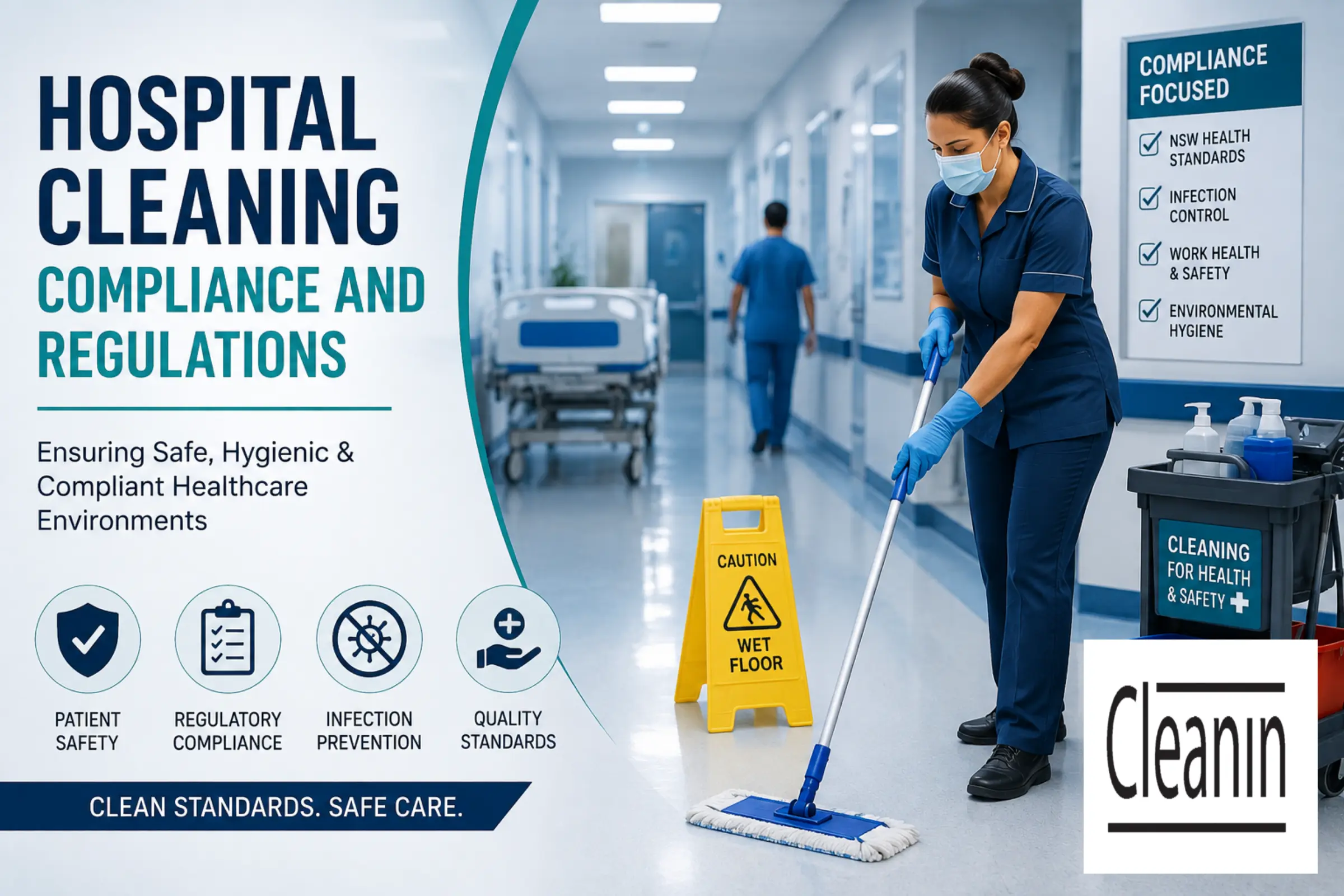
Hospital cleaning compliance in NSW is governed by two separate frameworks, not one. Nationally, the National Safety and Quality Health Service (NSQHS) Standards establish the accreditation requirements that hospital cleaning services must support across Australian hospitals. Alongside these standards, NSW Health sets additional policy directives that define how environmental cleaning should be planned, performed, and monitored across public healthcare facilities. Understanding both frameworks is essential because compliance depends on more than meeting accreditation requirements alone.
One of the most significant NSW Health requirements is Policy Directive PD2023_018, which outlines how hospitals should manage environmental cleaning based on the function and risk profile of different clinical and non-clinical areas. Rather than applying a single cleaning standard across an entire facility, the directive promotes a risk-based approach that aligns cleaning activities with patient safety and infection prevention objectives.
This guide explains how NSQHS Standards and NSW Health policies work together, the environmental cleaning requirements hospitals are expected to meet, how compliance is assessed across different functional areas, and the operational practices that support safe, hygienic, and compliant healthcare environments.
Key Hospital Cleaning Standards and Regulations in Australia
Hospital environmental cleaning in Australia is guided by a combination of national standards, clinical guidelines, and state-based policies that work together to support infection prevention and patient safety. Rather than relying on a single regulation, hospitals operate within a broader compliance framework that defines how healthcare environments should be managed, monitored, and continuously improved. Understanding how these documents complement one another provides the foundation for maintaining consistent environmental cleaning practices across healthcare facilities.
National Safety and Quality Health Service (NSQHS) Standards
The National Safety and Quality Health Service (NSQHS) Standards, developed by the Australian Commission on Safety and Quality in Health Care (ACSQHC), establish the national framework for safety and quality across Australian hospitals and day procedure services. Environmental cleaning is addressed primarily through Standard 3 – Preventing and Controlling Infections, which requires healthcare organisations to maintain clean healthcare environments as part of a broader infection prevention and control system.
Australian Guidelines for the Prevention and Control of Infection in Healthcare
These national guidelines provide evidence-based recommendations for preventing the transmission of infectious agents within healthcare settings. They outline the principles of environmental hygiene, standard and transmission-based precautions, cleaning and disinfection practices, and risk management strategies that support safe patient care across clinical and non-clinical areas.
State and Territory Health Policies
While national standards establish the overarching framework, each state and territory publishes additional policies that reflect local operational requirements. In New South Wales, for example, NSW Health issues policy directives and environmental cleaning guidance that define how public hospitals should plan, implement, and monitor cleaning activities within their facilities. These documents provide operational direction that complements the national standards rather than replacing them.
Australian Commission on Safety and Quality in Health Care (ACSQHC)
The ACSQHC is the national body responsible for developing and maintaining the NSQHS Standards. It also publishes supporting resources, implementation guides, and advisory material that help healthcare organisations translate national standards into practical infection prevention and environmental cleaning programmes.
Understanding NSQHS Standard 3 and Environmental Cleaning
NSQHS Standard 3 – Preventing and Controlling Infections recognises environmental cleaning as a fundamental component of infection prevention and control within Australian hospitals. The standard requires healthcare organisations to implement evidence-based systems that reduce the risk of healthcare-associated infections (HAIs) by maintaining clean clinical environments, supporting safe patient care, and minimising opportunities for infectious organisms to spread through the healthcare setting. Rather than treating cleaning as a routine housekeeping activity, Standard 3 positions it as part of an organisation-wide infection prevention strategy.
Environmental Cleaning Is Part of Infection Prevention
Environmental cleaning under Standard 3 is designed to interrupt the transmission of microorganisms from contaminated surfaces to patients, healthcare workers, and visitors. Clean healthcare environments complement hand hygiene, aseptic technique, equipment reprocessing, and other infection prevention measures by reducing the environmental burden of pathogens within clinical settings.
Cleaning Programmes Must Be Risk-Based
Standard 3 promotes a risk-based approach to environmental cleaning, recognising that different hospital areas present different levels of infection risk. Cleaning programmes should therefore consider factors such as the clinical function of an area, patient vulnerability, frequency of contact with surfaces, and the likelihood of environmental contamination when determining cleaning priorities.
Standardised Systems Promote Consistency
The standard also expects healthcare organisations to implement structured environmental cleaning systems rather than relying on individual practices. This includes clearly defined cleaning procedures, workforce training, documented responsibilities, and processes that help deliver consistent cleaning outcomes across the facility, regardless of department or shift.
Environmental Cleaning Supports Continuous Improvement
Maintaining compliance is not limited to completing scheduled cleaning activities. Standard 3 encourages healthcare organisations to regularly evaluate the effectiveness of their environmental cleaning programme, identify opportunities for improvement, and adapt cleaning practices as clinical risks, patient needs, or healthcare services evolve. This continuous improvement approach strengthens infection prevention while supporting long-term quality and safety objectives.
Why Is Risk-Based Cleaning Essential for Hospital Compliance?
Risk-based cleaning is the foundation of hospital environmental cleaning because not every healthcare space presents the same level of contamination or infection risk. Australian healthcare standards require hospitals to assess how each area is used, who occupies it, and the potential for exposure to infectious microorganisms before determining appropriate cleaning priorities. This approach ensures environmental cleaning resources are directed where they have the greatest impact on patient safety and infection prevention rather than applying the same cleaning programme throughout the entire facility.
Classification of Hospital Risk Areas
Hospitals classify functional areas according to their level of infection risk, the type of clinical activities performed, and the vulnerability of patients receiving care. Areas such as operating theatres, intensive care units, and isolation rooms require more stringent environmental controls than administrative offices or public waiting areas because they present a greater potential for pathogen transmission. This classification forms the basis for determining appropriate cleaning requirements throughout the hospital.
Factors That Determine Cleaning Risk
Cleaning requirements are influenced by several operational factors, including patient susceptibility, the frequency of invasive procedures, the level of surface contact, staff and visitor movement, and the likelihood of contamination from blood, body fluids, or infectious microorganisms. Evaluating these factors enables hospitals to prioritise environmental cleaning based on actual clinical risk rather than location alone.
Supporting Infection Prevention Through Risk Prioritisation
Allocating cleaning resources according to risk helps reduce environmental contamination in areas where patients are most vulnerable to infection. By prioritising higher-risk environments while applying appropriate cleaning measures to lower-risk areas, hospitals strengthen infection prevention strategies and make more effective use of environmental services without compromising safety.
Adapting Cleaning Programmes as Risks Change
Hospital environments are constantly evolving as patient numbers, healthcare services, and clinical activities change over time. A risk-based cleaning programme should therefore be reviewed regularly to ensure environmental cleaning continues to reflect current operational risks, emerging infection threats, and updated healthcare standards. This adaptive approach supports long-term compliance while maintaining safe healthcare environments.
How Do Different Hospital Zones Influence Cleaning Requirements?
Hospitals are divided into functional zones based on the level of clinical activity, patient interaction, and potential exposure to infectious microorganisms. Rather than following a single cleaning schedule across the entire facility, each zone is managed according to its operational purpose and environmental hygiene requirements. This structured approach helps maintain consistent cleaning standards while supporting safe patient care and effective infection prevention throughout the hospital.
Clinical and High-Risk Areas
Clinical areas, including operating theatres, intensive care units (ICUs), emergency departments, isolation rooms, and procedure rooms, require the highest level of environmental cleaning. These spaces accommodate vulnerable patients and invasive clinical procedures, making them more susceptible to environmental contamination. Cleaning programmes focus on maintaining hygienic conditions before, during, and after patient care while ensuring high-touch surfaces and clinical environments remain appropriately managed.
Patient Care Areas
Patient wards, recovery units, consultation rooms, and treatment areas require regular environmental cleaning to support patient comfort, minimise surface contamination, and maintain a safe healthcare environment. Cleaning activities are planned around patient occupancy and healthcare delivery to reduce disruption while ensuring shared equipment and frequently touched surfaces remain hygienic.
Public and Visitor Areas
Reception areas, waiting rooms, hospital entrances, corridors, lifts, and public amenities experience high levels of pedestrian traffic throughout the day. Environmental cleaning in these spaces focuses on reducing the accumulation of dirt, dust, and microorganisms on frequently touched surfaces, helping minimise opportunities for pathogen transmission among patients, visitors, and staff.
Support and Administrative Areas
Administrative offices, staff rooms, meeting rooms, storage areas, and non-clinical workspaces generally present a lower infection risk than clinical environments. Although these areas do not require the same level of environmental controls, routine cleaning remains essential to maintain workplace hygiene, support staff wellbeing, and prevent contaminants from being transferred into patient care areas.
Specialised Functional Areas
Certain hospital environments, such as sterile storage rooms, laboratories, pharmacy departments, and waste handling areas, have unique operational requirements that influence how environmental cleaning is performed. Cleaning procedures within these zones are developed to protect sensitive materials, support clinical operations, and maintain appropriate environmental conditions while aligning with hospital-specific infection prevention protocols.
How Do Cleaning Methods Support Hospital Cleaning Compliance?
Meeting hospital cleaning compliance requirements depends not only on what is cleaned, but also how environmental cleaning is performed. Australian healthcare standards promote evidence-based cleaning methods that reduce the risk of cross-contamination, support infection prevention, and deliver consistent cleaning outcomes across clinical and non-clinical environments. Standardised cleaning procedures help ensure environmental services are performed safely, effectively, and consistently throughout the hospital.
Standardised Cleaning Procedures
Hospitals use documented cleaning procedures to ensure environmental cleaning is performed consistently regardless of the department, shift, or cleaning personnel involved. Standardised workflows establish the correct sequence of cleaning activities, minimise variation in cleaning practices, and help maintain a uniform standard of hygiene across the facility.
Appropriate Use of Cleaning and Disinfection Products
Different hospital surfaces and clinical environments require cleaning products that are suitable for their intended purpose. Environmental cleaning programmes should use approved detergents and hospital-grade disinfectants in accordance with manufacturer instructions, ensuring appropriate dilution, application methods, and contact times are followed to achieve effective cleaning and disinfection without damaging surfaces or equipment.
Colour-Coded Cleaning Systems
Colour-coded cloths, mop systems, and cleaning equipment help reduce the risk of cross-contamination between different hospital areas. Assigning dedicated equipment to specific environments—such as patient bathrooms, clinical treatment areas, and general public spaces—supports infection prevention by preventing contaminants from being transferred from one area to another during routine cleaning.
Safe Handling of Cleaning Equipment and PPE
Cleaning equipment should be maintained in a hygienic condition and used appropriately throughout the cleaning process. Personal protective equipment (PPE) should be selected according to the cleaning task and the level of exposure risk, helping protect environmental services staff while preventing the spread of contaminants within the healthcare environment.
Consistent Cleaning Across Every Shift
Hospital environmental cleaning operates continuously to support healthcare services that function around the clock. Consistency between cleaning teams, shifts, and contracted services is essential to maintaining regulatory compliance, ensuring cleaning standards remain uniform regardless of when cleaning activities are performed or who completes them.
How Do Documentation, Auditing and Quality Assurance Support Hospital Cleaning Compliance?
Effective hospital cleaning compliance depends on more than completing scheduled cleaning tasks. Healthcare organisations are expected to demonstrate that environmental cleaning programmes are planned, consistently implemented, and regularly evaluated. Documentation, auditing, and quality assurance provide measurable evidence that cleaning activities align with organisational policies, infection prevention objectives, and Australian healthcare standards. Together, these processes help hospitals maintain accountability while identifying opportunities to improve environmental hygiene over time.
Documented Cleaning Schedules and Procedures
Hospitals maintain documented cleaning schedules that outline the areas to be cleaned, the frequency of cleaning, assigned responsibilities, and the procedures to be followed. These records establish a consistent approach to environmental cleaning and ensure cleaning activities are performed according to the operational requirements of each hospital department.
Monitoring Cleaning Performance
Regular monitoring helps confirm that environmental cleaning is being carried out as intended. Supervisory inspections, routine observations, and performance reviews allow hospitals to verify that cleaning standards are consistently achieved while identifying areas where corrective action or additional support may be required.
Environmental Cleaning Audits
Auditing provides an objective method of evaluating the effectiveness of hospital cleaning programmes. Hospitals may use structured inspection checklists, environmental cleaning audits, fluorescent marker assessments, ATP testing where appropriate, or other recognised verification methods to assess cleaning outcomes. Audit findings help validate cleaning performance and support evidence-based improvements to environmental hygiene practices.
Staff Training and Competency
Maintaining compliance also depends on ensuring environmental services staff understand current cleaning procedures, infection prevention principles, and safe work practices. Ongoing education, competency assessments, and refresher training help maintain consistent cleaning standards while supporting the implementation of updated policies, procedures, and regulatory requirements.
Continuous Quality Improvement
Quality assurance is an ongoing process rather than a single compliance exercise. Hospitals regularly review cleaning documentation, audit findings, incident reports, and operational feedback to identify trends and improve environmental cleaning programmes. This continuous improvement cycle strengthens infection prevention systems, enhances patient safety, and helps healthcare organisations adapt to evolving clinical risks and regulatory expectations.
What Are the Most Common Hospital Cleaning Compliance Challenges?
Maintaining hospital cleaning compliance is an ongoing operational responsibility rather than a one-time achievement. Hospitals operate continuously, with changing patient volumes, evolving clinical services, and varying infection risks that can influence environmental cleaning requirements. Even with established cleaning programmes, healthcare organisations must regularly review their processes to ensure they continue to meet regulatory expectations and support safe patient care.
Maintaining Consistent Cleaning Standards Across Large Facilities
Hospitals consist of numerous departments with different operational requirements, making consistency a continual challenge. Ensuring environmental cleaning is delivered to the same standard across clinical areas, public spaces, support services, and administrative departments requires clear procedures, effective coordination, and regular oversight.
Responding to Changing Infection Risks
Healthcare environments can change rapidly due to seasonal illnesses, infectious disease outbreaks, or changes in patient acuity. Environmental cleaning programmes must remain flexible so hospitals can increase cleaning activities, adjust priorities, and introduce additional infection prevention measures when clinical risks evolve.
Managing High-Traffic Areas Without Disrupting Patient Care
Many hospital spaces remain occupied throughout the day, including emergency departments, patient wards, and public waiting areas. Cleaning activities must therefore be carefully scheduled and coordinated to maintain environmental hygiene while minimising disruption to patient treatment, clinical workflows, and visitor access.
Maintaining Workforce Competency
Environmental cleaning practices, infection prevention guidance, and healthcare standards continue to evolve. Hospitals need ongoing training and competency assessments to ensure environmental services staff remain familiar with current procedures, safe work practices, and organisational expectations, particularly as new equipment, products, or regulatory requirements are introduced.
Demonstrating Ongoing Compliance
Meeting compliance expectations involves more than completing cleaning tasks. Hospitals must be able to demonstrate that environmental cleaning programmes are consistently implemented, monitored, and reviewed through documented evidence, performance monitoring, and continuous quality improvement. Maintaining accurate records and responding promptly to identified issues are essential for supporting long-term regulatory compliance.
What Happens If a Hospital Fails a Cleaning Compliance Audit?
A failed audit triggers rectification first, but repeated or unresolved failures carry consequences well beyond the immediate cleaning task: subsidy risk for public health organisations, accreditation risk under NSQHS, and, for a privately operated hospital or day procedure centre, a contractual and reputational exposure that sits outside the NSW Health system entirely.
Public Health Organisations Risk Subsidy Eligibility, Not Just a Compliance Note
Because PD2023_018 compliance is a condition of subsidy, a pattern of failed audits that isn’t resolved through rectification and escalation puts funding at risk, not just the facility’s internal compliance record. This is a materially different consequence from a typical failed inspection in most commercial settings, where the cost of non-compliance is reputational or contractual rather than tied to the organisation’s operating funding.
NSQHS Accreditation Can Be Affected by Environmental Cleaning Failures
Standard 3 requires audited cleaning effectiveness as part of ongoing NSQHS accreditation, so a hospital with unresolved environmental cleaning failures isn’t just failing a state-level audit in isolation, it’s generating evidence that can affect its national accreditation standing. Accreditation and the NSW policy layer aren’t separate risk tracks, a failure recorded under one can surface as a problem in the other.
Private Hospitals Face Consequences the Public System Doesn’t Impose Directly
A privately operated hospital or day procedure centre isn’t exposed to the subsidy mechanism the same way a public health organisation is, since it doesn’t rely on NSW Health funding in the same structure. Its exposure runs through NSQHS accreditation directly, and through its own cleaning contract, a facility with a documented pattern of audit failures has clear grounds to review or terminate a cleaning contractor’s engagement, independent of what the public subsidy framework would trigger.
Unresolved Failures Escalate Beyond the Cleaning Team
Where rectification doesn’t close the gap, the escalation process established under PD2023_018 moves accountability beyond the contractor or cleaning team to a higher level within the local health district. At that point, the issue is no longer treated as a cleaning-quality matter alone, it becomes a governance issue the facility has to answer for at an organisational level.
Frequently Asked Questions
What standards regulate hospital cleaning in Australia?
Hospital cleaning in Australia is primarily regulated through the NSQHS Standards, Australian infection prevention guidelines, and state or territory health policies that establish environmental cleaning requirements for healthcare facilities.
What is NSQHS Standard 3?
NSQHS Standard 3 focuses on preventing and controlling infections by requiring healthcare organisations to implement evidence-based systems for environmental cleaning, infection prevention, and patient safety.
Why is risk-based cleaning important in hospitals?
Risk-based cleaning ensures hospital areas are cleaned according to their infection risk, patient vulnerability, and clinical activities, helping reduce the spread of healthcare-associated infections.
How often should hospitals be cleaned?
Cleaning frequency depends on the function and risk level of each hospital area. High-risk clinical environments require more frequent cleaning than lower-risk administrative or public spaces.
How do hospitals monitor cleaning compliance?
Hospitals monitor compliance through documented cleaning schedules, routine inspections, environmental cleaning audits, staff competency assessments, and continuous quality improvement programmes.
What are high-touch surfaces in hospitals?
High-touch surfaces include bed rails, door handles, light switches, handrails, medical equipment, lift buttons, and other frequently touched objects that require regular environmental cleaning.
Why is environmental cleaning important in hospitals?
Environmental cleaning helps reduce surface contamination, supports infection prevention, protects patients and healthcare workers, and contributes to compliance with Australian hospital cleaning standards.