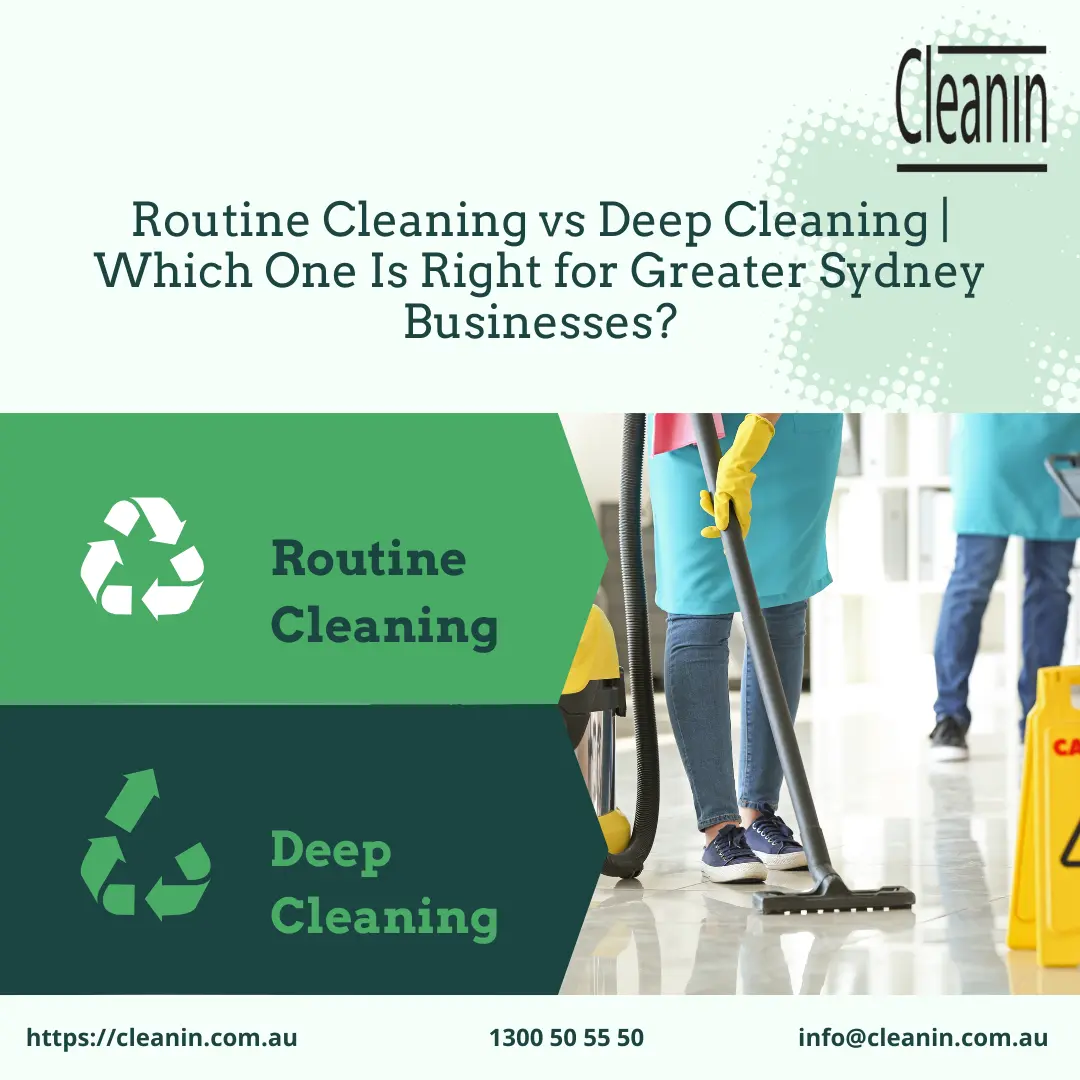
Many business owners and facility managers assume routine cleaning and deep cleaning are the same service performed at different levels of intensity. In reality, they serve different purposes within a commercial cleaning service.
Routine cleaning maintains day-to-day cleanliness, hygiene, and presentation, while deep cleaning removes accumulated dirt, grease, bacteria, and hidden contamination that regular cleaning does not typically address. Understanding the difference helps businesses evaluate service scope, schedule the right commercial cleaning frequency, and maintain a cleaner, safer, and more professional facility.
What is Routine Cleaning?
Routine cleaning is the recurring, day-to-day maintenance and upkeep of a commercial facility that is performed on a regular schedule (daily or multiple times per day) to keep a space clean, orderly, hygienic, and presentable for staff, customers, and visitors.
Routine cleaning tasks include vacuuming floors, mopping hard surfaces, emptying bins, wiping down countertops and door handles, cleaning bathrooms, and restocking consumables.
What is Deep Cleaning?
Deep cleaning is an intensive, project-based cleaning service that targets heavy soil buildup, embedded grime, and contaminants in areas where regular cleaning doesn’t reach.
Deep cleaning tasks include scrubbing tile and grout, pressure washing hard floors, steam-cleaning upholstery, sanitising air vents and ducts, degreasing kitchen extraction systems, descaling fixtures, and applying TGA-registered disinfectants to high-contact zones. These tasks require specialist equipment and trained cleaning personnel. Commercial cleaning services use a wide range of cleaning tools and equipment to perform these procedures safely and effectively, depending on the contamination type, surface material, and cleaning objective.
What are the differences between routine cleaning and deep cleaning?
Routine cleaning maintains workplace hygiene, appearance, and safety on a regular schedule, while deep cleaning provides a more thorough clean by addressing accumulated contamination, neglected surfaces, and hard-to-reach areas throughout the facility.
Routine Cleaning Vs Deep Cleaning: Table Comparison
| Factors | Routine Cleaning | Deep Cleaning |
| Primary Goal | Maintain Hygiene | Restore Hygiene |
| Frequency | Daily, weekly, or fortnightly. | Monthly, quarterly, or bianually on demand |
| Scope of work | Visible and accessible surfaces like floors, bins, bathrooms, countertops, door handles, and consumable restocking | All surfaces, including hard-to-reach areas like grout lines, behind equipment, vents, ducts, fixtures, and structural surfaces |
| Equipment used | Standard mops, vacuums, microfibre cloths, spray bottles, and floor scrubbers | Industrial pressure washers, steam cleaners, extraction machines, grout brushes, and specialist degreasers |
| Products used | General-purpose surface cleaners, disinfectant sprays, and facility-appropriate floor solutions | TGA-registered hospital-grade disinfectants, degreasers, descalers, mould treatments, and enzyme cleaners with SDS documentation required |
| Staff requirement | Trained in facility-specific protocols and recurring task checklists | Trained in hazardous chemical handling, infection control, and industrial equipment operation |
| Compliance value | Supports daily operational safety under the WHS Act 2011 (NSW). Maintains a safe and presentable working environment | Supports audit readiness, infection control obligations, and post-incident documentation. |
| Cost structure | Fixed recurring cost. Easy to budget and include in facility management contracts | Higher per-visit cost. Priced by facility size, scope, and product/equipment requirements |
Does a Commercial Facility Need Both Routine and Deep Cleaning Services?
Yes, a commercial facility needs both routine and deep cleaning services. Routine cleaning maintains day-to-day cleanliness, hygiene, and presentation, while deep cleaning removes accumulated contamination that develops over time.
Routine cleaning focuses on visible surfaces, shared spaces, and frequently used areas. Deep cleaning focuses on hidden contamination, hard-to-reach areas, embedded dirt, grease buildup, and surfaces that require more intensive cleaning methods.
Without routine cleaning, dirt and contamination can quickly affect workplace hygiene and presentation. Without periodic deep cleaning, contaminants may continue to accumulate in areas that are not fully addressed during regular cleaning visits.
Facilities achieve the best cleaning outcomes when routine cleaning and deep cleaning work together. Routine cleaning maintains cleanliness on an ongoing basis, while deep cleaning restores areas that require more detailed attention.
The appropriate balance between routine cleaning and deep cleaning depends on facility type, occupancy levels, hygiene requirements, contamination risks, and operational activities. Offices, healthcare facilities, childcare centres, retail stores, warehouses, strata properties, and industrial facilities all benefit from a cleaning programme that includes both services at suitable intervals.
How Often Should Deep Cleaning Occur in a Commercial Facility?
Deep cleaning service frequency depends on three factors: facility type, occupant density, and the nature of activities performed in the space.
| Facility Type | Recommended Deep Cleaning Frequency |
| Medical and healthcare suites | Monthly or as directed by infection control protocol |
| Commercial kitchens and food-handling areas | Monthly, with quarterly intensive treatments |
| Strata common areas | Quarterly, with post-event cleans as required |
| Office environments | Twice per year or following fit-out changes |
| Childcare and aged care facilities | Monthly, aligned with regulatory requirements |
| Retail and high-footfall spaces | Retail and high-footfall spaces |
What Compliance Risks Does Deep Cleaning Address?
In NSW, facility operators have obligations under the Work Health and Safety Act 2011 to maintain safe working environments.
Deep cleaning directly supports compliance by:
- Reducing pathogen load on high-contact surfaces using TGA-registered disinfectants
- Removing grease, mould, and contaminant build-up that routine cleaning cannot address
- Producing a documented service record that demonstrates due diligence during audits or incident investigations
- Ensuring Safety Data Sheets (SDS) are maintained for all chemical products used on-site
A cleaning contractor that cannot provide product SDS documentation or service records is a compliance liability for the facility operator, not just a service gap.