The difference between a professional Commercial Cleaning Service provider and a non-professional provider is visible in the equipment used on-site.
A professional commercial cleaning company does not rely on generic tools. It uses facility-matched cleaning equipment systems that align with compliance requirements, contamination levels, and asset type.
A mop and bucket are not sufficient for a hospital environment. A domestic vacuum is not sufficient for a post-construction site. A pressure washer without an AS/NZS 4114-compliant setup is not sufficient for an industrial facility’s external hardstand.
This guide explains which tools and equipment are used in professional commercial cleaning services, how each of the equipment is matched to a specific facility type, and what the equipment inventory of a professional cleaning company like Cleanin looks like in practice across Greater Sydney.
What Equipment Is Used in Professional Commercial Cleaning Services?
These are the equipment used in the commercial cleaning services:
- vacuum systems
- floor scrubbing machines
- pressure washing equipment
- microfibre and textile systems
- disinfection and chemical application equipment
- Safety and Protective Equipment
- Waste Management Equipment
- window and facade cleaning equipment
- specialised facility-type equipment
Each category contains specific equipment classes matched to the facility type, floor area, contamination level, and compliance requirement of the site.
Commercial cleaning equipment is selected based on the surface type being cleaned, the contamination category present, the compliance standard applicable to the facility, and the floor area and layout of the site. Equipment chosen without these criteria produces inconsistent results, and in regulated environments like healthcare, education, and post-construction sites, inconsistent results carry compliance and liability consequences.
1. Vacuum Systems
Vacuum systems are used for dry soil removal across carpeted and hard floor surfaces. In professional cleaning environments, this includes upright commercial vacuums for large carpet areas, backpack vacuums for multi-level buildings, wet and dry vacuums for liquid recovery, and HEPA-filtered systems for fine particulate control. HEPA-rated equipment is especially important in healthcare, education, and post-construction environments where airborne contamination control is required.
2. Floor Scrubbing Machines
Floor scrubbing machines are mechanical cleaning systems that combine solution application, surface agitation, and water recovery in a single pass. These machines are used in hospitals, retail centres, warehouses, and strata buildings to maintain consistent floor hygiene standards. Depending on the facility size and layout, they include walk-behind scrubbers, ride-on scrubbers, or compact scrubbers for narrow or confined areas.
3. Pressure Washing Equipment
Pressure washing equipment is used for external and industrial cleaning applications such as car parks, loading docks, building facades, and hardstand areas. These systems operate at varying pressure levels depending on surface type and contamination level. In regulated environments, their use must align with AS/NZS 4114.1 to ensure safe and compliant operation.
4. Microfibre and Textile Systems
Microfibre systems are used to support controlled cleaning and prevent cross-contamination between different facility zones. These systems use colour-coded cloths and mop heads to separate high-risk areas such as bathrooms, kitchens, clinical zones, and general office spaces. All textiles used in commercial cleaning must be laundered in accordance with AS/NZS 4146:2000 to ensure proper hygiene control between service cycles.
5. Disinfection and Chemical Application Equipment
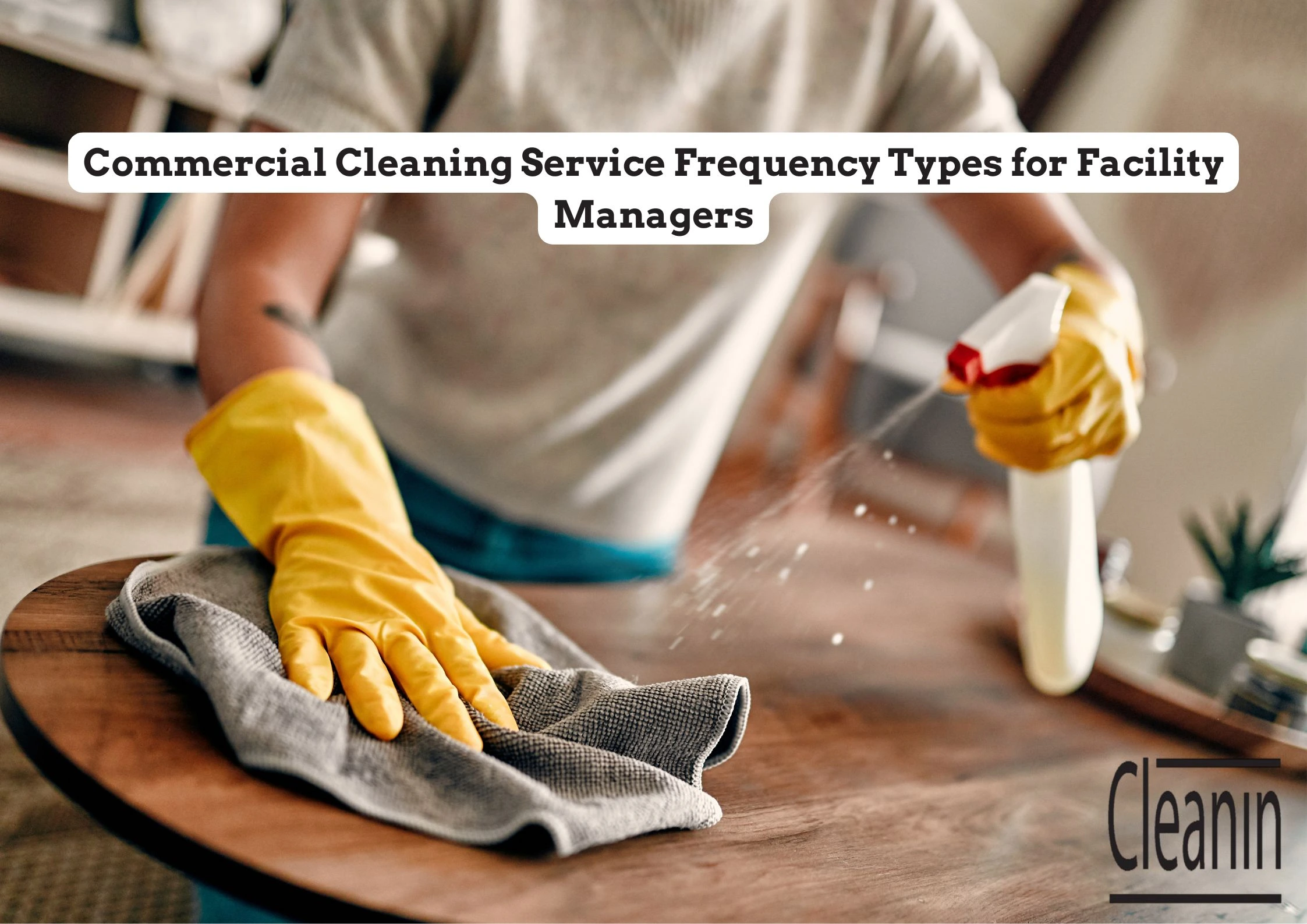
Disinfection systems are used to apply cleaning chemicals in controlled concentrations and ensure correct surface coverage. This includes trigger spray applicators for targeted cleaning, electrostatic sprayers for full-surface coverage, fogging systems for large-area disinfection, and chemical dosing systems for accurate dilution control. These systems ensure that disinfectants achieve their required contact time and performance standards.
6. Safety and Protective Equipment
Safety and protective gear are used to reduce worker exposure to chemicals, biological contaminants, slip hazards, dust, and workplace injuries during commercial cleaning operations. This includes protective gloves, respirators, safety glasses, face shields, slip-resistant footwear, high-visibility clothing, and hazard signage. The type of PPE used depends on the facility type, contamination risk, and cleaning task being performed.
7. Waste Management Equipment
Waste management equipment is used in commercial cleaning services to collect, separate, transport, and dispose of waste generated across different commercial facilities. It supports hygiene control, contamination prevention, and compliance with environmental and WHS regulations in NSW. Waste management equipment includes waste bins, waste liners, transport trolleys, recycling systems, hazardous waste containers, and waste compactors. Each type is selected based on waste category, contamination level, and disposal requirements of the site.
8. Window and Facade Cleaning Equipment
Window and facade cleaning equipment is used for external glass and building surface maintenance. This includes water-fed pole systems for low to mid-rise buildings, elevated work platforms for controlled access, rope access systems for high-rise cleaning, and building maintenance units for permanent facade systems. These activities are regulated under working-at-height obligations within the WHS Act 2011 (NSW) framework.
9. Specialised Facility Equipment
Specialised equipment is used for industry-specific cleaning requirements that go beyond standard maintenance cleaning. This includes hot-water extraction systems for carpet cleaning, ATP testing devices for surface hygiene validation, escalator and lift cleaning systems for transport and retail environments, and commercial kitchen degreasing equipment for hospitality facilities. These tools are selected based on contamination type and operational risk level.
What Types of Vacuum Systems Are Used in Commercial Cleaning?
There are 4 types of vacuum systems used in commercial cleaning services:
- upright commercial vacuums,
- backpack vacuums,
- wet and dry vacuums,
- HEPA H-Class and M-Class Vacuums
Not all vacuums used in commercial cleaning are equivalent. The HEPA filtration rating is the most critical specification for regulated environments as it determines what the vacuum captures and what it exhausts back into the air.
1. Upright Commercial Vacuums
Upright commercial vacuums are used for large carpeted areas commonly found in offices, hotels, and strata buildings. They are built for continuous use and operate at higher motor power than domestic vacuums, typically between 1,000W and 1,400W.
These machines use commercial-grade brush systems that help maintain carpet appearance by lifting dirt while keeping the carpet pile consistent. They are most effective in high-traffic areas where carpets experience constant use and require regular maintenance and cleaning.
2. Backpack Vacuums
Backpack vacuums are used in environments where mobility and flexibility are important. They are commonly used in multi-level office buildings, school classrooms, and strata corridors where cleaners need to move easily between tight spaces, stairwells, and workstation areas.
These units usually have a tank capacity of around 8 to 10 litres and are fitted with HEPA H13 filtration systems, which can capture up to 99.95% of particles as small as 0.3 microns. This level of filtration makes them suitable for environments where air quality matters, such as schools, medical offices, and shared indoor spaces.
3. Wet and Dry Vacuums
Wet and dry vacuums are designed to handle both liquid spills and dry debris, making them essential for versatile cleaning operations. They are commonly used in retail centres, food service areas, and situations involving flood or spill cleanup.
These vacuums range from 20 to 80 litres in tank capacity and are built with motor isolation systems. This design ensures the motor is protected from water exposure, allowing safe and reliable operation during liquid recovery tasks without equipment damage.
4. HEPA H-Class and M-Class Vacuums
HEPA H-Class (H14) and M-Class (H13) vacuums are used in high-risk environments where fine dust and hazardous particles must be strictly controlled. These systems are mandatory on post-construction sites in New South Wales where materials such as silica dust, engineered stone residue, and concrete particles are present, in line with the WHS Amendment (Crystalline Silica Substances) Regulation 2024.
Using a non-HEPA or standard commercial vacuum on a post-construction site containing silica dust is a non-compliant method under the WHS Amendment (Crystalline Silica Substances) Regulation 2024 (NSW). Cleanin uses H-Class HEPA vacuum equipment on every post-construction engagement across Greater Sydney.
What Floor Scrubbing Machines Are Used in Commercial Cleaning?
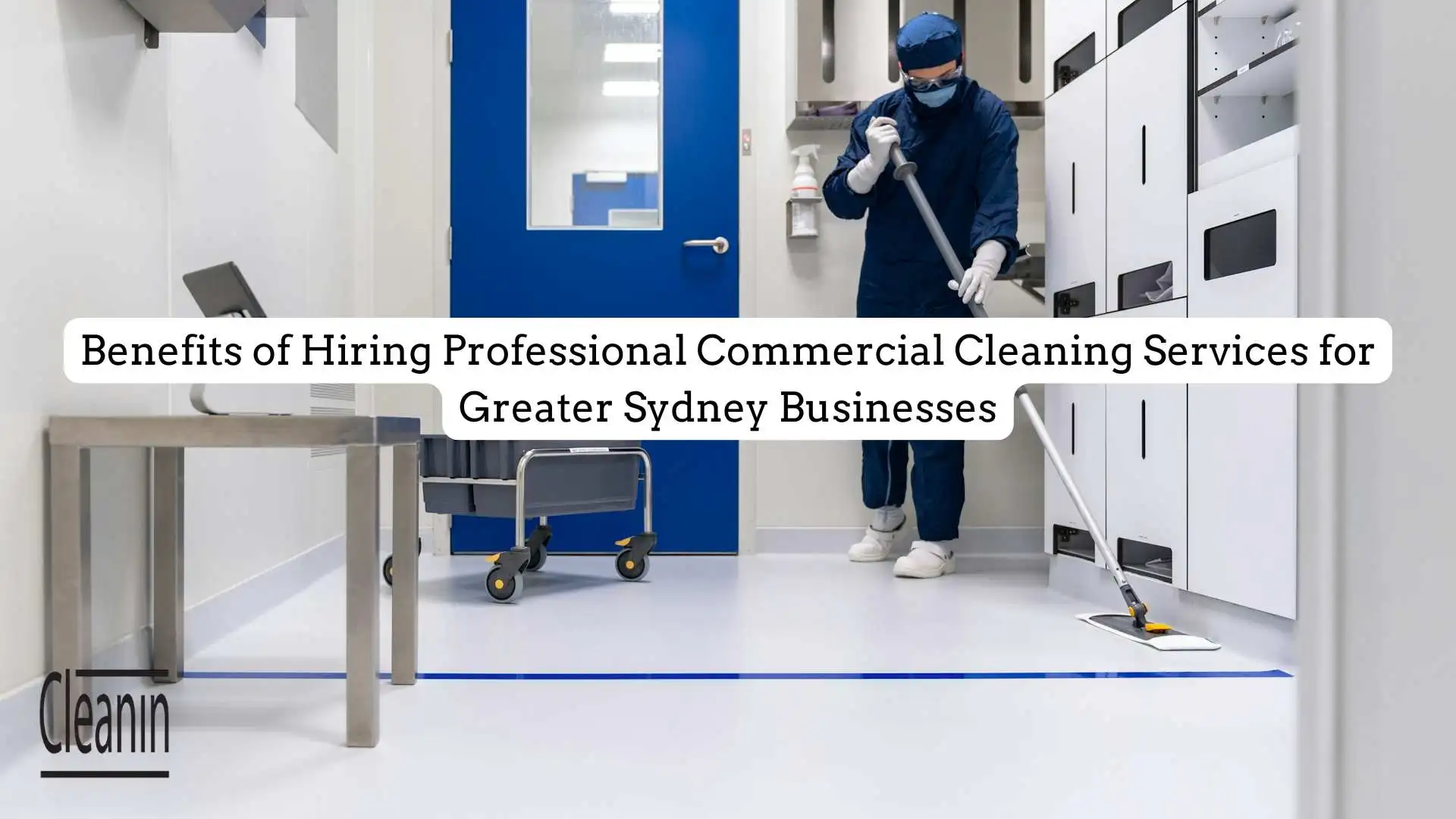
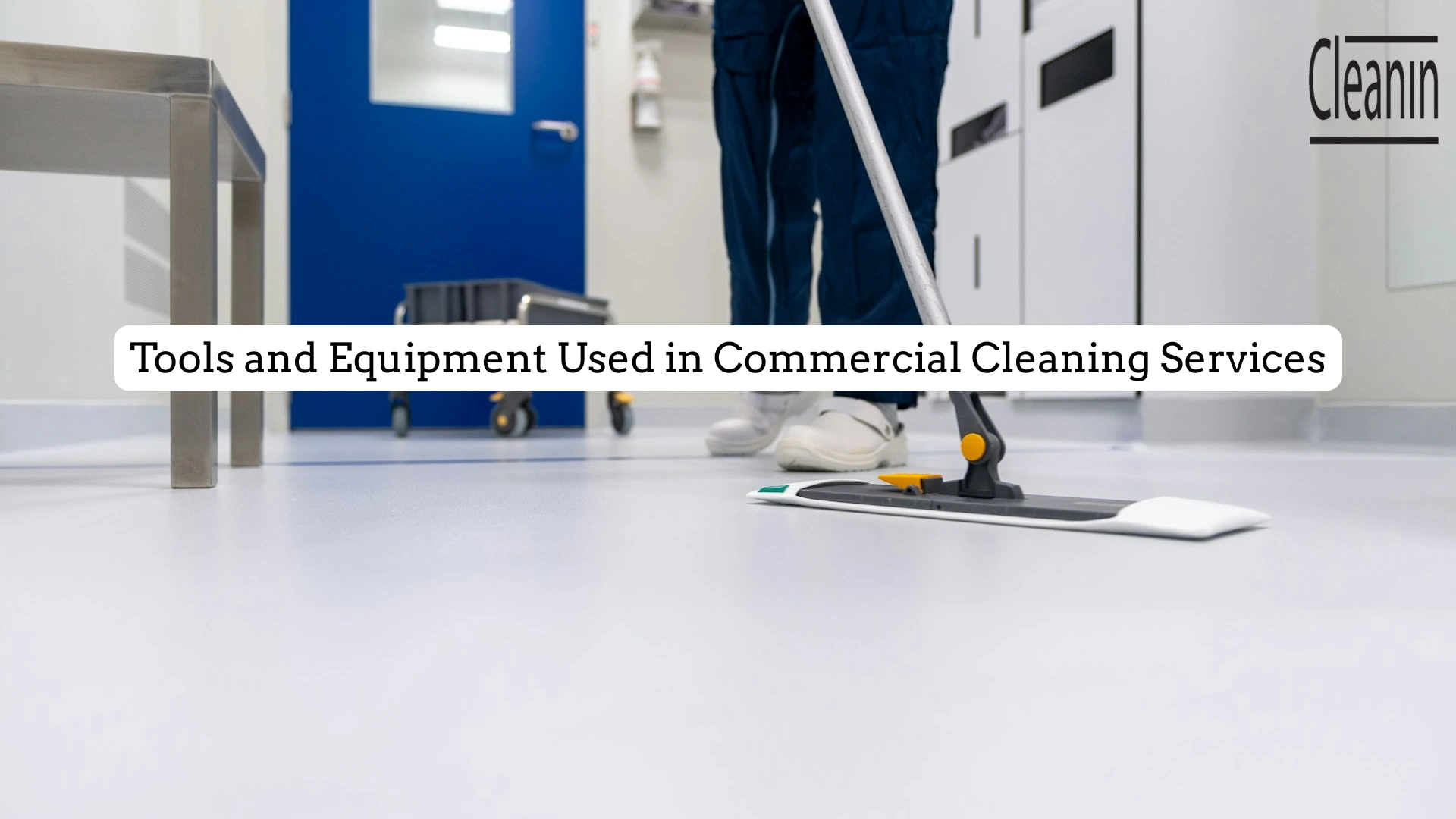
Commercial floor scrubbing machines are used to clean and maintain hard floor surfaces more efficiently and consistently than manual mopping.
The types of floor scrubbing machines used in commercial cleaning services are:
- walk-behind scrubbers.
- ride-on scrubbers.
- compact scrubbers.
- single-disc rotary floor machines.
The choice of equipment is not based on preference. It depends on the size of the floor area, the layout of the space, the type of flooring, and the level of dirt or soil buildup.
1. Walk-Behind Floor Scrubbers
Walk-behind scrubbers are commonly used in medium to large commercial spaces, typically covering areas between 200 and 2,000 square metres per cleaning cycle. They are widely used in hospitals, schools, strata buildings, retail back-of-house areas, and commercial kitchens where controlled and consistent floor hygiene is required.
2. Ride-On Floor Scrubbers
Ride-on scrubbers are used in large open commercial environments where speed and efficiency are essential. Ride-on floor scrubbers are used in warehouses, distribution centres, manufacturing facilities, airport terminals, and large retail spaces such as shopping centre food courts.
As Ride-On floor scrubbers are large and powered machines, operators must be trained in accordance with Safe Work Australia plant operation and workplace safety guidelines before use.
3. Compact and Micro Floor Scrubbers
Compact scrubbers are designed for smaller or narrow spaces where larger machines cannot operate effectively. They are commonly used in bathroom areas, elevator lobbies, narrow retail aisles, school corridors, and food preparation zones.
Their smaller scrub width, usually between 35 and 55 centimetres, allows them to clean tight spaces while still maintaining machine-based cleaning consistency.
4. Single-Disc and Rotary Floor Machines
Single-disc floor machines are used for more detailed floor care tasks such as scrubbing, stripping, polishing, and restoring hard floor surfaces. They are commonly used on materials like vinyl, terrazzo, marble, and timber, especially in environments such as healthcare facilities, hotels, and strata buildings.
What Pressure Washing Equipment Is Used in Commercial Cleaning?
Commercial pressure washing uses cold-water and hot-water high-pressure units equipped with rated pressures between 1,500 and 5,000 PSI, depending on the surface and contamination type.
In Australia, all commercial pressure washing work must follow AS/NZS 4114.1, which sets safety and operational standards for high-pressure water-jetting equipment.
Hot-water systems, usually operating between 60°C and 95°C, are used when grease, oil, and heavy industrial residue need to be broken down. Cold-water systems are used for general surface cleaning where heat is not required.
Pressure washing is never a one-setting process. Every surface needs a different combination of pressure, water temperature, nozzle type, and flow rate. When the settings are wrong, the damage is not minor. It can permanently affect surfaces like pavers, concrete coatings, render, and facade cladding.
What Microfibre and Textile Systems Are Used in Professional Commercial Cleaning?
These are the microfibre systems used in the commercial cleaning services:
- Colour-Coded Microfibre Cloths
- Flat Mop Systems
- Microfibre Laundering
Professional commercial cleaning uses colour-coded microfibre cloth and mop systems to prevent cross-contamination between facility zones. The standard colour-coding system assigns red to bathroom and toilet areas, blue to general surfaces and offices, green to food preparation and kitchen surfaces, and yellow to clinical risk areas in healthcare.
Microfibre cloths must be laundered to AS/NZS 4146:2000 thermal or chemical disinfection standards between service visits to prevent pathogen transfer between sites.
1. Colour-Coded Microfibre Cloths
Colour coding prevents the single most common source of cross-contamination in commercial cleaning: a cloth used in a high-contamination zone being reused in a low-contamination zone. The 4-colour system used by Cleanin across all Greater Sydney facilities is:
| Colour | Zone assignment | Facility types where this applies |
| Red | Toilets, urinals, and high-contamination bathroom fixtures | All facility types with bathroom facilities |
| Blue | General surfaces — desks, countertops, door handles, and office common areas | Offices, strata, retail, schools, hotels |
| Green | Food preparation surfaces, kitchen benchtops, and food contact areas | Restaurants, hotels, schools, childcare centres, aged care |
| Yellow | Clinical risk areas — isolation rooms, infection control zones, wound care areas | Hospitals, medical centres, aged care facilities |
2. Flat Mop Systems
Flat mop systems have replaced traditional loop mop-and-bucket setups in professional commercial cleaning because they deliver consistent chemical application, reduce cross-contamination from soiled mop heads rewetted in the same bucket, and allow the mop head to be changed between zones without interrupting the cleaning sequence. Microfibre flat mop heads are used wet with a diluted disinfectant solution and are standard in hospitals, schools, aged care facilities, and food-handling environments.
3. Microfibre Laundering — AS/NZS 4146:2000
Microfibre cloths and mop heads used in commercial cleaning must be laundered between service visits to eliminate pathogen transfer between sites. AS/NZS 4146:2000 specifies 2 methods for cleaning textile disinfection:
- Thermal disinfection: washing at a minimum of 71°C for 3 minutes — kills vegetative bacteria and most viruses
- Chemical disinfection: washing with a TGA-listed disinfectant at the concentration and contact time specified on the product label
Cleanin launders all microfibre textiles to AS/NZS 4146:2000 standards between every service visit. Facility managers receive confirmation of laundering compliance in the post-service documentation pack.
What Disinfection and Chemical Application Equipment Is Used in Commercial Cleaning Services?
Disinfection and chemical application used in commercial cleaning services are:
- trigger spray applicators for targeted surface disinfection
- electrostatic sprayers for whole-room surface coverage
- fogging machines for large-area airborne disinfection,
- dosing and dilution systems for accurate chemical preparation.
Using the right disinfectant alone is not enough. The way the chemical is applied is equally important. A TGA-listed disinfectant only works properly when it is mixed at the correct concentration and left on the surface for the required contact time. If the product is diluted incorrectly or wiped away too quickly, it may not achieve the disinfecting result stated on the label.
This is why professional commercial cleaning services use equipment that controls chemical concentration, coverage, and application consistency rather than relying on manual estimation.
1. Trigger Spray Applicators
Trigger spray bottles are the most common tool used for targeted surface disinfection.
They are used on high-touch surfaces such as door handles, desk surfaces, elevator buttons, light switches, bathroom fixtures, and kitchen preparation areas.
The most important requirement when using trigger spray disinfectants is contact time. The surface must stay visibly wet for the full dwell time listed on the disinfectant label, which is usually between 30 seconds and 5 minutes, depending on the chemical and the pathogen being targeted.
One of the most common cleaning mistakes is wiping the surface immediately after spraying, which prevents the disinfectant from working effectively.
2. Electrostatic Sprayers
Electrostatic sprayers are used when larger surface coverage is required.
These machines electrically charge disinfectant droplets as they leave the sprayer. The charged droplets then attach evenly to surfaces, including difficult areas such as edges, undersides, corners, and curved objects that are harder to clean with cloths or standard spray bottles.
Electrostatic sprayers are commonly used in hospitals, schools, childcare centres, and food-handling facilities during outbreak cleaning or terminal cleaning procedures.
Droplet size is important for proper coverage. Commercial electrostatic sprayers typically operate between 40 and 80 microns. If the droplets are too small, they remain airborne and do not fully coat the surface. If they are too large, excess liquid builds up and causes uneven application.
3. Fogging Machines
Fogging machines are used for large-area disinfection where airborne application is required. These systems disperse disinfectant into a fine mist that spreads across wider spaces such as warehouses, large office areas, transport facilities, and high-traffic public environments.
Fogging is generally used as a supplementary disinfection method rather than a replacement for manual surface cleaning. Physical contamination, such as dirt, grease, and organic residue, still needs to be removed before fogging can be effective.
The effectiveness of fogging depends on chemical compatibility, droplet distribution, ventilation conditions, and the required settling time after application.
4. Chemical Dosing and Dilution Systems
Chemical dosing systems are used to mix concentrated cleaning chemicals at the exact ratio specified in the product Safety Data Sheet (SDS). These systems can be portable or permanently installed and are widely used in commercial cleaning programmes operating across multiple sites.
Manual chemical mixing often leads to under-dilution or over-dilution. Under-diluted chemicals may not disinfect properly, while over-concentrated chemicals increase the risk of surface damage, chemical residue, and worker exposure.
Dosing systems remove this inconsistency by automatically controlling the chemical-to-water ratio for every application. For professional commercial cleaning services, chemical dosing and dilution systems help maintain compliance, improve safety, and ensure the disinfectant performs as intended across all facility types.
What Safety and Protective Gears are Used in Commercial Cleaning Services?
Safety and protective gear are used in professional commercial cleaning services to reduce worker exposure to chemical, biological, slip, sharp, and contamination hazards across different commercial facility types. The type of protective equipment used depends on the cleaning task, contamination category, chemical risk level, and compliance obligations applicable to the site.
A healthcare facility, commercial kitchen, industrial warehouse, and post-construction site each carry different operational hazards that require different levels of personal protective equipment (PPE) and site safety controls.
Under the WHS Act 2011 (NSW) and WHS Regulation 2017 (NSW), a commercial cleaning company must provide appropriate PPE, worker training, and documented hazard controls before cleaning work begins.
The safety and protective gears that are used in commercial cleaning services are:
Protective Gloves
Protective gloves are used to prevent direct contact with chemicals, contaminated surfaces, and waste materials. Nitrile gloves are commonly used in healthcare and chemical handling, while heavy-duty gloves are used in industrial and pressure washing environments.
Respiratory Protection
Respiratory protection is used where dust, airborne particles, chemical vapours, or biological contaminants are present. P2 respirators and N95 masks are commonly used in post-construction cleaning, healthcare cleaning, and high-dust environments.
Safety Glasses and Face Shields
Safety eyewear protects workers from chemical splashes, debris, and high-pressure spray exposure. These are commonly used during pressure washing, chemical dilution, and commercial kitchen degreasing.
Protective Clothing
Commercial cleaning staff may use disposable coveralls, waterproof aprons, fluid-resistant gowns, and high-visibility clothing depending on the site and contamination risk level.
Slip-Resistant Safety Footwear
Slip-resistant footwear helps reduce fall risks on wet and greasy surfaces. This is especially important in hospitals, kitchens, loading docks, and floor scrubbing operations.
Hazard Signage and Traffic-Control Equipment
Wet floor signs, barricades, hazard cones, and caution tape are used to protect occupants and workers during active cleaning operations in retail centres, strata buildings, warehouses, and public-access facilities.
What Waste Management Equipment is Used in Professional Commercial Cleaning Services?
Waste management equipment in commercial cleaning services is used to safely collect, separate, transport, and dispose of general waste, recyclable materials, sanitary waste, and hazardous waste generated across commercial facilities. The equipment selection depends on waste type, contamination level, facility category, and local environmental disposal regulations.
The waste management equipment used in commercial cleaning services is:
- Waste Collection Bins and Sorting Systems
- Waste Liners and Containment Bags
- Trolleys and Waste Transport Equipment
- Recycling and Segregation Equipment
- Hazardous and Clinical Waste Containers
- Waste Compactors and High-Volume Disposal Systems
Waste Collection Bins and Sorting Systems
Waste bins are the first point of separation in commercial cleaning. Facilities use general waste bins, recycling bins, and sanitary bins, depending on the area. Colour-coded systems are commonly used to reduce mixing of waste and improve segregation accuracy across commercial sites.
Waste Liners and Containment Bags
Waste bags are used to contain and transport waste safely without leakage or contamination.
Standard bin liners are used for general waste, while stronger or biohazard-rated bags are used in healthcare and high-risk environments. Double-bagging is often used in clinical or contaminated areas.
Trolleys and Waste Transport Equipment
Waste trolleys are used to move waste through buildings without manual carrying, reducing spill risk and worker strain.
Smaller trolleys are used in offices, while larger enclosed carts are used in hospitals, retail centres, and large commercial buildings.
Recycling and Segregation Equipment
Recycling equipment helps separate materials like paper, plastics, and cardboard at the source.
In larger facilities, balers or compacting systems are used to reduce waste volume and improve storage efficiency before collection.
Hazardous and Clinical Waste Containers
Special containers are used for hazardous waste such as sharps, chemicals, and contaminated materials.
These systems are essential in healthcare, laboratories, and cleaning operations involving biological or chemical risks.
Waste Compactors and High-Volume Disposal Systems
Waste compactors are used in high-volume sites like shopping centres, hotels, and industrial facilities. They compress waste to reduce storage space, control odour, and reduce collection frequency.
What Window and Facade Cleaning Equipment Is Used in Commercial Cleaning Services for Commercial Buildings?
Commercial window and facade cleaning uses different access systems depending on building height, facade material, site access conditions, and safety requirements.
The four main access systems for window and facade cleaning are:
- reach-and-wash water-fed pole systems
- elevated work platforms (EWPs)
- rope access systems
- building maintenance units (BMUs).
Each system is not just a “method” but a complete equipment setup that includes access tools, safety systems, water delivery systems, and cleaning applicators designed for specific building conditions.
1. Reach-and-Wash Water-Fed Pole Systems
Reach-and-wash systems are used for low-rise and mid-rise commercial buildings up to around 25 metres.
This equipment uses carbon fibre or fibreglass poles with soft brush heads and purified water delivery. Operators clean from ground level, which reduces the need for ladders or elevated access equipment.
The water is filtered through reverse osmosis or deionisation systems, so it dries without streaks or mineral marks on glass and facade surfaces.
Although no working-at-heights permit is usually required below 2 metres, a site risk assessment is still needed to manage pedestrian movement, overhead hazards, and pole handling safety.
2. Elevated Work Platforms (EWPs)
EWPs are used when facade areas cannot be safely reached from the ground, typically in buildings between 2 and 25 metres.
Common equipment includes scissor lifts, boom lifts, and cherry pickers, which may be electric for indoor use or diesel for outdoor work.
EWP operations require a SWMS and trained operators. Boom lift use also requires a high-risk work licence (TLILIC0003). These systems are used when stable elevated access is needed for detailed cleaning or maintenance tasks.
3. Rope Access Systems
Rope access systems are used for high-rise buildings where EWPs cannot reach the facade safely.
This equipment includes industrial harnesses, rope systems, and certified anchor points compliant with AS 4488 standards.
It is commonly used on tall office towers, hotels, and complex architectural facades.
Because of the high-risk nature of the work, operators must hold IRATA or equivalent rope access qualifications. Each job also requires SWMS documentation, rescue planning, and anchor point verification before work begins.
4. Building Maintenance Units (BMUs)
BMUs are permanent facade access systems installed on high-rise commercial buildings.
They consist of roof-mounted cradles or gondolas that move along fixed tracks, allowing safe and controlled access across building facades.
BMUs are commonly found in premium office towers and large commercial developments that require ongoing facade maintenance.
Operators must follow building-specific procedures, complete training, and ensure regular inspection records are maintained to confirm equipment safety and compliance.
What Specialised Equipment Is Used for Specific Commercial Facility Types?
The specialized equipment used for specific commercial facilities is:
- hot-water carpet extraction machines for hotels, offices, and aged care facilities
- commercial kitchen degreasing equipment for food service venues
- coolroom and cold storage cleaning equipment for food handling and pharmaceutical facilities
- escalator and lift cleaning machines for retail centres
- ATP bioluminescence testing meters for surface hygiene validation in healthcare environments.
Specialist equipment is what separates a general commercial cleaning service from an industry-specific commercial cleaning service.
Hot-Water Extraction Machines — Commercial Carpet Cleaning
Hot-water extraction machines are used for deep carpet cleaning in commercial office buildings, hotels, aged care facilities, and strata common areas.
These machines inject heated water and cleaning solution deep into the carpet fibres and immediately extract the dirty water through a high-powered vacuum recovery system. Commercial units typically operate at water temperatures between 60°C and 85°C to help remove embedded dirt, allergens, stains, and bacteria from high-traffic carpeted areas.
Commercial Kitchen Degreasing Equipment
Commercial kitchen cleaning requires specialised degreasing equipment designed to remove grease, oil, and food residue safely from cooking and exhaust systems.
This equipment includes hot-water pressure washers, exhaust canopy cleaning systems, rotary duct brushes, and grease trap management tools. Hot-water systems are especially important because grease and fat deposits cannot be effectively broken down with cold water alone.
Exhaust canopy and duct cleaning is also a critical fire safety requirement. Grease buildup inside commercial kitchen exhaust systems is one of the leading causes of kitchen fires under Australian fire safety standards.
ATP Bioluminescence Testing Meters
ATP (Adenosine Triphosphate) testing meters are used to measure biological contamination levels on surfaces in real time. These devices provide a Relative Light Unit (RLU) reading within seconds after a surface swab is tested. The reading helps cleaning teams verify whether a surface has been cleaned to the required hygiene standard.
ATP testing is commonly used in hospitals, medical centres, healthcare facilities, and food preparation environments where hygiene validation is critical.
Escalator and Lift Cleaning Machines
Escalator cleaning machines use rotating brushes and vacuum extraction systems to clean deep between escalator steps and comb plates where dirt, debris, and biological contamination accumulate over time.
These areas are difficult to clean manually and require specialised equipment to maintain consistent hygiene and presentation standards in shopping centres, transport hubs, and large commercial buildings.
Lift cleaning also requires specialised tools and detailing equipment for floor track grooves, door seals, button surrounds, stainless steel panels, and high-touch contact surfaces. Different surfaces inside lift cabins require different cleaning methods to prevent scratching, residue buildup, or surface damage.
What Equipment Does Cleanin Use Across Greater Sydney Commercial Cleaning Services?
Cleanin provides a facility-matched equipment inventory across all commercial cleaning engagements in Greater Sydney. Equipment selection is determined at the site assessment stage and is not standardised across all clients. Every piece of equipment used on a Cleanin site is documented in the scope of works and the site SWMS, giving facility managers a transparent record of the tools deployed at their facility.
Cleanin’s equipment inventory across Greater Sydney includes the following across its 7 facility type categories:
- HEPA vacuum systems: H-Class (H14) and M-Class (H13) HEPA-rated vacuums deployed on post-construction, healthcare, and allergen-sensitive sites; commercial backpack vacuums for multi-level office and school environments
- Floor scrubbing machines: Walk-behind scrubbers for hospital wards, school corridors, and retail back-of-house; ride-on scrubbers for warehouses and large industrial floor plates; compact scrubbers for tight commercial spaces
- Pressure washing equipment: AS/NZS 4114.1-compliant cold-water and hot-water high-pressure units for car parks, loading docks, external hardstand, and commercial kitchen floor surfaces
- Microfibre systems: 4-colour coded microfibre cloth and flat mop systems; all textiles laundered to AS/NZS 4146:2000 thermal or chemical disinfection standards between every service visit
- Disinfection equipment: TGA-listed disinfectants applied via trigger spray with documented contact time compliance; electrostatic sprayers for healthcare terminal cleans and outbreak response scenarios
- Window and facade equipment: Purified water reach-and-wash pole systems for buildings up to 25 metres; EWP-assisted access for mid-rise facades with SWMS and operator ticket documentation
- Specialised equipment: Hot-water extraction carpet cleaning machines; commercial kitchen exhaust degreasing systems; ATP bioluminescence testing meters for healthcare surface validation
Every Cleanin site engagement includes a written scope of work confirming the specific equipment deployed at that facility. This is not a generic equipment list applied across all sites. Facility managers receive this documentation as part of the compliance pack before the first service visit begins.
Cleanin provides professional, equipment-verified commercial cleaning services across office buildings, hospitals, schools, universities, strata complexes, retail centres, industrial facilities, and post-construction sites in Greater Sydney.
Contact Cleanin at cleanin.com.au for a site assessment and written scope of works confirming the equipment and cleaning methods applicable to your facility.