A mop is a cleaning tool used to remove dirt, dust, spills, debris, and contaminants from floor surfaces through wet cleaning, damp cleaning, or dry dust control methods. A mop consists of a handle and an absorbent cleaning head made from materials such as cotton, microfibre, synthetic fibres, sponge, or blended textiles. Commercial cleaning services use mops to maintain floor hygiene, improve workplace safety, control contamination, and preserve the appearance of hard floor surfaces across offices, healthcare facilities, retail stores, educational facilities, warehouses, and industrial environments.
The effectiveness of a mop depends on factors such as mop type, head material, absorbency level, cleaning method, floor surface compatibility, contamination level, and ease of maintenance.
What are the Different Types of Mops Used in Commercial Cleaning Services?
The most common types of mops used in commercial cleaning services include microfiber flat mops, loop-end string mops, cut-end string mops, spray mops, steam mops, dust mops, and spin mops. Each mop type serves a different cleaning purpose and is suited to specific facility environments.
Commercial cleaning companies select mops based on the surface being cleaned, the amount of dirt and liquid present, the level of hygiene required, and the risk of cross-contamination. Some mops are designed for daily maintenance cleaning, while others are designed for heavy-duty cleaning, spill management, sanitisation, or dust control.
Let’s look at each of the mops used in commercial cleaning services:
1. Microfiber Flat Mops
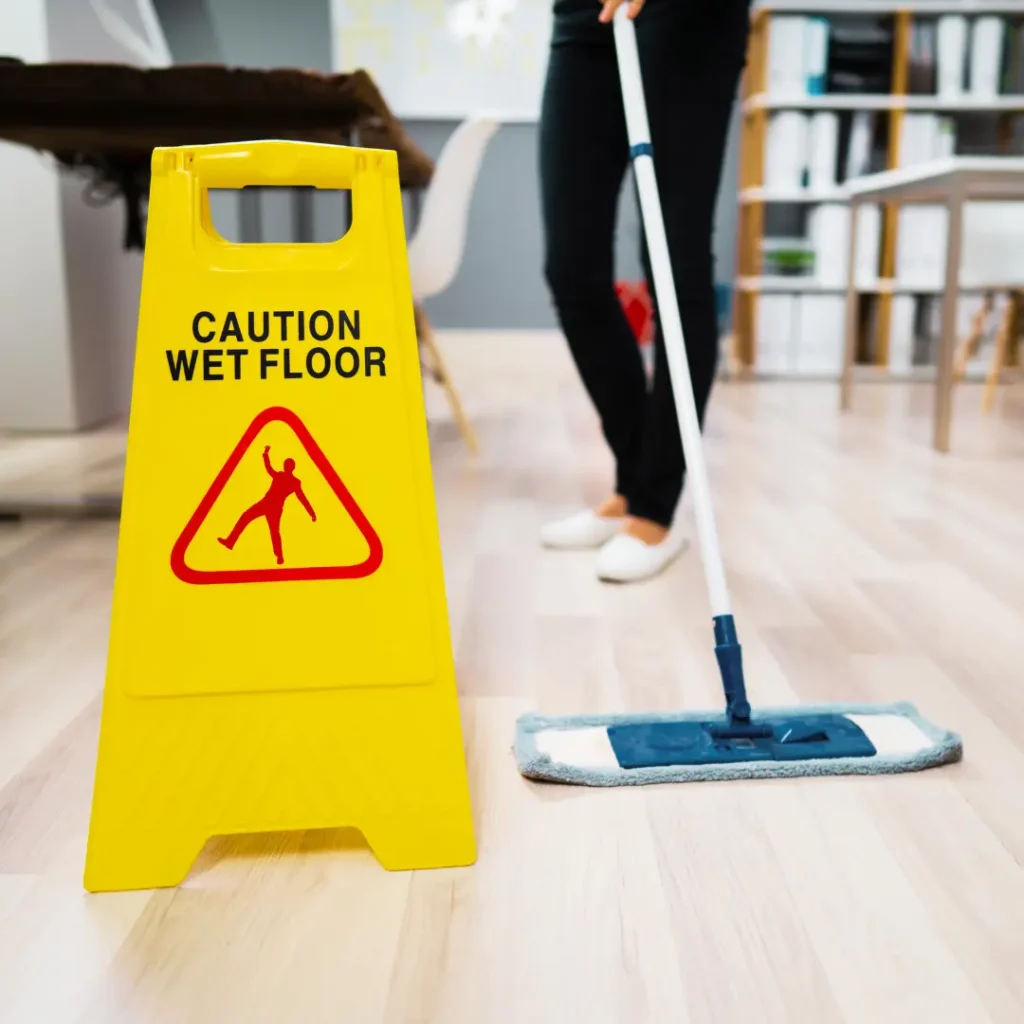
A microfiber flat mop is a lightweight mop system designed for fast, controlled, and efficient floor cleaning. The flat microfibre mop is the most widely used in professional commercial cleaning services.
It uses a rectangular microfibre pad attached to a flat frame and handle. The microfibre material lifts and traps particles rather than pushing them across the floor surface.
Key Benefits of Microfibre Flat Mops
- A microfiber flat mop removes fine particles from floor surfaces
- A microfiber flat mop reduces water usage during cleaning
- A microfiber flat mop head supports repeated use
- A lightweight microfiber flat mop design improves cleaning speed.
Suitable facility types for Microfibre Flat Mops
- Offices
- Schools, Universities, and Childcare centres
- Retail stores
- Hospitals and Healthcare clinics
2. Loop-End String Mops
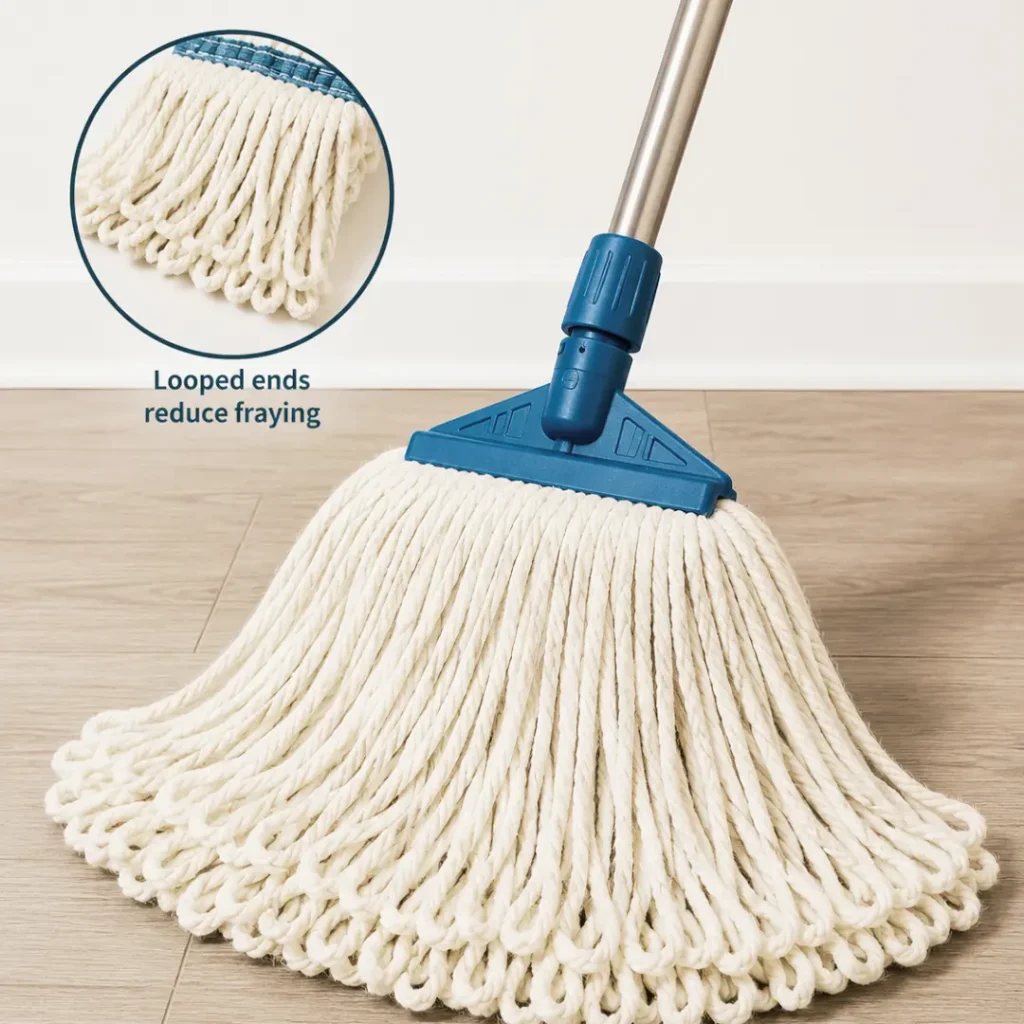
A loop-end string mop is a traditional wet mop made from absorbent cotton or synthetic yarn loops. Loop-end string mops handle heavy soil loads and large liquid spills that a flat mop cannot manage efficiently.
Loop-end mops are used in commercial cleaning services for general wet mopping in areas with moderate to heavy contamination. The looped design reduces linting and improves durability during repeated use.
String mops are not recommended for zones with strict cross-contamination protocols. Their shape makes complete chemical saturation and rinsing difficult, which limits their use in regulated facilities.
Key Benefits of Loop-End String Mops
- Loop-End String mop absorbs large amounts of liquid
- Loop-End String mop design improves durability
- Loop-End String mop works well on rough and textured floors
- Loop-End String mop is suitable for heavy-duty cleaning tasks
Suitable Facility Types for Loop-End String Mops
- Warehouses
- Industrial facilities
- Parking areas
- Maintenance zones
3. Cut-End String Mop
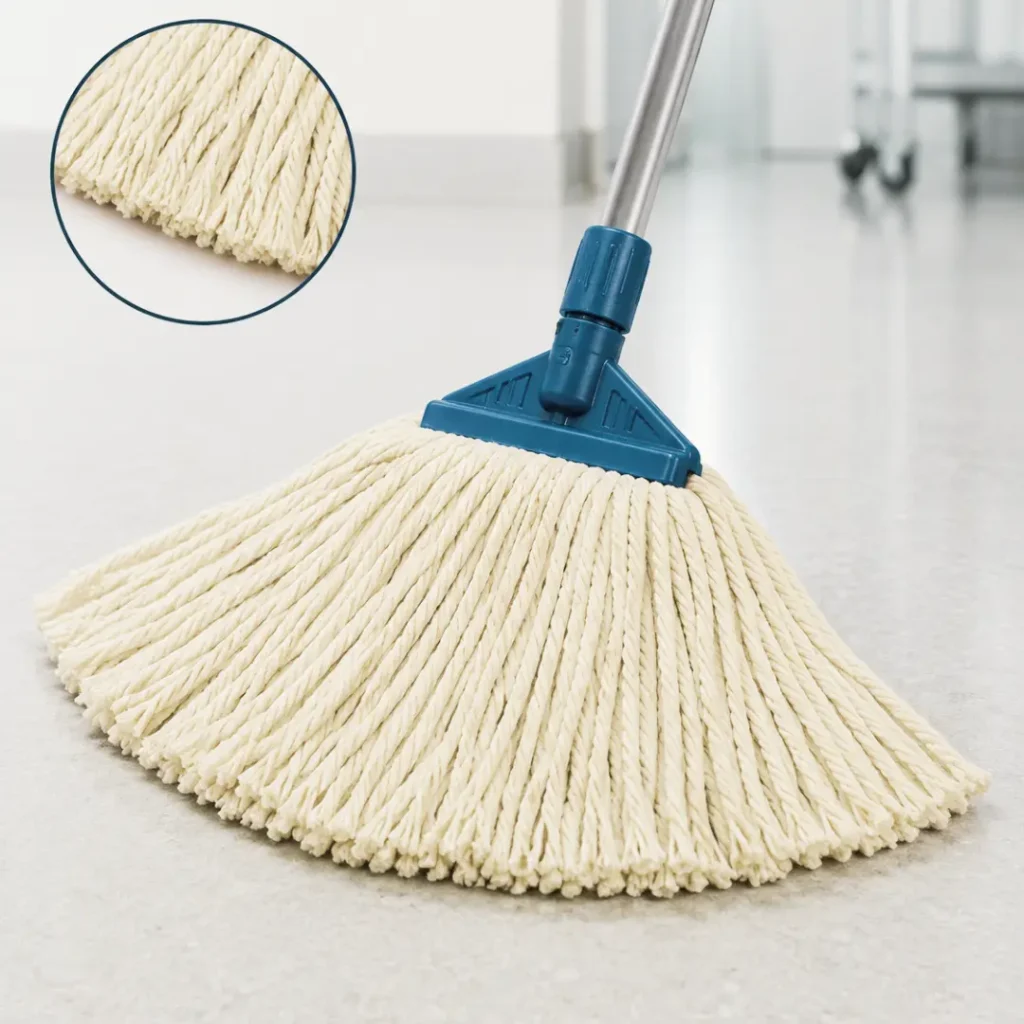
A cut-end string mop is a basic string mop where yarn strands are cut evenly at the ends for general cleaning use. Cut-end string mop is the most economical commercial mop option and is typically used as a single-use or short-lifespan consumable in lower-budget cleaning operations.
Cut-End String Mops are not appropriate for regulated environments where fibre shedding or incomplete drying could create hygiene or slip-hazard issues.
Key Benefits of Cut-End String Mop
- Cut-End String Mop Mop absorbs water quickly
- Cut-End String Mop design supports fast floor cleaning
- Cut-End String Mop is cost-effective for general use
- Cut-End String Mop is Suitable for large surface coverage
Suitable Facility Types for a Cut-End String Mop
- Low-traffic offices
- Community buildings
- Storage rooms
- Light commercial spaces
4. Spray Mop
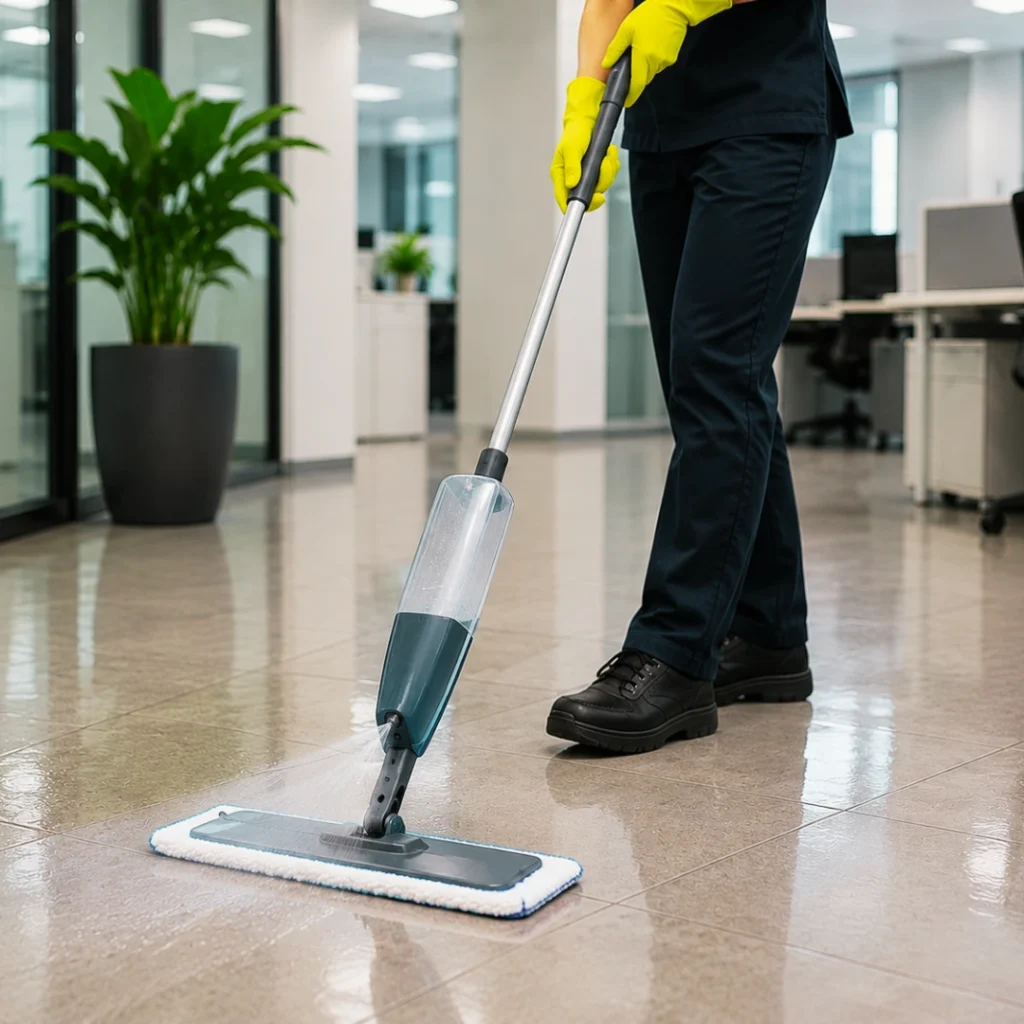
A spray mop combines a flat mop head with a built-in liquid reservoir and trigger mechanism. The cleaner dispenses a measured amount of cleaning solution directly onto the floor ahead of the mop pad, eliminating the need for a separate bucket.
Spray mops are used in commercial cleaning services for their speed and low moisture delivery. Spray mops are ideal for maintaining clean, lightly soiled floors between deeper scheduled cleans.
Benefits of Spray Mop
Spray mop reduces cleaning time
Spray mop supports low-moisture cleaning
Spray mop improves spot cleaning efficiency
Spray mop increases mobility
Suitable Facility Types for a Spray Mop
- Retail stores
- Small offices
5. Steam Mop
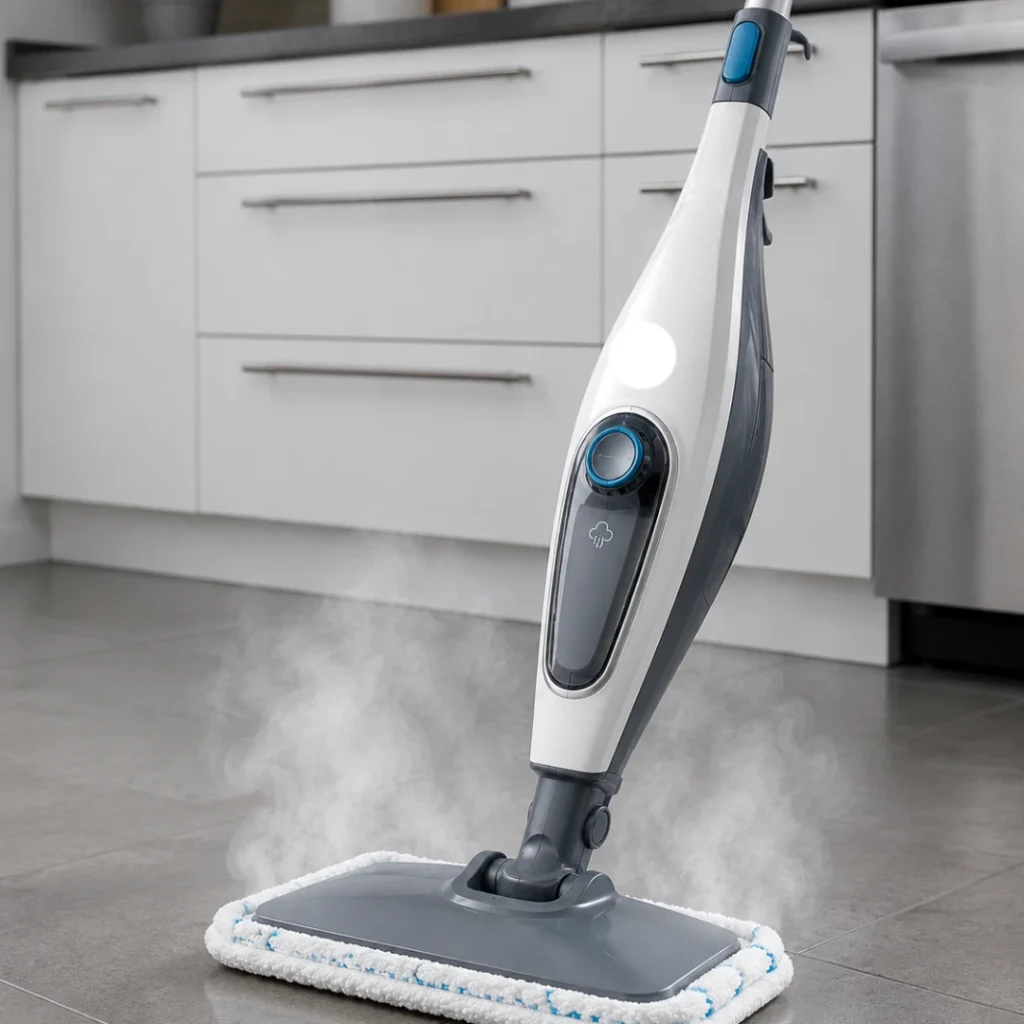
A steam mop uses electrically heated water to produce steam, which is directed through a pad onto the floor surface. The high-temperature steam helps sanitise floors without the use of chemical cleaning products.
Steam mops are used in commercial cleaning services for hard floor sanitisation in facilities with strict chemical-use requirements. The heat-based cleaning process helps maintain hygiene standards while reducing chemical residue on treated surfaces.
Benefits of a Steam Mop
- Steam mop sanitizes floors with high‑temperature steam
- Steam mop helps to dry the floor quickly, reducing slip risk and downtime.
- Steam mop breaks down grease and stubborn dirt faster than regular mopping.
Suitable Facility Types For Steam Mop
- Schools and Child Care Centres.
- Hospital and Medical Facilities.
- Kitchen areas.
6. Dust Mop (Dry Mop)
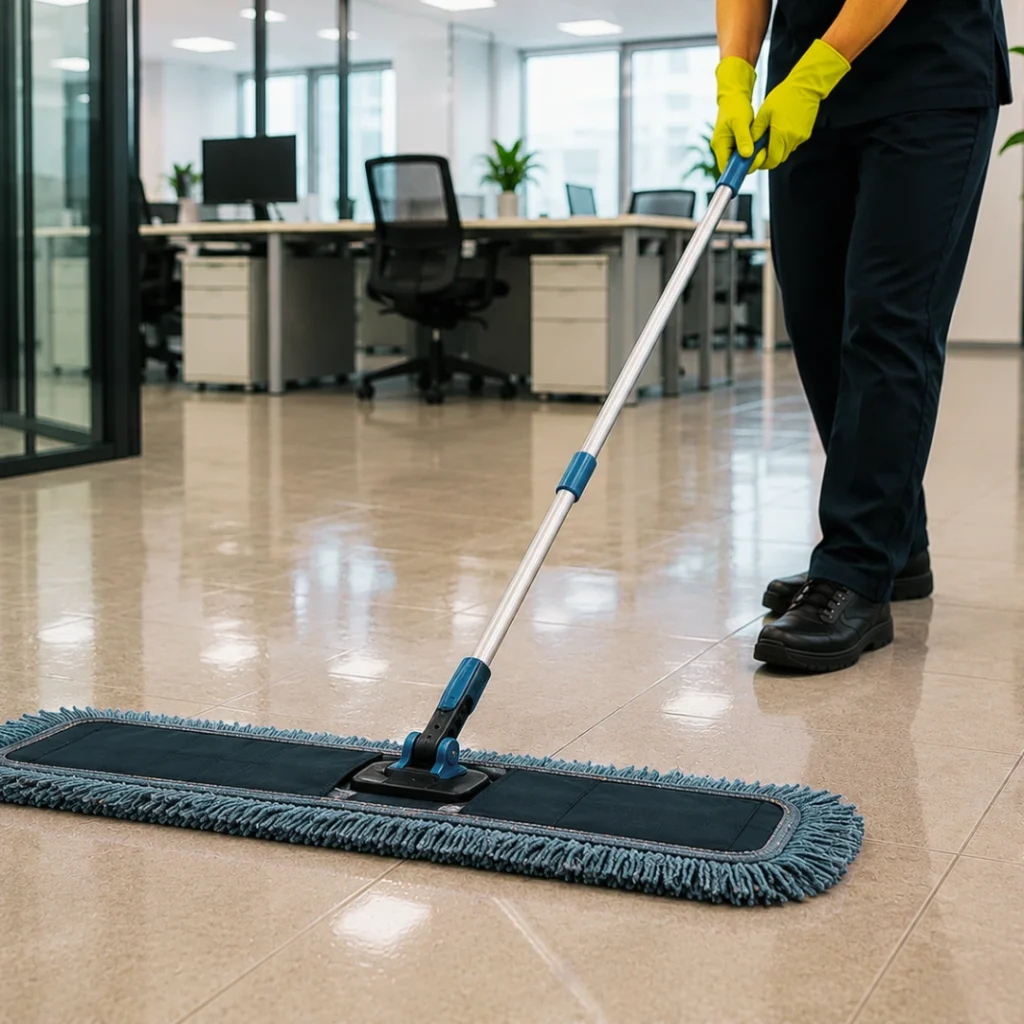
A dust mop or a dry mop is used without a liquid. A dust mop is used in commercial cleaning services to collect dust, dirt, and fine particles before wet cleaning. A dust mop also prevents scratching that can occur during wet mopping.
Benefits of Dust Mops
- Dust mop captures fine particles from floor surfaces
- Dust mop reduces airborne dust during cleaning
- Dust mop protects floor finishes from abrasion
- Dust mop improves the effectiveness of wet mopping
Suitable Facility Types for Dust Mop
- Schools and child care centres
- Corporate office
- Retail stores
- Gyms and fitness centres
- Strata buildings
7. Spin Mop
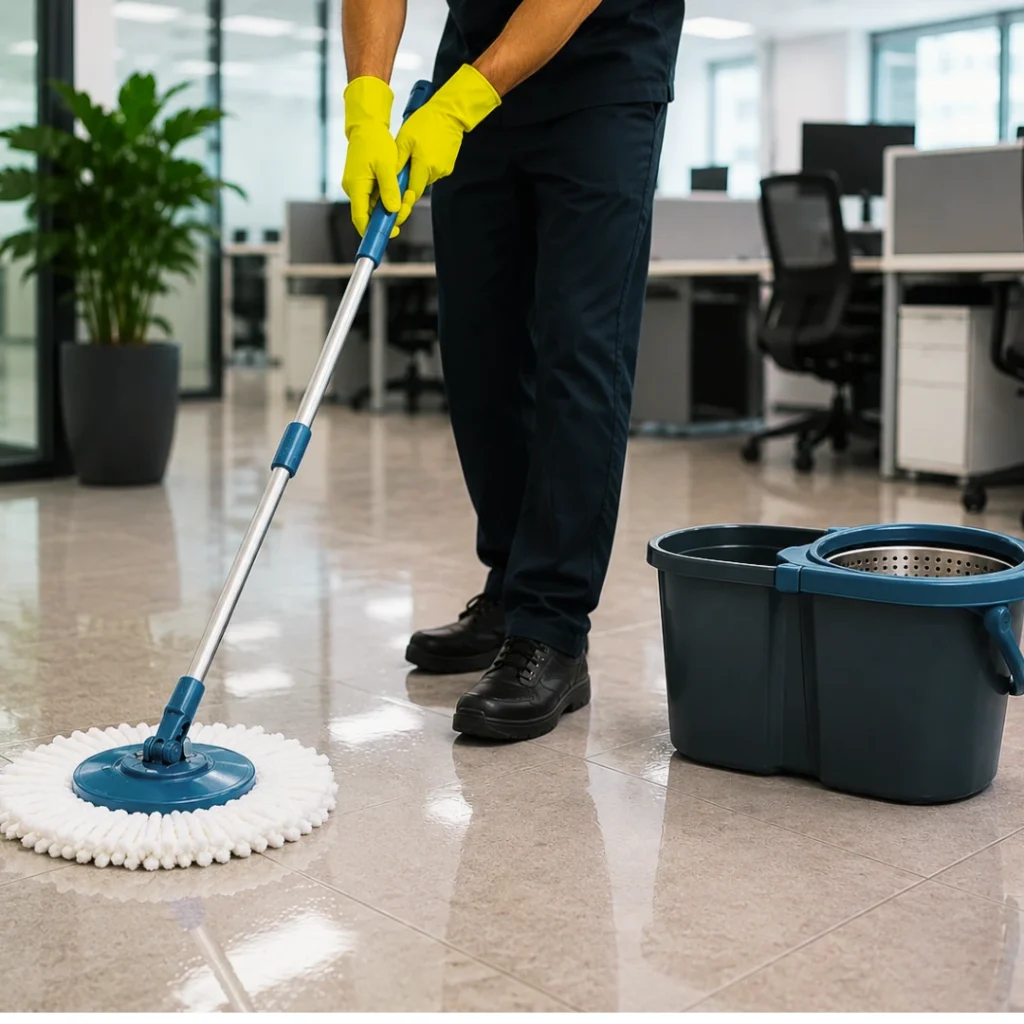
A spin mop system is a bucket-based mop system that removes excess water using a spinning mechanism. A spin mop is used in commercial cleaning services to control moisture levels and improve drying time in indoor environments.
Key Benefits of Spin Mop
- Spin mop reduces excess water on the mop head
- Spin mop improves floor drying speed
- Spin mop reduces slip hazards after cleaning
- Spin mop improves cleaning efficiency
Suitable Facility Types for Spin Mops
- Offices
- Retail spaces
- Hospitality venues
- Healthcare waiting areas
How to Select the Right Mop for Commercial Cleaning Services in Greater Sydney?
The right mop is chosen for the commercial cleaning services based on floor type, hygiene requirements, contamination levels, cross-contamination risks, and cleaning frequency. Different commercial facilities require different mop systems because cleaning conditions vary significantly between offices, healthcare facilities, childcare centres, retail stores, warehouses, and industrial environments.
Consider the following factors when selecting the right mop for commercial cleaning services:
- Choose a mop based on floor type. Microfiber flat mops suit vinyl, tile, and hardwood floors. Sponge mops perform better on textured surfaces. Low-moisture mops are recommended for hardwood and laminate flooring.
- Match the mop to hygiene requirements. Healthcare facilities and childcare centres often require higher contamination-control standards than offices or retail stores.
- Consider the contamination level. Microfiber mops handle light daily cleaning, while loop-end string mops are better suited for grease, spills, and heavy soil.
- Assess cross-contamination risks. Colour-coded mop systems help separate cleaning zones and improve hygiene management across commercial facilities.
- Align the mop with the cleaning frequency. Facilities that receive daily cleaning often benefit from reusable microfiber mop systems, while specialised environments may require alternative solutions.
What Type of Mop is Used for Hardwood Floors in Commercial Cleaning Services?
A microfiber flat mop is used for hardwood floors in commercial cleaning services because microfiber effectively removes dust, dirt, and surface contaminants while using minimal moisture. Excess water can damage hardwood flooring by causing swelling, warping, or finish deterioration. A microfibre flat mop is also used for laminate floors and Vinyl floors.