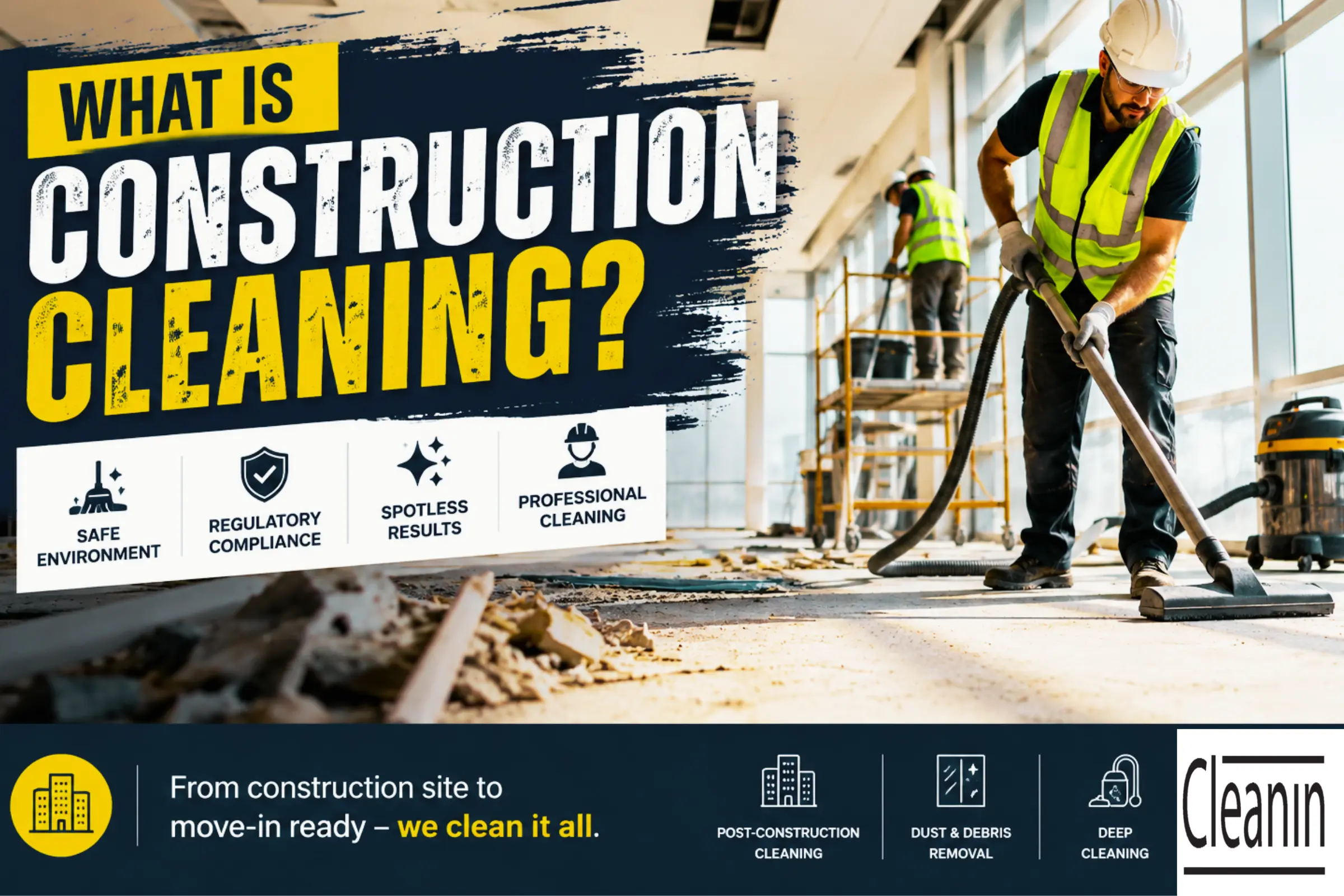
Construction cleaning is the specialised cleaning of a property during and after building, renovation, or fit-out work, removing construction dust, grout haze, paint spots, adhesive and silicone marks, protective films, packaging waste, and other site-related contaminants. Its purpose is to take a structurally finished build and make it genuinely clean, so the space is ready for inspection, handover, or occupation.
The term is most often used to mean post-construction cleaning, the detailed clean carried out after the trades finish and before handover. Construction cleaning is the slightly broader term, as it can also cover tidying and debris removal while a build is still underway. In everyday use, however, the two are generally treated as the same job of getting a completed site clean.
What makes it a specialist service is not the amount of cleaning required, but the type of contamination involved. Fine construction dust and bonded residue cannot be removed properly with ordinary cleaning without the right equipment and method.
Construction cleaning assesses each surface before cleaning because floors, glazing, joinery, and fittings can all respond differently to the same cleaning method. Applying one method everywhere risks damaging newly installed finishes. It uses industrial-grade equipment, HEPA-filtered vacuum systems, and surface-compatible cleaning solutions to remove construction residue without marking or damaging the surfaces underneath.
As the last clean before practical completion, construction cleaning is what lets builders, contractors, developers, facility managers, and business owners present a finished space to the standard an inspection, handover, or opening day requires. It sits at the point where a build stops being a construction site and becomes a space ready for use.
What Services does Construction Cleaning Include?
Construction cleaning includes clearing the bulk debris and waste left behind by the trades, extracting the fine construction dust that settles across surfaces, cleaning surfaces and glass while removing bonded residue, and finishing with floor care and detailed cleaning. Each type of work uses a method matched to the surface rather than one approach applied everywhere.
1. Debris and Waste Removal
The first step is clearing the bulk material a build leaves behind, including offcuts, packaging, timber, and general site waste. This needs to happen before detailed cleaning because there is no point cleaning surfaces that are still covered by rubbish. Clearing the debris first also reveals the surfaces that the rest of the clean needs to cover.
2. Dust Extraction
Construction dust is a defining part of the job. It is much finer than ordinary dust, can settle into surfaces and vents, and can resettle after being disturbed. It therefore needs to be captured with sealed HEPA equipment rather than swept or wiped around. This part of construction cleaning requires a specialised approach because the aim is to remove the dust rather than move it around the site.
3. Surface, Glass, and Residue Cleaning
Once the dust is under control, detailed surface cleaning begins across walls, fixtures, cabinetry, and glass, where construction marks can be particularly noticeable. It also involves removing bonded residue such as paint, adhesive, silicone, and render. Each type of residue needs a method matched to the surface so it can be removed without damaging the finish underneath.
4. Floor Care and Final Detailing
The final work brings the site to a finished standard. Floors are cleaned according to their material, while detailing covers smaller finishing points such as skirting, vents, fittings, and edges. A full breakdown of the areas covered by a construction clean, room by room, is useful when scoping a specific site.
What are the Phases of Construction Cleaning?
The 3 phases of construction cleaning are the rough clean, the builders clean, and the final clean. Each happens at a different point in the build and has a different purpose, moving the site from cluttered and dusty to finished and ready for handover. Each phase has its own scope and timing, which our guide to the 3 phases of post-construction cleaning breaks down in full.
1. Rough Clean
The rough clean happens after the major construction work is done but before the final finishes are inspected. It clears the bulk waste that gets in the way, including leftover building materials, packaging, timber offcuts, and plasterboard pieces. This keeps the site safe and workable for the trades finishing painting, flooring, cabinetry, and fit-out. This phase is about clearing the space, not detailed surface cleaning.
2. Builder Clean
The builder clean begins once all construction and installation work is complete. This is the detailed phase, where cleaning covers every accessible surface, removing fine construction dust, cleaning glass and floors, detailing fixtures, and removing installation residue left behind. The builder clean phase aims to bring the property to a condition where builders, developers, and property owners can inspect the finished workmanship without construction contamination getting in the way.
3. Final Cleaning
The final clean is the last phase before the property is handed over or occupied. After punch-list items or minor defect repairs are finished, small amounts of dust, fingerprints, or footprints can reappear in areas that have already been cleaned. This phase revisits those surfaces, removes the remaining marks, and carries out a final presentation check so the building is consistently clean and ready for handover, occupancy, or opening.
Why does construction cleaning need specialised equipment and methods?
Construction cleaning needs specialised equipment and methods because construction dust and bonded residue cannot be removed effectively with ordinary cleaning. The dust is fine enough to pass through a normal vacuum and return to the air, while residue such as adhesive and render can be firmly stuck to surfaces. Removing both properly takes sealed HEPA equipment and the right technique, not just more effort.
Construction Dust and HEPA Extraction
Construction dust is one of the main reasons the job requires a specialised approach. It is much finer than ordinary dust, can settle deep into surfaces and vents, and can become airborne again when disturbed. A regular vacuum or dry sweeping can simply move it around rather than remove it. Capturing it properly means using sealed HEPA equipment that traps fine particles instead of recirculating them, along with a cleaning sequence that prevents cleaned areas from becoming dusty again. Some construction dust can also contain respirable crystalline silica, which is a recognised health hazard. This is another reason the dust needs to be captured rather than stirred back into the air.
Bonded Residue Removal
Bonded residue is the other major challenge. Paint marks, adhesive, silicone, render, and grout haze can stick to surfaces in a way that everyday dirt does not, and each may require a different removal method depending on the residue and the surface underneath. The wrong approach can either leave the residue behind or damage a newly finished surface. This is why construction cleaning relies on using the right method for each material rather than treating every surface in the same way.
How long does construction cleaning take? Who is it for?
Construction cleaning can take anywhere from a day for a small fit-out to several days or more for a large multi-level build, depending on the site’s size, condition, and scope. It is for anyone taking delivery of a finished build, including builders, developers, fit-out contractors, and facility, building, or property managers responsible for handover and occupancy.
What Affects the Timeframe
The duration depends on the specific site rather than a fixed rule. A small office fit-out that has been left reasonably tidy may be ready for handover within a day, while a large build with heavy debris and detailed finishes can take several days or more. Site size sets the starting point, but the condition and scope of the work can change the timeframe significantly. This is why an accurate estimate comes from assessing the actual site rather than relying on a general timeframe.
Who Uses Construction Cleaning Services
Construction cleaning is needed by builders, contractors, and property managers when a site is ready for handover. A builder or contractors needs the space cleaned before handover, while a fit-out contractor needs it presentable for their client. A facility or property manager taking occupancy needs the space properly prepared for use, not simply cleared of obvious rubbish.
In each case, the clean sits between the trades finishing their work and the space being handed over. That makes construction cleaning a necessary part of the handover process rather than an optional extra.
Knowing the phases and methods is useful background, but on an actual project the detail is in how the clean is planned around your handover date.
Get a Handover-Ready Construction Clean in Sydney
Explore our construction cleaning services in Sydney, scoped to your site, stage, and handover date. Book a free on-site construction cleaning service quote with Cleanin.