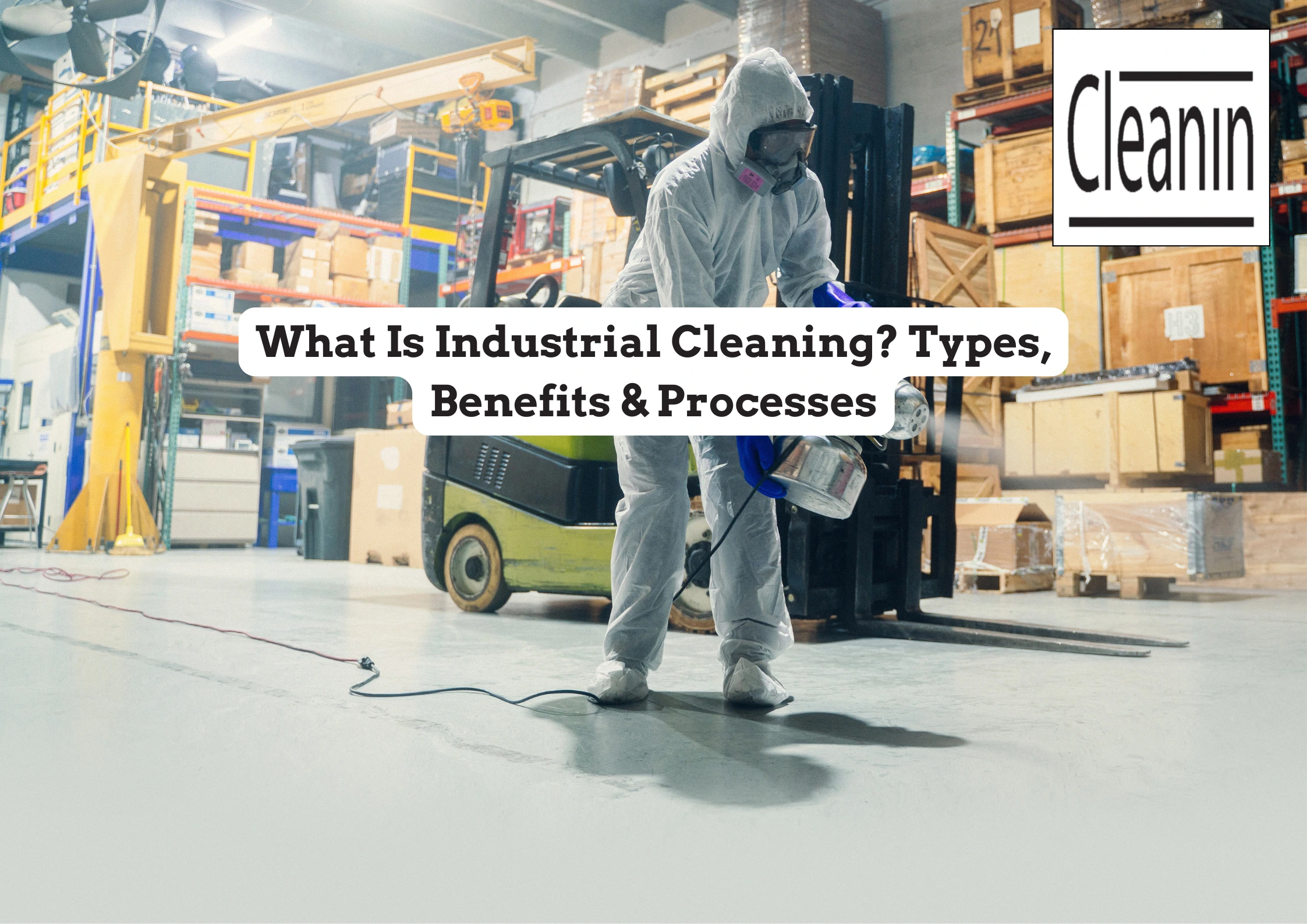
Industrial cleaning is the process of cleaning and maintaining industrial environments using specialised methods, trained personnel, and industrial-grade equipment. Industrial facilities are built for productivity, but they also generate some of the toughest cleaning challenges. Dust, grease, chemical residue, metal shavings, and production waste can accumulate quickly, creating safety hazards and affecting day-to-day operations. This is where industrial cleaning becomes essential.
Industrial cleaning is designed for factories, warehouses, manufacturing plants, and other heavy-use environments. It involves removing contaminants that regular cleaning methods cannot safely or effectively handle.
A professional Commercial Cleaning Service helps industrial businesses maintain cleaner, safer, and more efficient workplaces by delivering structured cleaning programs that support hygiene, workplace safety, and equipment performance.
What is Industrial Cleaning?
Industrial cleaning is the systematic removal of chemical, mechanical, biological and particulate contamination from industrial facility surfaces, equipment and structures using specialist equipment, regulated chemical products and documented safety protocols. Industrial maintenance data reveals that insufficient cleaning and deferred equipment care drive over 30% of all unplanned manufacturing downtime. Structured industrial and warehouse cleaning helps address this by systematically removing contamination that can damage machinery, create safety hazards and disrupt daily operations.
Industrial cleaning is not simply about making a facility look clean. Its primary goal is to create a safer more efficient work environment while protecting equipment, maintaining operational standards, and reducing workplace hazards.
The cleaning methods used in industrial cleaning are very different from those used in office or commercial cleaning. Industrial facilities often operate around heavy machinery, sensitive production lines and hazardous substances which require a much higher level of planning and expertise.
What does Industrial Cleaning Involve?
Industrial cleaning involves different types of cleaning tasks and industrial cleaning tools and equipments.
Cleaning Tasks Involved in Industrial Cleaning
Industrial cleaning covers a wide range of cleaning tasks that focus on maintaining cleanliness, improving workplace safety, and protecting equipment.
1. Industrial Floor Cleaning
Industrial floors accumulate dust, dirt, grease, and production residue every day. Regular sweeping, scrubbing, and degreasing help maintain safe walking surfaces, reduce slip hazards, and prevent contaminants from spreading across the facility.
2. Machinery and Equipment Cleaning
Machinery cleaning removes dust, grease, and production residue from equipment surfaces, conveyors, and production lines. Keeping machinery clean improves performance, reduces wear and tear, and helps identify maintenance issues before they become costly repairs.
3. High-Level Dusting
Dust often builds up on ceilings, beams, pipes, and ventilation systems. High-level cleaning removes this accumulation to improve air quality, reduce fire risks, and prevent dust from settling back onto machinery and work areas.
4. Degreasing and Heavy Contamination Removal
Industrial operations often produce grease, oil, and stubborn residue that require specialised cleaning methods. Degreasing removes these contaminants from floors, machinery, and production areas, helping maintain safety and operational efficiency.
5. Waste and Debris Removal
Industrial facilities generate waste such as packaging materials, scrap metal, cardboard, and production residue. Regular waste removal keeps workspaces organised, reduces hazards, and supports smoother day-to-day operations.
6. Industrial Deep Cleaning
Deep cleaning targets hard-to-reach areas and contaminants that build up over time. This may include cleaning behind machinery, restoring heavily used floors, and removing dust from overhead structures. Deep cleaning is usually scheduled periodically to maintain long-term cleanliness and hygiene.
Industrial Cleaning Tools and Equipment
Industrial cleaning requires specialised tools and equipment designed to handle heavy contamination and large-scale environments safely and efficiently.
Industrial cleaning involves the following tools and equipment:
1. Industrial Vacuum Cleaners
Industrial vacuums remove fine dust, debris, and production waste from floors, machinery, and storage areas. They are designed to handle materials that standard vacuum cleaners cannot safely collect.
2. Floor Scrubbers and Sweepers
These machines clean large floor areas quickly by sweeping debris, scrubbing surfaces, and removing stains. They help maintain clean, safe, and slip-resistant floors in warehouses and manufacturing facilities.
3. High-Pressure Washers
Pressure washers use high-pressure water to remove dirt, grease, mud, and grime from concrete floors, loading docks, exterior walls, and industrial equipment.
4. Degreasers and Chemical Applicators
Specialised degreasers are used to break down heavy grease and oil buildup. Chemical applicators ensure cleaning solutions are applied evenly and safely across machinery and work areas.
5. High-Level Access Equipment
Equipment such as extension poles, scissor lifts, and elevated work platforms allows cleaning teams to safely access ceilings, beams, ducts, and other hard-to-reach areas.
6. Personal Protective Equipment (PPE)
PPE is essential for safety during industrial cleaning. It includes gloves, masks or respirators, safety goggles, protective clothing, and safety boots. These protect cleaning staff from exposure to chemicals, dust, sharp objects, and hazardous materials commonly found in industrial environments.
How Does Industrial Cleaning Work?
Industrial cleaning works through a structured and planned process designed to maintain safety, hygiene, and operational efficiency in complex industrial environments. Industrial cleaning follows a system built around risk levels, facility type, and operational schedules.
1. Site Inspection and Understanding the Facility
The process begins with a detailed inspection of the site. During this stage, the cleaning team observes key factors such as machinery layout, traffic flow, contamination levels, and access restrictions. High-usage areas and high-risk zones are also identified so the cleaning plan can be built around real operational conditions rather than assumptions.
2. Risk Assessment and Safety Preparation
Industrial environments include hazards such as heavy machinery, slippery surfaces, electrical systems, and chemical exposure risks. Before any cleaning begins, industrial risks like heavy machinery, slippery surfaces, electrical systems, and chemical exposure must be identified and controlled.
At this stage, safety procedures are prepared, and the required Personal Protective Equipment (PPE) is determined based on site conditions. In some cases, specific zones may be isolated temporarily to ensure cleaning can be carried out safely without interrupting operations or putting workers at risk.
3. Developing a Structured Cleaning Plan
Once the site is understood and risks are identified, a structured cleaning plan is created. This plan defines what needs to be cleaned, how often it should be cleaned, and what methods should be used for each area.
This structured approach ensures cleaning is consistent, efficient, and aligned with operational needs.
4. Cleaning Execution in Operational Environments
After planning, the actual cleaning work begins. Industrial cleaning is usually carried out in coordination with facility operations to avoid disrupting production. In many cases, cleaning is scheduled during off-peak hours or in phases across different zones.
During execution, trained cleaners follow the defined plan step by step. This includes cleaning floors, machinery, high-touch surfaces, and contaminated areas while ensuring safety procedures are followed throughout the process.
The focus at this stage is not only on removing visible dirt but also on addressing hidden contamination that can affect safety and equipment performance.
5. Use of Specialised Methods and Equipment
This combination of tools and methods ensures cleaning is both effective and safe for industrial use.
Industrial cleaning relies heavily on specialised equipment because standard cleaning tools are not sufficient for heavy-duty environments. The method used depends on the type of surface and level of contamination. To learn more about the equipment used in industrial environments, read our What Is Industrial Cleaning Equipment guide, which explains the purpose and applications of common industrial cleaning equipment.
6. Final Inspection and Quality Check
Once cleaning is completed, a final inspection is carried out to ensure all areas meet the required standard. A 2025 manufacturing survey found that organisations increasingly view quality management as a strategic business driver rather than simply a compliance requirement. As a result, many industrial facilities now place greater emphasis on documented inspections, cleaning verification processes, and ongoing performance monitoring after cleaning activities are completed.
The inspection focuses on whether all planned tasks were completed properly, whether high-risk zones are clean, and whether any areas require additional attention. If necessary, re-cleaning is carried out before the job is closed.
7. Reporting and Ongoing Maintenance Planning
After the cleaning process is completed, the commercial cleaning company provides a report summarising the work performed. This may include details of completed tasks, identified issues, and recommendations for future maintenance.
Based on findings from each visit, cleaning schedules may be adjusted to improve efficiency, address recurring issues, and maintain long-term facility hygiene.
How does Industrial Cleaning Differ from Commercial Cleaning?
Industrial cleaning differs from commercial cleaning in four key areas: contamination type, equipment specification, compliance framework, and required documentation. Commercial cleaning addresses surface-level soiling in office, retail, and healthcare environments. Industrial cleaning addresses embedded, chemical, and hazardous contamination in production and storage environments.
The differences between industrial cleaning and commercial cleaning are:
1. Contamination type
Industrial cleaning addresses grease, oil, chemical residue, fine particulate matter (including respirable silica dust), allergen cross-contact, and microbial biofilm on production equipment. Commercial cleaning addresses dust, biological surface contamination, and organic matter from human occupancy.
2. Equipment specification
Industrial cleaning uses ride-on floor scrubber-dryers operating at 2,000 to 3,000 square metres per hour, HEPA H-Class vacuums capturing particles to 0.3 microns at 99.97% efficiency, and high-pressure washers delivering 4,000 to 6,000 PSI for loading dock and apron cleaning. Commercial cleaning uses upright vacuums, microfibre systems, and standard floor scrubbers.
3. Compliance framework
Both commercial and industrial cleaning operate under the WHS Act 2011 (NSW) and the WHS Regulation 2017. However, industrial cleaning triggers additional high-risk compliance frameworks, including the WHS Amendment (Crystalline Silica Substances) Regulation, FSANZ Food Standards Code in food processing environments, and strict Lockout/Tagout (LOTO) plant isolation protocols before equipment cleaning commences
4. Required documentation
Industrial cleaning additionally requires a Safe Work Method Statement (SWMS) for high-risk tasks, a silica risk control plan where crystalline silica substances are present, HACCP-aligned cleaning records in food facilities, and ATP bioluminescence verification records on food-contact surfaces. Commercial cleaning requires a cleaning schedule and an SDS register.
What Compliance Obligations apply to Industrial Cleaning in NSW?
The compliance obligations that apply to industrial cleaning are:
1. WHS Act 2011 (NSW) — all industrial facilities
PCBUs must eliminate or minimise biological, chemical, and physical hazards so far as is reasonably practicable. Industrial environments require documented cleaning schedules, SWMS for high-risk cleaning tasks, SDS registers for all chemical products used on site, and staff training records. SafeWork NSW auditors review documentation records, not only physical outcomes at the time of inspection.
2. WHS Regulation 2017 — hazardous manual tasks, PPE, chemical management
The WHS Regulation 2017 imposes specific obligations for hazardous manual task control, PPE selection and fit-testing, and chemical safety management. Chapter 7 of the Regulation requires SDS documents to be maintained on site and accessible to all workers. All chemicals must carry GHS labelling. PPE must meet the relevant AS/NZS standard for each hazard class present on site.
3. WHS Amendment (Crystalline Silica Substances) Regulation 2024 — operative from 1 September 2024
Industrial cleaning in environments where materials containing 1% or more crystalline silica are processed requires a silica risk control plan for high-risk tasks, air monitoring where the 0.05 mg/m³ WES limit may be exceeded, P2/N95 respiratory protection per AS/NZS 1716, and documented accredited crystalline silica training for all workers involved. Concrete manufacturing, stone processing, and ceramic production environments fall within scope of this Regulation.
4. FSANZ Food Standards Code Standard 3.2.2 — food processing and storage facilities
All food businesses must maintain premises in a clean condition and clean and sanitise food-contact surfaces after each use. Clause 24 extends this obligation to all production line equipment. HACCP prerequisite programs must include documented cleaning schedules, verification records, and allergen management protocols. The NSW Food Authority inspects food processing facilities against these requirements.
5. Public Health Act 2010 (NSW) — shared amenities in regulated industrial premises
Industrial facilities operating shared amenities, including shower facilities in heavy industrial environments, must maintain those amenities to prevent disease transmission. The obligation sits under the Public Health Act 2010 (NSW) and applies independently of the WHS Act obligations that govern the production environment itself.
What are the Benefits of Industrial Cleaning?
Some of the benefits of industrial cleaning are:
1. Improved Workplace Safety
Industrial environments naturally accumulate dust, grease, oil, and debris, which can create serious safety hazards if not properly managed. Professional cleaning reduces risks such as slips, equipment-related accidents, and exposure to harmful contaminants. This helps create a safer working environment for employees and reduces the likelihood of workplace incidents.
2. Better Equipment Performance and Longevity
Dust, grease, and production residue can affect machinery performance over time. When equipment is not cleaned regularly, it may overheat, wear out faster, or experience unexpected breakdowns. Professional industrial cleaning helps protect machinery by removing harmful buildup, improving efficiency, and extending the lifespan of valuable equipment.
3. Improved Operational Efficiency
A clean and well-organised facility supports smoother workflow and faster movement of workers and materials. When industrial spaces are properly maintained, employees spend less time dealing with clutter, contamination, or cleaning-related disruptions. Cleaning is also scheduled around operations, which helps avoid unnecessary downtime.
4. Regulatory Compliance and Standards
Many industrial facilities must meet workplace health and safety regulations. Professional cleaning services ensure that hygiene standards are consistently maintained and documented. This is especially important for industries like manufacturing, food processing, and logistics, where audits and inspections are common.
5. Healthier Work Environment
Dust buildup and poor air quality can affect employee health and productivity. Professional cleaning helps control airborne particles, maintain ventilation systems, and reduce contamination levels. This leads to a healthier workplace with fewer respiratory issues and improved overall comfort for workers.
6. Consistent and Reliable Cleaning System
Unlike irregular in-house cleaning, professional services follow a structured schedule based on facility needs. A Commercial Cleaning Service ensures all areas are cleaned at the right frequency using proper methods and equipment. This consistency helps maintain long-term cleanliness and operational stability.
How to Choose an Industrial Cleaning Company?
Choosing the right industrial cleaning company is an important decision because it directly affects workplace safety, equipment performance, and overall operational efficiency.
Some of the ways to choose an industrial cleaning company are:
Industry Experience and Facility Knowledge
An effective industrial cleaning company should have proven experience working in environments such as warehouses, manufacturing plants, and production facilities. Industrial sites are complex, so the provider must understand how to clean around machinery, manage high-risk zones, and handle different types of contamination without disrupting operations.
Safety Standards and Compliance
Safety is a key factor in industrial cleaning. A professional provider should follow workplace health and safety (WHS) guidelines and use proper risk assessment procedures before starting any work. This includes using appropriate PPE, safe cleaning methods, and documented processes to ensure compliance during every cleaning task.
Equipment and Cleaning Methods
Industrial cleaning requires specialised tools and techniques. The company should use equipment such as industrial vacuum systems, floor scrubbers, and pressure washers to handle heavy-duty cleaning tasks. The ability to choose the right method for different surfaces and contamination types is a strong indicator of professionalism.
Customised Cleaning Plans
Every industrial facility operates differently, so cleaning requirements should never be generic. A good Commercial Cleaning Service will assess your site and create a tailored cleaning schedule based on your operations, traffic levels, and risk areas. This ensures the cleaning plan matches your actual facility needs rather than a fixed routine.
Reliability and Service Consistency
Consistency is essential in industrial environments. The cleaning company should be reliable in terms of scheduling, quality of work, and communication. Regular reporting and clear service tracking help ensure that cleaning standards are maintained over time without gaps or missed areas.
Transparency and Communication
A trustworthy provider maintains clear communication from the start. This includes explaining the scope of work, expected outcomes, and service frequency in simple terms. Transparent pricing and clear service agreements also help avoid confusion and ensure a smooth long-term partnership.
Get Industrial Cleaning Services from Cleanin
Industrial facilities require more than routine cleaning. They need structured cleaning systems designed around safety, productivity, and operational continuity.
Cleanin provides professional industrial cleaning services for factories, warehouses, manufacturing facilities, and other heavy-use commercial environments. Our team develops customised cleaning schedules, follows strict safety procedures, and uses industry-specific methods to keep your facility clean, compliant, and operational.
Whether you need scheduled maintenance cleaning, industrial deep cleaning, or a complete site cleaning program, Cleanin can help you build a cleaning solution tailored to your facility.