Industrial facilities such as warehouses, manufacturing plants, workshops, and distribution centres generate continuous levels of dust, grease, debris, and production residue that cannot be managed with standard cleaning methods. This is where industrial cleaning equipment becomes essential, providing the machines and systems needed to maintain large-scale facilities safely and efficiently.
Industrial cleaning equipment includes specialised tools such as floor scrubbers, industrial vacuum cleaners, sweepers, pressure washers, steam cleaners, and degreasing systems. Each piece of equipment is designed to handle specific contaminants and surface types, ensuring that cleaning is both effective and consistent across high-demand environments.
A professional Commercial Cleaning Service relies on this equipment to provide structured industrial cleaning services tailored to different facility types, operational schedules, and compliance requirements. To better understand how industrial cleaning equipment fits into a facility maintenance program, businesses can explore what is industrial cleaning, the key benefits of industrial cleaning, the relevant industrial cleaning standards, and what industrial cleaning involves. Understanding these areas helps explain why specialised equipment is essential for achieving safe, compliant, and efficient cleaning outcomes.
What is Industrial Cleaning Equipment?
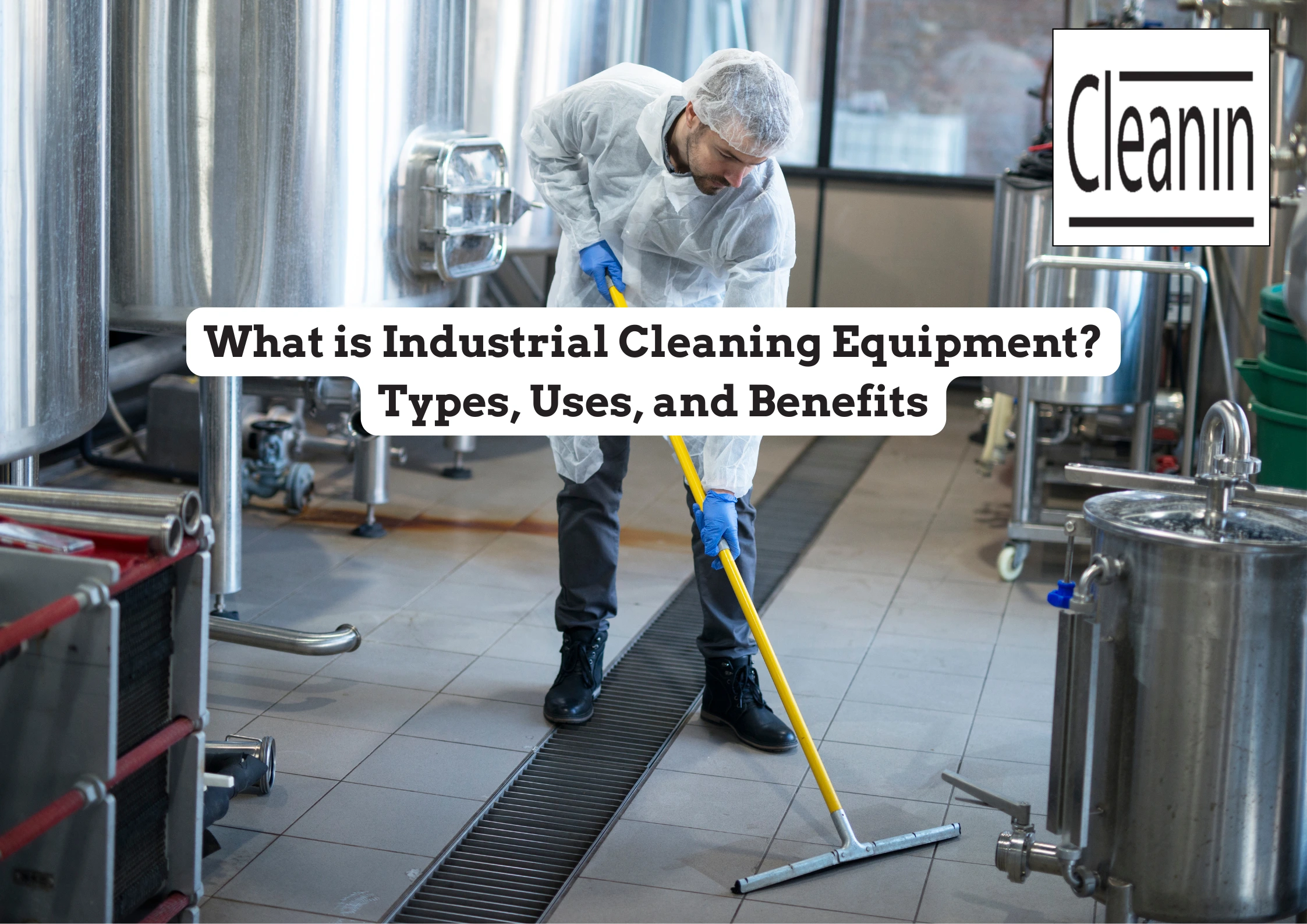
Industrial cleaning equipment refers to specialised machines, tools, and safety gear used to clean large-scale industrial and commercial environments efficiently. These tools are designed to handle heavy contamination such as dust, grease, oil, production residue, and waste in industrial facilities that standard cleaning equipment cannot manage effectively.
Unlike general cleaning tools used in residential or small commercial settings, industrial cleaning equipment is built for continuous operation, high durability, and large surface coverage. This makes it suitable for environments where cleaning is not occasional but part of daily operational safety and maintenance.
Research in facility management and industrial hygiene consistently shows that mechanised cleaning systems such as floor scrubbers and industrial vacuums can significantly reduce cleaning time compared to manual methods, especially in high-traffic industrial zones. This efficiency becomes critical in environments where downtime directly affects productivity.
In practice, industrial cleaning equipment is not used in isolation. It is typically deployed as part of a structured system managed by a professional Commercial Cleaning Service, where equipment selection, cleaning frequency, and method are tailored to the facility type and risk level.
What are the Types of Industrial Cleaning Equipment?
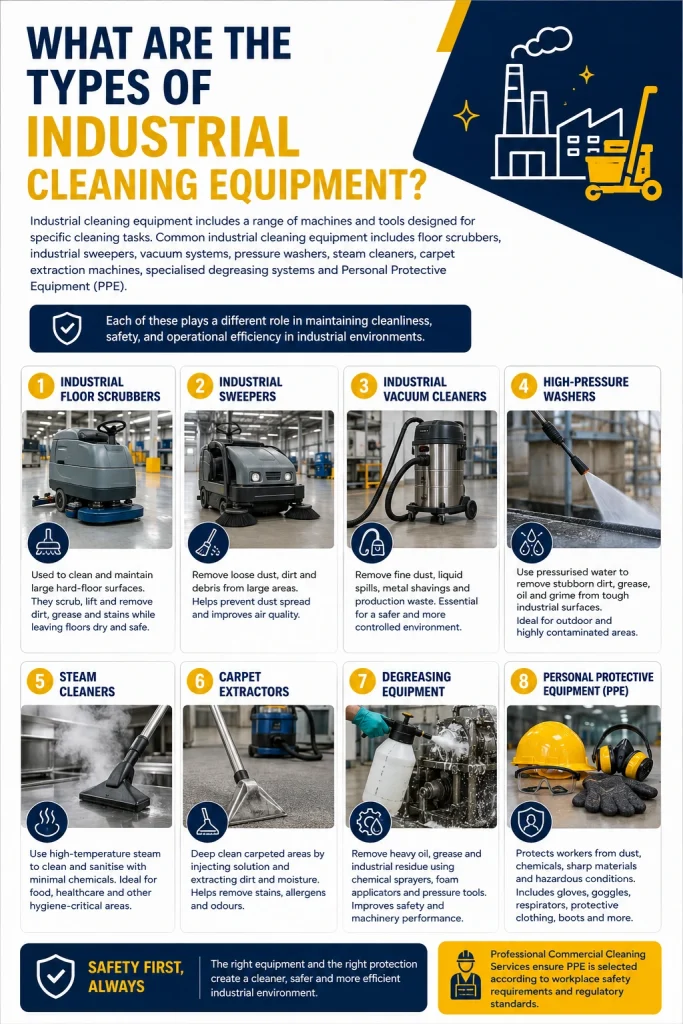
Industrial cleaning equipment includes a range of machines and tools designed for specific cleaning tasks. Common industrial cleaning equipment includes floor scrubbers, industrial sweepers, vacuum systems, pressure washers, steam cleaners, carpet extraction machines, specialised degreasing systems and Personal Protective Equipment (PPE).
Each of these plays a different role in maintaining cleanliness, safety, and operational efficiency in industrial environments.
The types of industrial cleaning equipment are:
- Industrial Floor Scrubbers
- Industrial Sweepers
- Industrial Vacuum Cleaners
- High-Pressure Washers
- Steam Cleaners
- Carpet Extractors
- Degreasing Equipment
- Personal Protective Equipment (PPE)
1. Industrial Floor Scrubbers
Industrial floor scrubbers are used to clean and maintain large hard-floor surfaces. They combine water, cleaning solutions, and mechanical scrubbing to remove dirt, grease, and stains while leaving floors dry and safe to use. These machines are widely used in warehouses, manufacturing plants, logistics centres, and food production facilities where floor cleanliness directly impacts safety and workflow.
Compared to manual cleaning methods, floor scrubbers provide more consistent results and significantly reduce cleaning time, especially in large-scale environments.
2. Industrial Sweepers
Industrial sweepers are used to remove loose dust, dirt, and debris from large floor areas. They use rotating brushes and vacuum systems to collect particles efficiently and prevent dust from spreading through the facility. They are commonly used in warehouses, distribution centres, loading docks, and workshops where constant movement of goods and vehicles creates ongoing debris accumulation.
By controlling dust at the source, sweepers also contribute to improved air quality and cleaner working conditions.
3. Industrial Vacuum Cleaners
Industrial vacuum cleaners are heavy-duty machines used to remove fine dust, liquid spills, metal shavings, and production waste. Unlike standard vacuum cleaners, they are built to handle large volumes of debris safely and efficiently.
These systems are essential in manufacturing environments where dust and residue can affect machinery performance or pose health risks to workers.
Regular vacuum cleaning helps prevent contamination spread and supports a safer and more controlled industrial environment.
4. High-Pressure Washers
High-pressure washers use pressurised water to remove stubborn dirt, grease, oil, and grime from industrial surfaces. They are especially effective in outdoor or heavily contaminated areas where manual cleaning is not practical.
Typical applications include loading docks, exterior walls, concrete floors, equipment surfaces, and waste handling zones.
In many cases, pressure washing is combined with industrial degreasers to break down heavy oil and grease buildup more effectively.
5. Steam Cleaners
Steam cleaners use high-temperature steam to clean and sanitise surfaces with minimal chemical use. This makes them particularly useful in environments where hygiene standards are strict.
They are commonly used in food processing facilities, commercial kitchens, healthcare environments, and sensitive production areas.
Steam cleaning is effective because it removes grease, kills bacteria, and reduces the need for harsh chemical cleaners, making it a more sustainable option.
6. Carpet Extractors
While many industrial facilities focus on hard-floor cleaning, carpeted areas still exist in offices, reception areas, and administrative zones. Carpet extractors are used to deep clean these surfaces by injecting a cleaning solution into carpet fibres and extracting embedded dirt and moisture.
This process helps remove stains, allergens, and odours while extending the lifespan of carpeted areas.
7. Degreasing Equipment
Degreasing equipment is used to remove heavy oil, grease, and industrial residue that accumulate on machinery and floors. These systems typically involve chemical sprayers, foam applicators, and pressure-assisted cleaning tools.
They are essential in manufacturing plants, automotive workshops, and engineering facilities where grease buildup can impact both safety and equipment performance.
Effective degreasing improves machinery efficiency and reduces the risk of mechanical failure caused by contamination.
8. Personal Protective Equipment (PPE)
PPE is a critical part of industrial cleaning because it protects workers from exposure to dust, chemicals, sharp materials, and hazardous environments.
Depending on the task, PPE may include gloves, safety goggles, respirators, protective clothing, safety boots, and hearing protection. The type of PPE used always depends on the cleaning method and site risk level.
Professional Commercial Cleaning Services ensure PPE is selected according to workplace safety requirements and regulatory standards.
Why Is Industrial Cleaning Equipment Important?
Industrial cleaning equipment is important because of the following reasons:
- Minimizes Workplace Safety Hazards
- Protects machinery and enables preventive maintenance
- Improves Operational Efficiency at Scale
- Supports Regulatory Compliance and Hygiene Standards
- Reduces Long-Term Operational Expenses
1. Minimizes Workplace Safety Hazards
Industrial floors naturally accumulate grease, oil, and dust from heavy machinery and forklift traffic. Standard manual mopping often just spreads these contaminants around. Specialized equipment like ride-on scrubber-dryers aggressively agitates grime and vacuums the residue instantly, leaving floors dry and immediately safe, drastically reducing slip-and-trip risks.
2. Protects Machinery and Enables Preventive Maintenance
Airborne grit and production debris are mechanical abrasive agents. If left unchecked, particles enter sensitive machinery components, leading to overheating, accelerated wear, and unexpected mechanical breakdowns. Utilizing targeted industrial vacuum systems and pressure cleaners removes these hazards, extending the lifespan of infrastructure and acting as a frontline defense in preventive maintenance.
3. Improves Operational Efficiency at Scale
Industrial facilities span thousands of square meters that cannot be effectively managed with manual labor alone. Industrial sweepers and high-capacity floor scrubbers allow teams to clean massive areas in a fraction of the time. This rapid turnaround is vital for facilities operating tight production schedules where downtime must be minimized.
4. Supports Regulatory Compliance and Hygiene Standards
Many industrial sectors operate under strict workplace health and safety requirements. Regular and well-documented cleaning is often a key part of meeting these standards, especially in industries like manufacturing, logistics, and food processing.
Industrial cleaning equipment ensures that cleaning is carried out at the required level of consistency and quality. This helps businesses maintain compliance, pass inspections, and reduce the risk of regulatory issues.
5. Reduces Long-Term Operational Expenses
While industrial equipment represents a significant asset investment, it actively reduces long-term facility costs. Clean environments suffer fewer machine failures, experience less product contamination, and experience lower worker absenteeism due to improved indoor air quality. Engaging an industrial cleaning provider delivers the benefits of advanced equipment without the capital burdens of ownership, maintenance, and specialized staff training.
How Is Industrial Cleaning Equipment Used for Scheduled and One-Time Cleaning?
Industrial cleaning equipment is used in two main ways: as part of a scheduled cleaning program or for one-time and ad-hoc cleaning projects. The right approach depends on how the facility operates, the level of contamination, and the business’s long-term maintenance goals.
While both approaches use specialised cleaning equipment, they serve different purposes and offer different benefits.
Scheduled Industrial Cleaning
Scheduled industrial cleaning involves cleaning a facility at regular intervals—daily, weekly, monthly, or according to an agreed maintenance plan. The goal is to maintain a consistent level of cleanliness and prevent contaminants from building up over time.
This approach is common in warehouses, manufacturing plants, food processing facilities, and distribution centres where cleaning is an ongoing operational requirement rather than an occasional task. Industrial floor scrubbers, sweepers, vacuum systems, and pressure washers are often used repeatedly as part of these programs to keep floors, machinery, and work areas in optimal condition.
The biggest advantage of scheduled cleaning is prevention. Regular cleaning helps reduce dust accumulation, minimise slip hazards, protect machinery from contamination, and maintain a healthier working environment. It also allows businesses to identify potential issues early before they become costly maintenance or safety problems.
For businesses that operate year-round or under strict hygiene and safety requirements, scheduled cleaning provides consistency and peace of mind.
One-Time and Ad-Hoc Industrial Cleaning
One-time industrial cleaning is designed for specific situations that require immediate or intensive cleaning. Unlike scheduled cleaning, it is performed as needed rather than regularly.
Businesses often require one-time cleaning after major operational changes, construction work, equipment shutdowns, or unexpected incidents. Industrial cleaning equipment is used intensively during these projects to restore cleanliness and safety within a short period.
Common examples include:
- Post-construction industrial cleaning
- End-of-lease cleaning
- Machinery degreasing
- Industrial deep cleaning
- Spill and contamination cleanup
- Pre-audit or pre-inspection cleaning
One-time cleaning is ideal for businesses that do not require ongoing cleaning programs but still need access to specialised equipment and professional expertise when challenges arise.
Should You Buy Industrial Cleaning Equipment or Hire a Commercial Cleaning Service?
Whether to buy industrial cleaning equipment or hire a professional Commercial Cleaning Service depends on your facility size, cleaning frequency, budget, and operational requirements. While owning equipment gives businesses direct control over cleaning, it also comes with high costs and responsibilities that are often overlooked.
For facilities with occasional cleaning needs or limited in-house expertise, outsourcing can be a more practical and cost-effective solution.
Buying Industrial Cleaning Equipment
Purchasing industrial cleaning equipment can make sense for businesses that have dedicated cleaning teams and require frequent, routine cleaning. However, the upfront cost is only one part of the investment.
Businesses must also consider ongoing expenses such as equipment servicing, replacement parts, operator training, storage space, and the purchase of cleaning chemicals and safety gear. Machines like ride-on floor scrubbers, industrial vacuum cleaners, and pressure washers also require regular maintenance to ensure they continue to operate safely and efficiently.
In addition, owning equipment does not automatically guarantee effective cleaning. Staff need to understand which machine to use, how to operate it correctly, and how to adapt cleaning methods to different surfaces and contamination types.
Hiring a Commercial Cleaning Service
Hiring a professional Commercial Cleaning Service gives businesses access to industrial-grade equipment, trained operators, and proven cleaning systems without the burden of ownership.
Professional cleaning companies invest in a wide range of specialised equipment, including floor scrubbers, ride-on sweepers, industrial vacuum systems, pressure washers, steam cleaners, and carpet extractors. They also stay updated with industry best practices, workplace safety requirements, and environmentally responsible cleaning methods.
This means businesses receive not just the equipment, but also the expertise needed to use it effectively. Cleaning programs are tailored to the facility type, contamination level, and operational schedule, ensuring consistent results without disrupting daily operations.
Get Professional Industrial Cleaning Services in NSW
Industrial cleaning equipment is only part of the solution. Effective cleaning also requires trained operators, the right cleaning methods, and a program tailored to your facility.
At Cleanin, we use commercial-grade industrial cleaning equipment including floor scrubbers, ride-on sweepers, industrial vacuum cleaners, pressure washers, steam cleaners, and carpet extractors to provide reliable cleaning services across NSW.
Whether you need a scheduled cleaning program or a one-time industrial clean, our team can create a solution that matches your facility, industry, and operational requirements.
Contact Cleanin today to discuss your industrial cleaning needs and request a customised quote.